Algeria
 Egypt
 Libya
 Morocco
 Sudan
 Tunisia
 Benin
 Burkina Faso
 Cabo Verde
 Côte d'Ivoire
 Ghana
 Guinea
 Guinea-Bissau
 Liberia
 Mali
 Niger
 Nigeria
 Senegal
 Sierra Leone
 The Gambia
 Togo
 Cameroon
 Central African Republic
 Chad
 DR Congo
 Equatorial Guinea
 Gabon
 Republic of the Congo
 São Tomé and Príncipe
 Burundi
 Comoros
 Djibouti
 Eritrea
 Ethiopia
 Kenya
 Madagascar
 Malawi
 Mauritius
 Mozambique
 Rwanda
 Seychelles
 Somalia
 South Sudan
 Tanzania
 Uganda
 Angola
 Botswana
 Eswatini
 Lesotho
 Namibia
 South Africa
 Zambia
 Zimbabwe
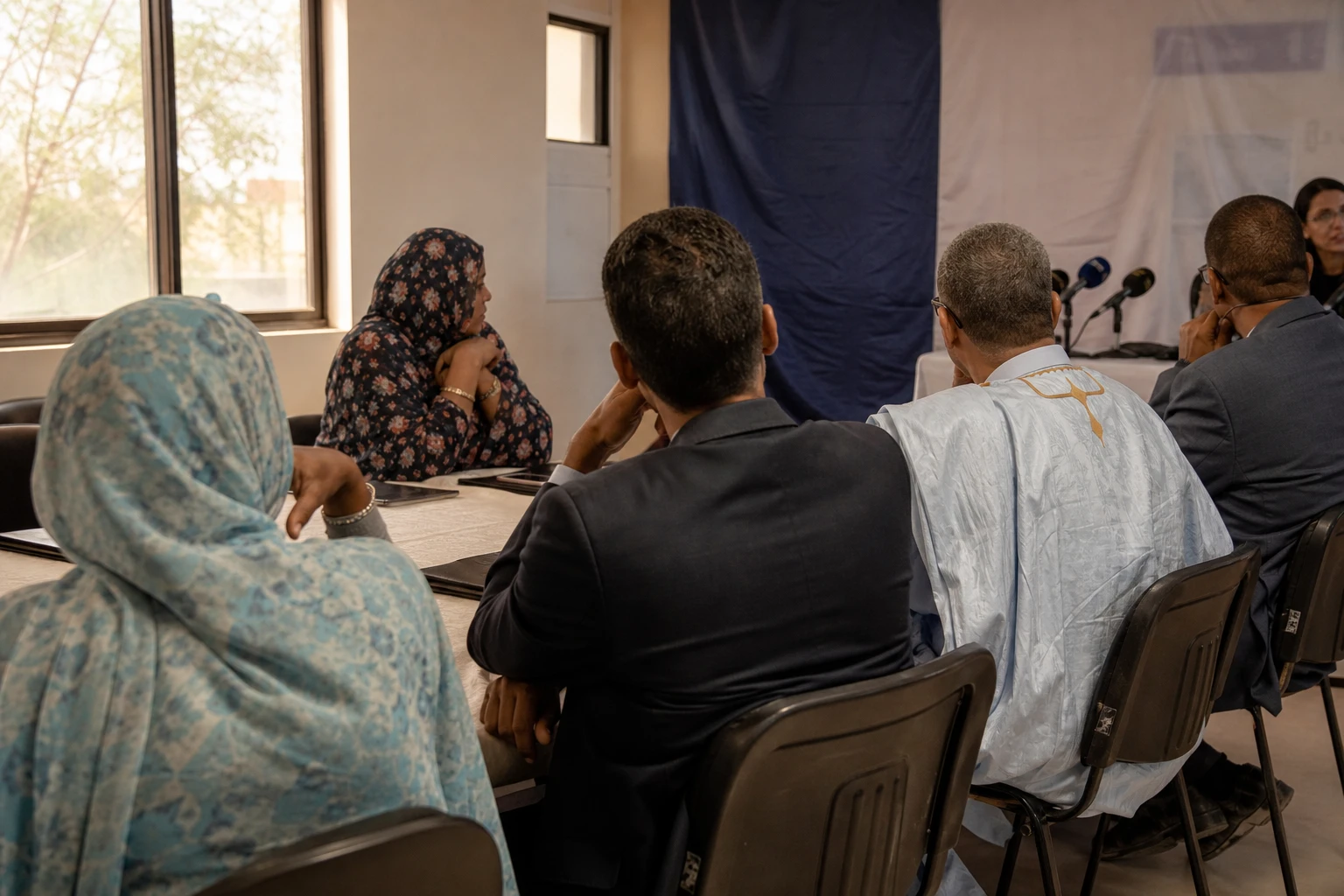
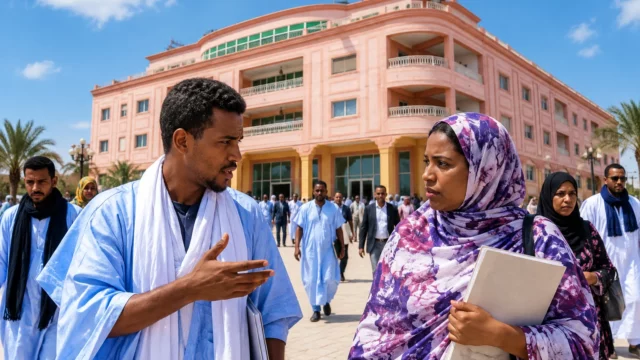
In Toujounine, a suburb of Nouakchott, two cases involving young girls have revived a question Mauritania has been putting off for years: how can women and children be effectively protected from sexual violence? For the families and associations who gathered on Sunday 27 September, the answer lies in a bill awaiting consideration by parliament: the Karama bill, whose name means “dignity”.
Families in Nouakchott call for a judicial response
The first case concerns a seven-year-old girl who was assaulted on 5 September in Toujounine as she was on her way to her Koranic school. Mauritanian police announced the arrest of a suspect on 8 September. According to information provided by investigators, the child is said to have identified the suspect from several photographs after her health improved. The man is then said to have led police to the alleged scene of the crime.
A few days later, another girl, aged four, was reportedly assaulted in the same area of Nouakchott. The child’s relatives spoke at a press conference organised by civil society groups. They are calling for the investigations to be completed and for victims to receive medical, psychological and legal support.
The statements were made amid intense public emotion, but also a need for caution. In sexual violence cases, initial accounts shared on social media are sometimes incomplete or contradictory. The facts must therefore be established by investigators and the courts. Mauritanian associations say, however, that this requirement must not delay the protection of children or families’ access to information.
The family of Hawa Traoré, an 18-year-old Mauritanian who died in Nouakchott in May 2025, was also represented. Human rights organisations called at the time for responsibility to be clearly established. Police, for their part, disputed some claims circulating online about the circumstances of her death. This divergence underlines the importance of an independent investigation, a documented autopsy and clear communication from the judicial authorities.
A bill debated for a decade
The Karama bill aims to provide a broader framework for violence against women and girls. It is intended to cover physical, sexual, psychological and economic violence. It also provides for a more precise definition of rape and penalties that, depending on the versions put forward, range from five to 20 years in prison for the most serious offences.
The bill was adopted by the Council of Ministers several years ago. It was subsequently sent to the National Assembly several times, but never completed the parliamentary process. Associations say it was rejected or blocked during previous attempts. The precise chronology of the debates nevertheless needs to be distinguished according to the versions of the bill and the institutional stages concerned.
In September 2026, Sectou Mohamed Vall, president of the Mauritanian NGO AMANE, said the current legal framework remained inadequate to guarantee effective protection from sexual violence. Her organisation is calling in particular for better support for survivors and more rigorous monitoring of judicial proceedings.
The debate is therefore not just about the length of prison sentences. It also concerns the filing of complaints, the preservation of evidence, access to forensic medicine, witness protection and the training of police officers, magistrates and healthcare workers. Without these mechanisms, a tougher law risks being difficult to enforce.
Between government commitment and associations’ expectations
Mauritanian authorities now present the fight against violence towards women and girls as a national priority. In April 2026, the Minister of Social Action, Children and the Family said at a regional forum in Banjul that the government wanted to strengthen coordination between health, justice and education.
The government also says it has developed regional platforms and support services to provide medical, psychological and legal assistance. In May 2026, the National Observatory for the Rights of Women and Girls held a meeting in Nouakchott on monitoring public policies and protecting the rights of women and girls.
For civil society, these services must now deliver visible results in low-income neighbourhoods as well as in areas far from the capital. In Nouakchott, families can more easily access health services and judicial authorities. In the regions, distances, a shortage of specialists and social pressure can make it harder to report incidents.
The consequences are not the same for every victim. A family with resources can seek a lawyer, pay for travel and follow proceedings. Another may have to rely on neighbours, an association or a distant public service. Children need immediate protection, wherever they live.
A national issue that transcends borders
Mauritania lies at the meeting point of the Maghreb and West Africa. It is not a member of the Economic Community of West African States (ECOWAS), but maintains close ties with several countries in the region. Violence against women is therefore also discussed in regional forums, including meetings on the protection of women and girls in West and Central Africa.
The issue also forms part of the African Union’s and the United Nations’ commitments to combat gender-based violence. A document submitted as part of Mauritania’s Universal Periodic Review recommends that online violence be included in the Karama bill and that measures for protection, support and redress be strengthened.
The next step will be parliamentary, but not only that. Associations are calling for a public timetable, an accessible text and a process that allows victims to be heard without facing further pressure. The government must also clarify how the future law will work alongside the Criminal Code, social services and healthcare facilities.
In Nouakchott, the current mobilisation is turning individual cases into a national debate. It is forcing Mauritanian institutions to answer a concrete question: beyond the outrage, what resources will be guaranteed to prevent violence, bring alleged perpetrators to justice and help victims rebuild their lives?