Algeria
 Egypt
 Libya
 Sudan
 Tunisia
 Benin
 Burkina Faso
 Cabo Verde
 Côte d'Ivoire
 Ghana
 Guinea
 Guinea-Bissau
 Liberia
 Mali
 Mauritania
 Niger
 Nigeria
 Senegal
 Sierra Leone
 The Gambia
 Togo
 Cameroon
 Central African Republic
 Chad
 DR Congo
 Equatorial Guinea
 Gabon
 Republic of the Congo
 São Tomé and Príncipe
 Burundi
 Comoros
 Djibouti
 Eritrea
 Ethiopia
 Kenya
 Madagascar
 Malawi
 Mauritius
 Mozambique
 Rwanda
 Seychelles
 Somalia
 South Sudan
 Tanzania
 Uganda
 Angola
 Botswana
 Eswatini
 Lesotho
 Namibia
 South Africa
 Zambia
 Zimbabwe
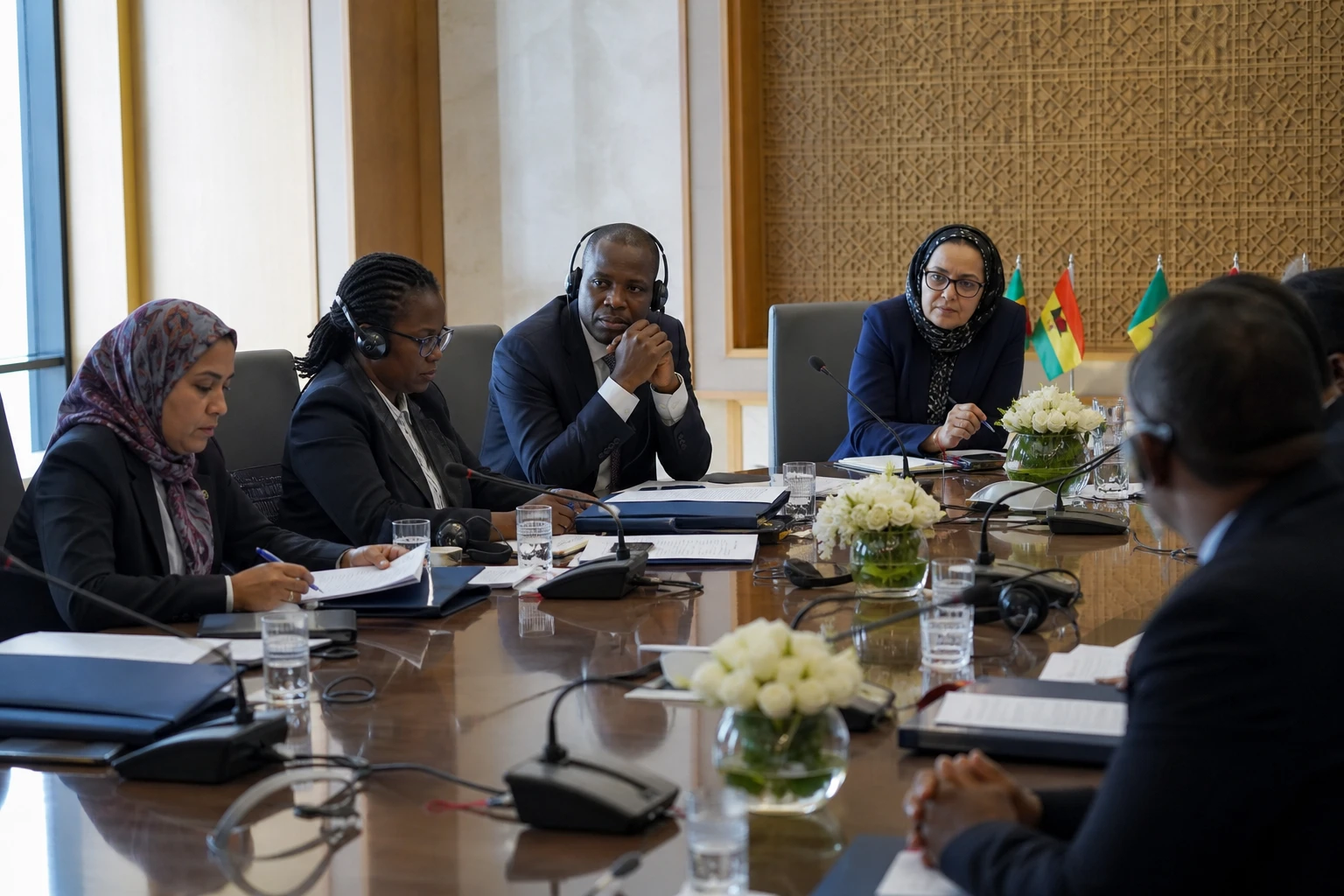
In Rabat, Morocco’s 2025 protests are now continuing in the corridors of justice. Outside Parliament, mothers are calling for the release of their children, arrested after unrest accompanied GenZ 212 rallies. For these families, the stakes go beyond a prison sentence: they include a lost year of study, ongoing legal proceedings and the chance to rebuild a life after taking part in the protests.
In Rabat, families demand answers from the courts
About 30 mothers gathered outside Parliament in the Moroccan capital on Saturday. They are calling for the release of young people convicted or still being held after the protests of autumn 2025.
“We want all the children to be free and able to leave after a year; enough is enough,” said Ilham Negro, the mother of a detainee. She said some young people had already lost a school year and that families were facing health problems linked to the situation.
The gathering was backed by the national solidarity committee for GenZ 212 detainees. Its co-ordinator, Hakim Sikouk, puts the number of young people still in prison at nearly 750. The figure includes people who have been convicted, as well as defendants who have yet to stand trial.
However, not all sources confirm this figure. The Moroccan Association for Human Rights said in September 2026 that about 650 people remained in prison, out of at least 5,700 arrests since the start of the protests. The discrepancies are due in part to different counting dates and to the distinction between arrests, prosecutions, pre-trial detention and sentences being served.
The issue of minors features prominently in the families’ demands. The support committee says some teenagers are among those facing prosecution. It also alleges that some proceedings have been irregular. These claims must be examined case by case by the relevant courts.
A movement born out of public services
GenZ 212 emerged on social media at the end of September 2025. Its name combines Generation Z with Morocco’s international telephone code, +212. The collective, with no clearly identified public leadership, used digital platforms, among others, to call for rallies.
The demands initially focused on health and education. Young people also called for measures to tackle corruption and a fairer distribution of public investment. In several cities, they contrasted spending on major sports facilities with the state of hospitals, schools and transport.
The protests spread to Casablanca, Rabat, Marrakech, Tangier, Oujda and Agadir. Several observers said most rallies remained peaceful. However, two evenings were marked by stone-throwing, fires and clashes with security forces.
In the Agadir region, three young people died in violence near Lqliaa in early October 2025. The Moroccan authorities said security forces had opened fire as individuals tried to attack a gendarmerie post. Relatives of the victims and human rights organisations called for an independent investigation into the exact circumstances of the deaths.
This divergence calls for caution. Several media outlets and organisations have reported a death toll of three, but responsibility for the shootings and the precise sequence of events remain disputed. No account from either side can, on its own, settle the matter.
A criminal justice response that continues to have an impact
On 29 October 2025, Morocco’s public prosecutor said 2,480 people were facing prosecution over acts linked to the violence. Of these, 1,473 were being held pending trial, according to the Associated Press. In several cases, charges ranging from violence against public officials to incitement to commit crimes were brought.
The courts subsequently handed down different sentences depending on the charges. Some rulings concerned damage to property and arson. Others involved participants in rallies or road-blocking actions. In October 2025, the Agadir Court of Appeal handed down lengthy sentences to defendants prosecuted for setting vehicles on fire, damaging property and obstructing traffic.
In Casablanca, another case related to the blocking of an urban motorway led to the release of several detainees in June 2026, after the Court of Appeal ruled that their sentences had been served through the time they had already spent in prison. The decision does not resolve all the cases, but shows that the legal proceedings remain ongoing.
For families, the time justice takes merges with the punishment itself. A young detainee may miss a university year, lose a job or interrupt a course before a final ruling has even been handed down. The consequences also affect relatives, who are often forced to pay for travel, visits and legal fees.
The debate goes beyond the trials themselves
The protests exposed a gap between the priorities set out by the state and the expectations of some young Moroccans. Morocco is preparing to host major sporting events, including the 2025 Africa Cup of Nations and the 2030 World Cup. These projects could support jobs, infrastructure and the country’s appeal. They also prompt questions about social priorities when essential services are still seen as inadequate.
The contrast is particularly stark between major cities and outlying areas. In Rabat and Casablanca, young people have greater access to universities, formal employment and administrative services. In rural areas and urban outskirts, access to specialist healthcare, transport and higher education remains more difficult.
The protests also highlighted the weakness of traditional channels. GenZ 212 was built outside political parties, trade unions and established associations. This independence helped the movement mobilise quickly. It also limited its ability to negotiate, document cases and defend its members before institutions.
A test for Morocco’s trajectory
The GenZ 212 case forms part of a Moroccan trajectory already marked by social protests, notably in the Rif in 2016 and 2017. It is not an identical movement. But the same problem keeps returning: how can local demands over public services be turned into lasting institutional dialogue?
Across the African Union and the Maghreb, Morocco’s experience will be watched for two reasons. First, it shows the growing role of social media in co-ordinating movements without a declared leader. Second, it raises the question of how to balance law and order, the right to protest and the judicial handling of violence committed on the fringes of demonstrations.
The next stage will play out in the courts, but also through public policy. The number of detainees actually released, the fate of minors, the transparency of investigations into the deaths in Agadir and the response to demands concerning health and education will help determine the real scale of this crisis. In Rabat, the mothers gathered outside Parliament are already reminding the authorities that the case is not closed.