
 Algeria
 Egypt
 Libya
 Morocco
 Sudan
 Tunisia
 Benin
 Burkina Faso
 Cabo Verde
 Côte d'Ivoire
 Ghana
 Guinea
 Guinea-Bissau
 Liberia
 Mali
 Mauritania
 Niger
 Nigeria
 Senegal
 Sierra Leone
 The Gambia
 Togo
 Cameroon
 Central African Republic
 Chad
 Equatorial Guinea
 Gabon
 Republic of the Congo
 São Tomé and Príncipe
 Burundi
 Comoros
 Djibouti
 Eritrea
 Ethiopia
 Kenya
 Madagascar
 Malawi
 Mauritius
 Mozambique
 Rwanda
 Seychelles
 Somalia
 South Sudan
 Tanzania
 Uganda
 Angola
 Botswana
 Eswatini
 Lesotho
 Namibia
 South Africa
 Zambia
 Zimbabwe
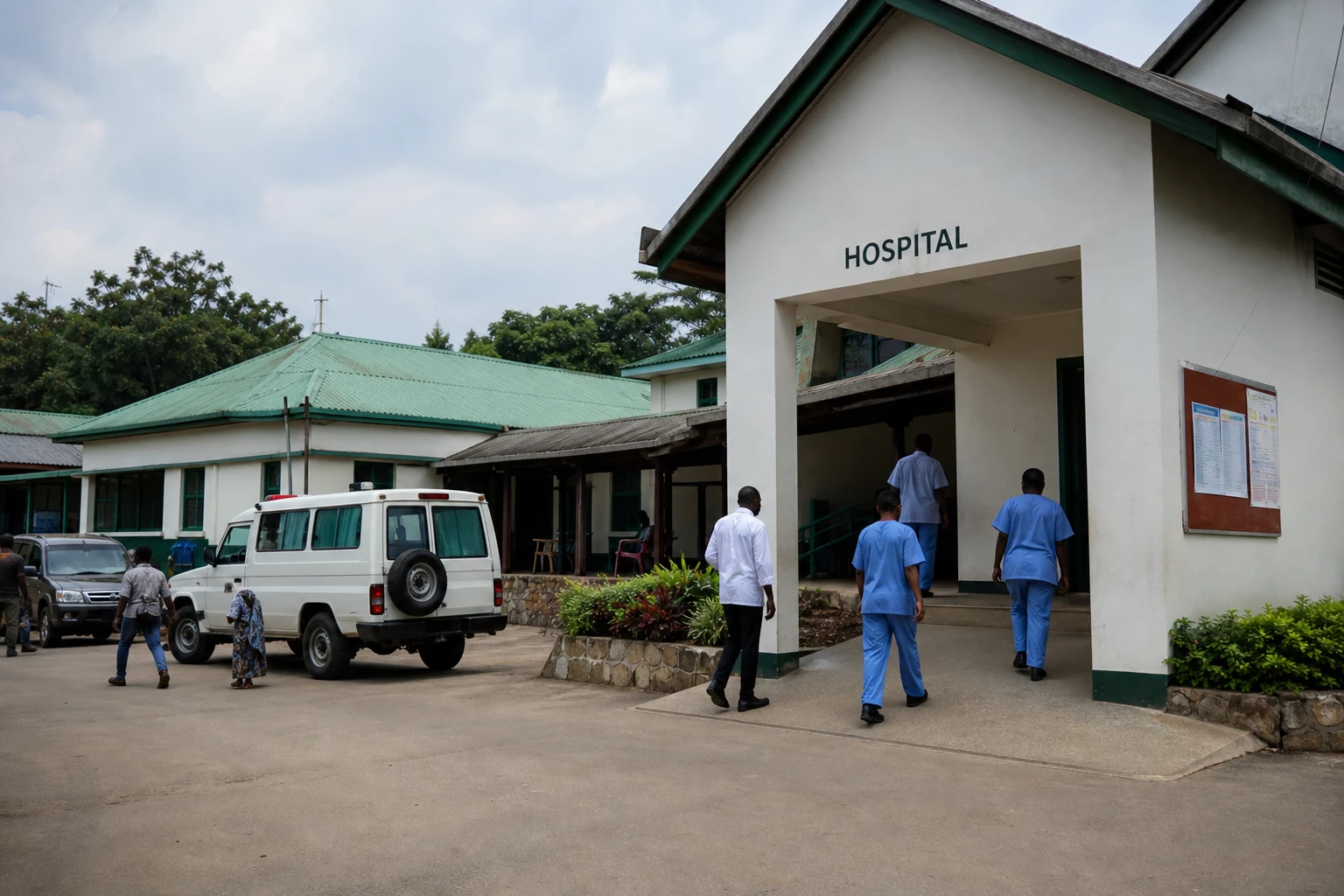
In eastern Democratic Republic of the Congo, the decline recorded in Ituri does not yet mean the Ebola epidemic is over. The centre of transmission is shifting towards North Kivu, where healthcare facilities must cope with a rapid rise in cases.
An epidemic on the move
The current outbreak is linked to the Ebola Bundibugyo virus. It was declared in May 2026 in the north-east of the DRC. It is the 17th Ebola epidemic recorded in the country since the virus was identified in 1976, according to WHO Africa.
Ituri remains the worst-affected province. However, recent indicators there show a downturn. Between 31 August and 20 September 2026, the number of cases is reported to have fallen by 26%, according to a situation update reported by RDC Actualité. This progress remains fragile, as the virus is still circulating in several health zones.
A few hundred kilometres away, North Kivu is following the opposite trajectory. The same update reports a 73% increase over the period in question. The World Health Organization has also reported a rapid rise in cases in the province, after a decline in some parts of Ituri.
These percentages describe a trend, not a definitive tally. The data may change as samples are confirmed, rural areas become accessible and exposed people are identified. WHO therefore continues to describe the situation as a succession of linked outbreaks, rather than a uniform epidemic across the whole of eastern Congo.
North Kivu treatment centres under pressure
The Mabalako health zone illustrates this new challenge. In this rural part of North Kivu, the general hospital is the main facility treating people who are infected or suspected of being infected. Its capacity is limited in relation to the size of the area it serves.
A WHO team recently visited the facility to assess needs and strengthen the response. Guy Mutombo, head of Ebola response operations in North Kivu, described treatment centres as close to saturation.
“Almost all our treatment centres are completely saturated,” he said, according to information provided by the response authorities. He also advocated setting up an isolation or treatment centre in every health zone, to prevent patients from being referred too late to facilities far away.
This proposal addresses a very practical constraint. Cases are not concentrated solely in major urban centres such as Beni. They are also appearing in villages and hard-to-reach localities. For families, several hours of travel can delay diagnosis, complicate contact tracing and increase the risk of transmission.
The response must also contend with population displacement, insecurity and weak transport networks. In some areas, medical teams cannot move freely. Awareness campaigns, possible vaccination and the safe burial of people who have died become more difficult to organise as a result.
A medical response facing local constraints
The fight against Ebola does not depend solely on the number of beds available. It also relies on early detection, contact tracing, rapid diagnosis and trust between healthcare workers and communities.
In Ituri, WHO says local outreach has helped raise awareness among more than 2.5 million people in Ituri, North Kivu and South Kivu. Laboratories have also been set up or strengthened in Bunia, Mongbwalu and Beni, with further sites planned in several areas. This capacity reduces the time between the onset of symptoms and confirmation of a case.
But progress remains uneven. Improvement in one province can coincide with an acceleration elsewhere. The decline in Ituri must therefore be interpreted with caution. If transmission chains shift towards North Kivu, the need for staff, ambulances, protective equipment and isolation space will rise rapidly.
The situation affects different populations in different ways. Cities have more health facilities, but they can quickly be overwhelmed. In rural areas, distance is often the main obstacle. Informal economy workers, traders and families travelling between markets or villages may also be particularly exposed to delays in receiving care.
An issue that goes beyond provincial borders
North Kivu shares borders with Uganda and Rwanda. Cross-border movements are not in themselves proof of transmission, but they make coordination between health services and continued surveillance at crossing points essential.
The 2018-2020 epidemic left useful capacity in the region. It also showed the limits of a response that is too centralised or too distant from communities. At the time, North Kivu and Ituri faced a prolonged health crisis, compounded by insecurity and distrust of some response teams.
The current dynamics therefore affect the East African Community, of which the DRC is a member, as well as the African Union’s surveillance mechanisms. Africa CDC is already monitoring the outbreak with Congolese authorities and partners on the ground.
The next test will be whether the rise in North Kivu can be prevented from undoing the gains made in Ituri. Opening treatment centres closer to villages, securing access to affected areas and regularly publishing verifiable data will be decisive. For Kinshasa and neighbouring provinces, the goal is no longer simply to contain one outbreak, but to manage several transmission chains across a vast and highly mobile region.



