Algeria
 Egypt
 Libya
 Morocco
 Sudan
 Tunisia
 Benin
 Burkina Faso
 Cabo Verde
 Côte d'Ivoire
 Ghana
 Guinea-Bissau
 Liberia
 Mali
 Mauritania
 Niger
 Nigeria
 Senegal
 Sierra Leone
 The Gambia
 Togo
 Cameroon
 Central African Republic
 Chad
 DR Congo
 Equatorial Guinea
 Gabon
 Republic of the Congo
 São Tomé and Príncipe
 Burundi
 Comoros
 Djibouti
 Eritrea
 Ethiopia
 Kenya
 Madagascar
 Malawi
 Mauritius
 Mozambique
 Rwanda
 Seychelles
 Somalia
 South Sudan
 Tanzania
 Uganda
 Angola
 Botswana
 Eswatini
 Lesotho
 Namibia
 South Africa
 Zambia
 Zimbabwe
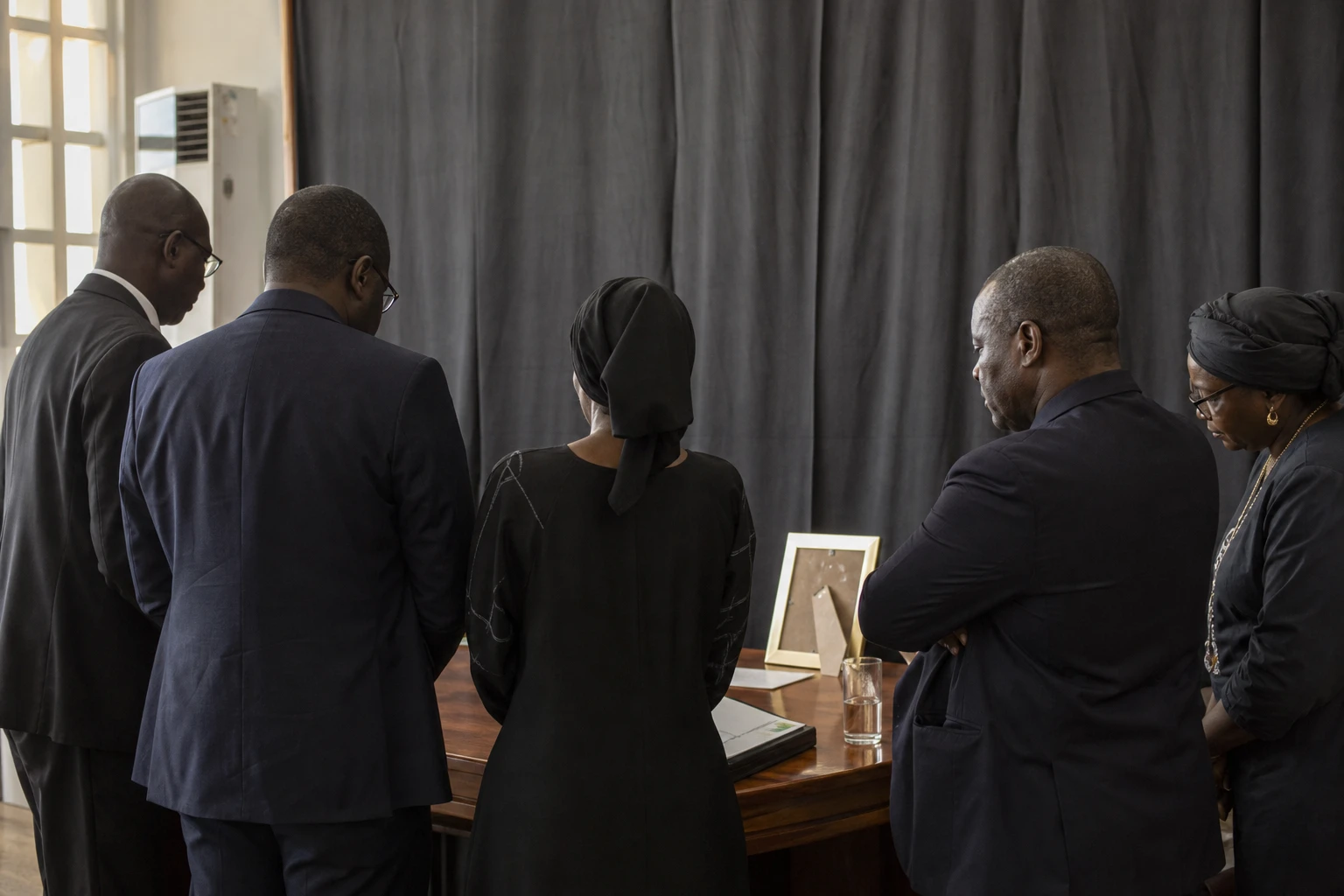
Sidya Touré’s death opens a period of mourning, but also of reflection for Guinea’s political class. In Conakry and among the diaspora, tributes recall the career of a former prime minister who became one of the opposition’s enduring figures.
Sidya Touré died on Friday 25 September 2026 in Paris, aged 81, after a period in hospital. The former head of government and president of the Union of Republican Forces (UFR) had lived outside Guinea in recent years, notably in Côte d’Ivoire. Details of his funeral are to be announced by his family and the Guinean authorities.
A political figure shaped by the state and the economy
Sidya Touré’s career took shape at the intersection of public administration, government management and politics. He headed the Guinean government under President Lansana Conté, after the events of 2 and 3 February 1996. His time as prime minister was associated with efforts to reorganise public administration and restore relations with international financial partners.
In his tribute, Cellou Dalein Diallo also recalled the role Sidya Touré played in discussions with the International Monetary Fund and the World Bank. He also cited efforts on electricity, economic reforms and reviving growth. These issues remain central to Guineans’ expectations today, in a country with significant mineral resources that still needs to strengthen its infrastructure and essential services.
After serving in government, Sidya Touré chose opposition. He founded the UFR and stood for president twice. In 2010, he came third in the first round before backing Cellou Dalein Diallo in the second. The alliance left a lasting mark on Guinean politics.
Tributes from several generations
In Conakry, Prime Minister Bah Oury paid tribute to the memory of a “major figure in Guinea’s political life for three decades” and a “pragmatic reformer”. Former president Alpha Condé, for his part, described a man who had devoted his life to serving the Republic.
Other political leaders also expressed their grief. Ousmane Kaba, president of the Party of Democrats for Hope, spoke of the loss of an “elder brother”. François Louncény Fall, a former prime minister, described a “tragically unfinished destiny”. These reactions transcend the partisan divides that have often shaped public life in Guinea.
Cellou Dalein Diallo, who is also based in Abidjan, paid tribute to a “friend and companion on the road and in the struggle”. The two men had shared an electoral alliance in 2010, followed by several opposition protests. They had also opposed Alpha Condé’s third term and taken part in various political coalitions.
In a statement reported by the Guinean press, Cellou Dalein Diallo recalled the ordeals he and Sidya Touré had faced together. He mentioned political restrictions, proceedings targeting their property, the removal of their parties from the institutional landscape and their exile in Côte d’Ivoire.
The leader of the UFDG also recalled that their shared commitment had cost lives. He says the two leaders lost supporters during clashes and periods of political repression. These claims are part of his testimony and should be distinguished from an official toll established by an independent commission.
A death amid political restrictions
Sidya Touré’s death comes at a time when Guinea’s political space remains heavily constrained. Since the coup of 5 September 2021, the country has been governed by a military transition led by General Mamadi Doumbouya. Several opposition parties have been suspended or dissolved, while political leaders are living abroad.
The UFR, the party founded by Sidya Touré, is among those that have lost their place in the official political system. His absence from the country had also deprived him of a direct presence among his supporters and voters. For his associates, this absence fuelled a sense that his career had been cut short before he could fulfil his presidential ambition.
Barry Boubacar, a member of the UFR’s political bureau, summed up this regret by saying that Sidya Touré’s departure meant the loss of a “library”. The phrase refers to his administrative experience, his knowledge of institutions and his long practice of political negotiations.
Those close to him who gathered in Conakry, meanwhile, emphasised his qualities as a statesman, his rigour and his integrity. Fodé Baldé, the UFR’s communications chief, said Sidya Touré had given a great deal to Guinea. The tributes paint a picture of a leader whose influence extended beyond election campaigns.
A death resonating across West Africa
Sidya Touré’s career also reflects the transformations taking place in West Africa. Guinea is a member of the Economic Community of West African States, ECOWAS, an organisation tasked with promoting regional integration and cooperation among its members. For several years, the organisation has faced a growing number of military transitions and the weakening of democratic mechanisms.
Against this backdrop, the death of a leader who championed electoral change and pluralism comes as several major Guinean figures are living outside the country. This situation is changing the balance of power. It weakens parties’ ability to organise their structures, but it does not erase social demands for representation, justice and transparency.
What happens next will depend in particular on the arrangements for the funeral, the authorities’ response and the UFR’s ability to preserve his political legacy. Beyond his family and supporters, Sidya Touré’s death brings a central question for Guinea into focus: how can public debate be renewed without erasing the figures who shaped earlier stages of national life?