
 Algeria
 Egypt
 Libya
 Morocco
 Sudan
 Tunisia
 Benin
 Burkina Faso
 Cabo Verde
 Côte d'Ivoire
 Ghana
 Guinea
 Guinea-Bissau
 Liberia
 Mali
 Mauritania
 Niger
 Nigeria
 Senegal
 Sierra Leone
 The Gambia
 Togo
 Cameroon
 Central African Republic
 Chad
 DR Congo
 Equatorial Guinea
 Gabon
 Republic of the Congo
 São Tomé and Príncipe
 Burundi
 Comoros
 Djibouti
 Eritrea
 Ethiopia
 Kenya
 Madagascar
 Malawi
 Mauritius
 Mozambique
 Rwanda
 Seychelles
 Somalia
 South Sudan
 Tanzania
 Uganda
 Angola
 Botswana
 Eswatini
 Lesotho
 Namibia
 Zambia
 Zimbabwe
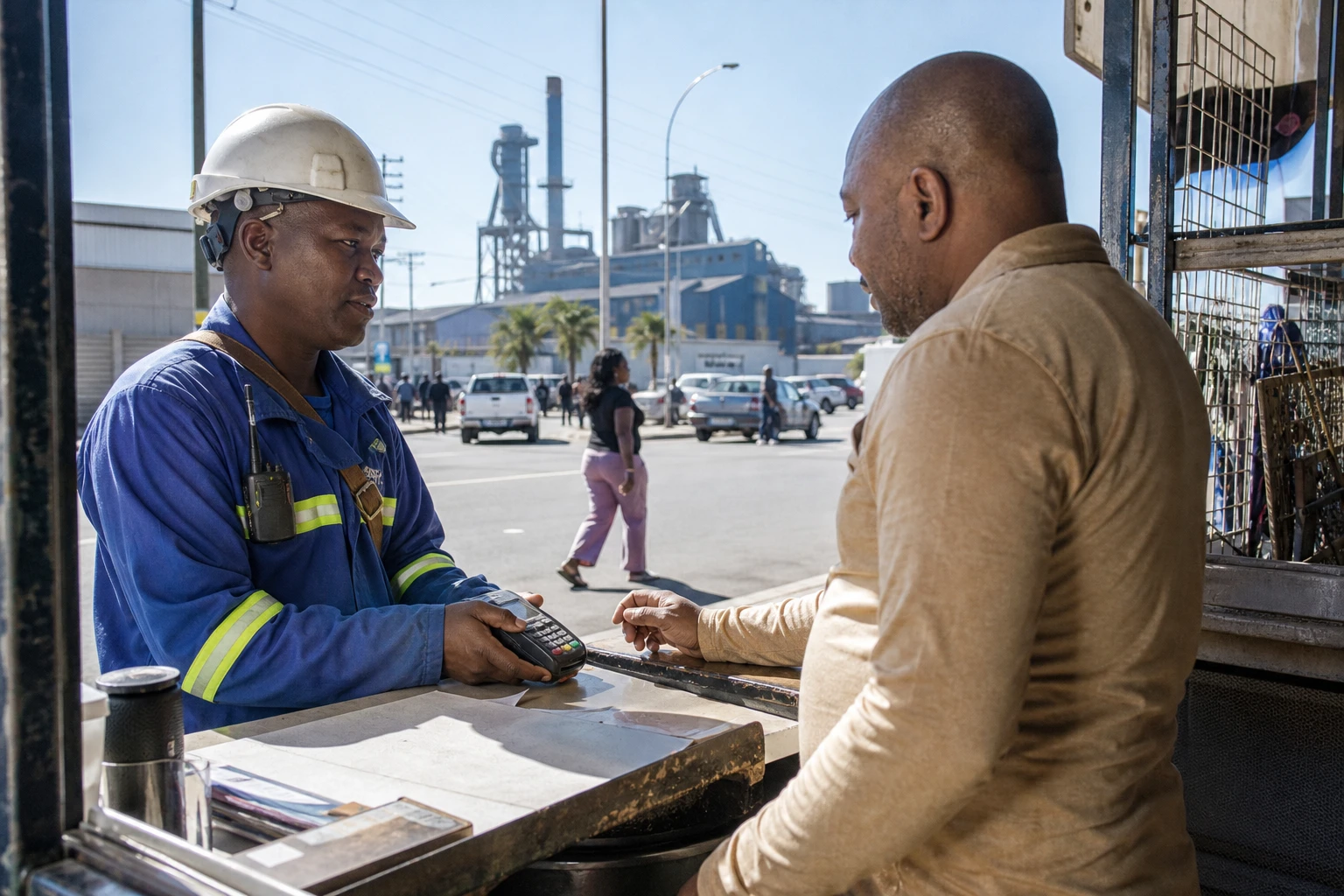
In South African industry, every megawatt saved and every tonne of gas reused can now affect competitiveness. In Vanderbijlpark and Newcastle alike, the transformation of steelmaking therefore depends as much on access to finance as on the plants themselves.
An agreement focused on energy, water and resources
ArcelorMittal South Africa (AMSA), Veolia and Norfund signed a development agreement on 21 September 2026 covering several decarbonisation and resource-efficiency projects at the steelmaker’s South African sites. The announcement was confirmed by Veolia and the South African Iron and Steel Institute, the industry body for the sector in South Africa.
The programme does not yet amount to a final investment decision. It must first turn technical proposals into projects assessed on industrial, commercial, financial and environmental grounds. The aim is to develop projects robust enough to attract capital and specialist expertise.
The initial priorities involve recovering and reusing gases produced by blast furnaces. These gases can provide some of the energy needed to operate the facilities. Their use should reduce flaring, limit purchases of external fuels and improve the sites’ overall efficiency.
The partners also want to modernise steam and power-generation infrastructure. Further studies will cover renewable energy, water optimisation, wastewater treatment and resource recovery. Veolia sets out the industrial programme’s priorities.
Steelmaking under pressure even before Europe’s carbon rules
Climate concerns are emerging in a sector already weakened by electricity costs, logistical difficulties and sluggish demand. South Africa remains the continent’s second-largest steel producer, behind Egypt. Yet its crude steel production has fallen sharply since its 2006 peak.
A recent study by the Organisation for Economic Co-operation and Development estimates that South Africa produced 4.7 million tonnes of crude steel in 2024. Capacity utilisation in the basic steelmaking sector was then around 65%. This leaves less room to finance new equipment.
The industrial model also remains heavily dependent on coal and blast-furnace processes. AMSA’s roadmap targets a 25% reduction in carbon intensity between 2018 and 2030. The company also aims to cut it by 86% by 2050, to 0.40 tonnes of CO2 equivalent per tonne of crude steel.
The plan relies on several levers. These include increasing the use of scrap, installing on-site solar capacity and, eventually, adopting direct iron ore reduction and electric arc furnaces. ArcelorMittal South Africa’s climate roadmap sets out these targets and the initial measures under consideration.
The transition is more complex, however, than simply replacing one technology with another. Hydrogen-based direct reduction requires abundant, competitively priced electricity. Electric arc furnaces also need a reliable grid and a steady supply of scrap. In a country where industrial companies have faced power cuts and grid constraints, decarbonisation therefore depends directly on energy reform.
Europe’s carbon mechanism changes the calculation for exporters
The European Union’s Carbon Border Adjustment Mechanism, commonly known as CBAM, is gradually requiring European importers to report and then cover emissions associated with certain imported products. The scheme includes iron and steel. It could make products with a high carbon footprint more expensive.
For South African producers, the stakes go beyond the amount of any potential carbon bill. They must also have reliable emissions data. The measure is therefore pushing companies to improve process monitoring, tracking of energy use and product certification.
The OECD identifies iron and steel as the South African sector most exposed to the EU’s CBAM. It also highlights the role of coal in national electricity generation and investment difficulties that are slowing equipment upgrades. This external pressure is thus adding to industrial constraints already affecting the domestic market.
Companies cannot deliver the response on their own. It also involves the state, electricity suppliers, ports, railways and financial institutions. A more efficient plant cannot sustainably compensate for unreliable electricity, inadequate rail freight or lengthy port delays.
An industrial issue for southern Africa
Steelmaking retains a strategic role in South Africa. It supplies materials for construction, equipment, the automotive industry, energy infrastructure and renewable energy projects. Its decline would increase dependence on imports and reduce the country’s ability to develop local value chains.
The effects of the transition will nevertheless vary between regions. Large industrial sites concentrate direct jobs and technical expertise. Suppliers, contractors and small businesses in steelmaking areas also depend on activity being maintained. Conversely, investment in energy efficiency can create new demand for solar installers, water specialists, engineers and maintenance technicians.
The OECD estimates that basic steelmaking accounted for about 22,000 direct jobs in South Africa in 2024. This figure does not cover all the indirect jobs linked to transport, maintenance, processing and distribution. The transition will therefore need to include vocational training and protection for workers affected by changes in production processes.
The partnership between AMSA, Veolia and Norfund reflects another shift: climate finance is moving towards concrete industrial projects. Veolia brings expertise in water, energy and waste. Norfund, the Norwegian Investment Fund for Developing Countries, is involved in structuring and financing projects with the potential to become profitable.
This approach is already being used on the continent. In October 2025, Norfund granted a $15 million loan to Ghanaian company B5 Plus. The financing is intended to support the modernisation of a steel plant and the construction of a 16-megawatt solar facility at Prampram. Norfund outlines the steel project developed in Ghana.
With Veolia, the Norwegian institution is also offering a platform able to finance integrated industrial solutions in water, energy and waste management. Projects can reach €50 million, according to the partnership’s presentation. The Veolia-Norfund platform targets resource-intensive African industries.
Execution will be the next test
For AMSA, the immediate challenge will be to move from studies to decisions. Gas-recovery and power-modernisation projects can deliver relatively quick gains. Solutions involving hydrogen, direct iron ore reduction or carbon capture will require more time, electricity and capital.
The European timetable will increase pressure on exporters. But the success of the transition will also be measured in South Africa, by continuity of production, the preservation of skilled jobs, lower costs and the ability to supply locally the steel needed for infrastructure across the southern region.
Within the Southern African Development Community, the issue therefore extends beyond AMSA alone. It concerns the possibility of building a more integrated regional industry, less vulnerable to imports and better prepared for new climate-related trade rules.



