
 Algeria
 Egypt
 Libya
 Morocco
 Sudan
 Tunisia
 Benin
 Burkina Faso
 Cabo Verde
 Côte d'Ivoire
 Ghana
 Guinea
 Guinea-Bissau
 Liberia
 Mali
 Mauritania
 Niger
 Nigeria
 Senegal
 Sierra Leone
 The Gambia
 Togo
 Cameroon
 Central African Republic
 Chad
 Equatorial Guinea
 Gabon
 Republic of the Congo
 São Tomé and Príncipe
 Burundi
 Comoros
 Djibouti
 Eritrea
 Ethiopia
 Kenya
 Madagascar
 Malawi
 Mauritius
 Mozambique
 Rwanda
 Seychelles
 Somalia
 South Sudan
 Tanzania
 Uganda
 Angola
 Botswana
 Eswatini
 Lesotho
 Namibia
 South Africa
 Zambia
 Zimbabwe
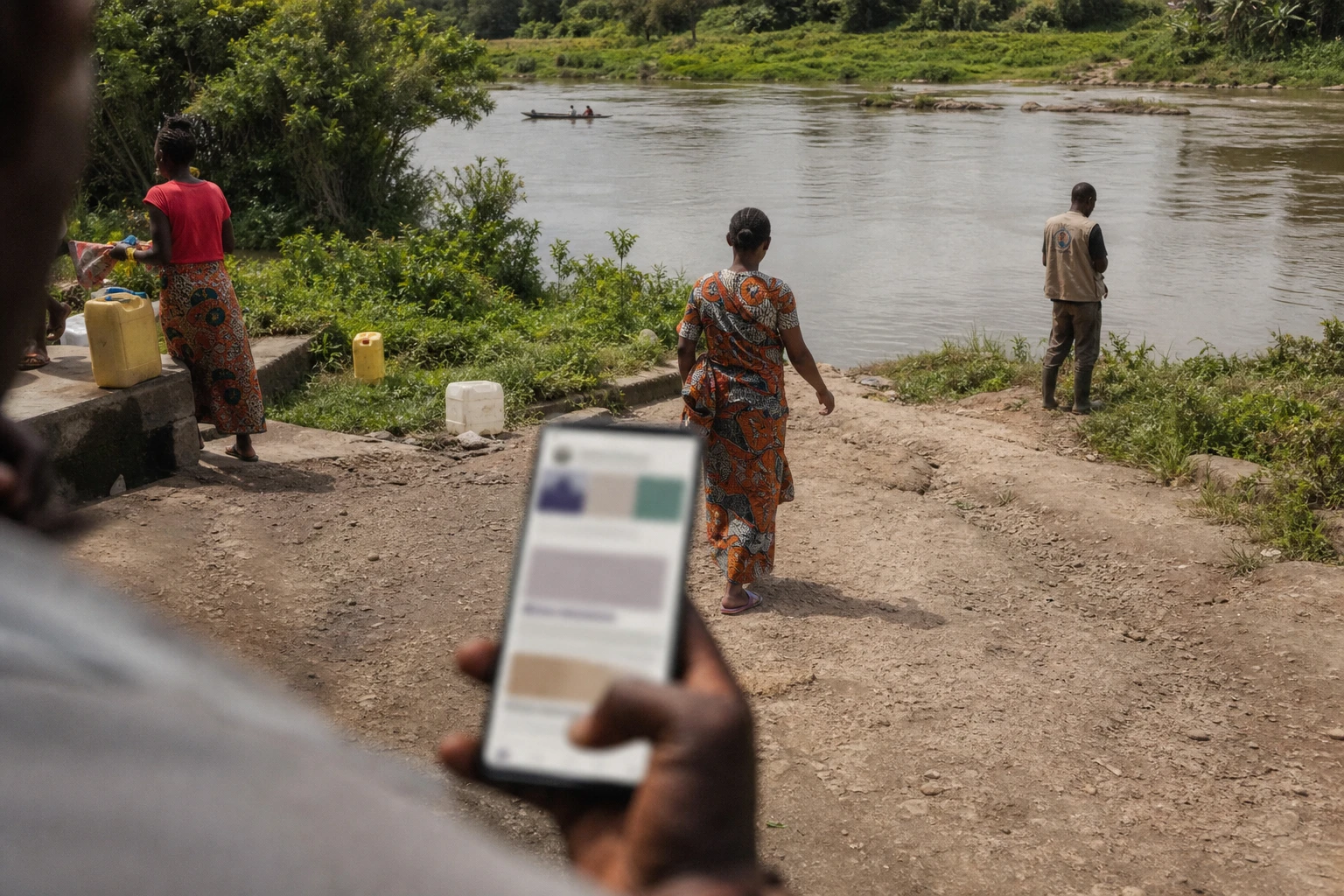
In North Kivu, the discovery of several dead hippos in the Semuliki River has left communities along its banks facing a dual challenge: protecting their health without drawing conclusions before test results are available. The area lies near Virunga National Park, where wildlife, livestock, fishing and daily activities exist in close proximity.
Health alert, not yet a diagnosis
Hippo carcasses have been reported in the Semuliki, on the boundary between the Ruwenzori sector and the Bashu chiefdom, in the Beni region. The information was reported on 24 September 2026 by local conservation stakeholders. The Congolese Institute for Nature Conservation (ICCN) says the cause of death remains unknown.
Samples are to be analysed to determine the cause of these deaths. At this stage, no official confirmation allows anyone to say that this is a new outbreak of anthrax, also known as charbon bactéridien. The disease is an infection caused by the bacterium Bacillus anthracis. It can affect animals and, under certain conditions, humans.
The authorities’ caution is explained by an earlier incident in the same province. In March and April 2025, hippos and buffaloes died in the Lake Edward and Ishasha River area, within Virunga National Park. Veterinary tests confirmed the presence of spores of the bacterium responsible for anthrax.
The FAO recorded 52 dead hippos and seven dead buffaloes during the first phase of the alert, according to reports from ICCN patrols. A few weeks later, the World Health Organization reported 60 dead hippos and 27 dead buffaloes in several health zones in North Kivu, as well as suspected human cases.
Strict instructions for residents along the river
While laboratory results are pending, the ICCN and health services are asking residents not to touch the carcasses. They are also prohibited from moving, cutting up, opening, burying or burning them without instructions from the relevant services.
The authorities also recommend not eating meat from an animal found dead. This prohibition applies to fresh, cooked, dried or smoked meat. Buying, selling and transporting it should also be avoided. Children, livestock and domestic animals should be kept away from the affected areas.
Another precaution concerns water. Residents are urged to avoid water sources near a carcass and to use a safe source or properly treated water. This measure is important in a region where waterways support several domestic and economic activities.
Any further animal deaths should be reported to veterinary services, local authorities, community representatives or conservation officers. Anyone who develops unusual symptoms after contact with a carcass, a sick animal or suspect meat should go promptly to a health facility.
Memories of 2025 underpin heightened vigilance
The 2025 episode showed how quickly an animal disease can become a public health problem. The WHO describes anthrax as a zoonosis, meaning a disease that can be transmitted from animals to humans. Risks increase when carcasses are handled or meat from sick animals enters the food supply.
In its July 2025 update, the WHO reported 24 suspected human cases in North Kivu as of 26 May. The animal deaths at the time involved hippos, buffaloes, goats and one cow. These figures do not make it possible to automatically link the Semuliki carcasses to anthrax. They do, however, explain why the authorities are immediately taking a precautionary approach.
This approach is based on the “One Health” principle. It regards human health, animal health and the state of the environment as interconnected. In North Kivu, this connection is tangible. People live near protected areas, use natural resources and may encounter sick wild or domestic animals.
A cross-border ecological and health zone
The Semuliki is part of an ecological system that extends beyond the borders of the Democratic Republic of the Congo. Virunga National Park borders Uganda and lies within the wider Virunga landscape, which is shared with Rwanda. Animals, water and human activities do not follow administrative boundaries.
This reality requires coordination between conservation bodies, health authorities and veterinary services in the countries concerned. The FAO has already highlighted the importance of regional surveillance in the Virunga landscape. Rapid reporting tools can help detect animal diseases before they spread.
The situation is also unfolding against a difficult national backdrop. North Kivu remains affected by insecurity, displacement and unequal access to health services. These constraints complicate sample collection, carcass monitoring and the dissemination of instructions in rural areas. They can also fuel rumours when results are slow to arrive.
What the next tests need to establish
The priority now is to identify the exact cause of the deaths. Laboratories will need to determine whether this is anthrax or another infection, poisoning, a water-related problem or an environmental factor. Without a confirmed result, any definitive explanation would be premature.
The authorities will then need to clarify the extent of the affected area and adapt protective measures. They will also need to inform communities in clear language, particularly about symptoms to watch for and where to report any further carcasses.
For residents of the Semuliki, the immediate priority is clear: avoid all contact with dead animals and maintain access to safe water. For the Democratic Republic of the Congo and its neighbours, the alert is a reminder of the need for ongoing surveillance of wildlife and diseases circulating in shared ecosystems. The next step will depend on the tests under way.



