Algeria
 Egypt
 Libya
 Morocco
 Sudan
 Tunisia
 Benin
 Burkina Faso
 Cabo Verde
 Côte d'Ivoire
 Ghana
 Guinea
 Guinea-Bissau
 Liberia
 Mali
 Mauritania
 Niger
 Nigeria
 Sierra Leone
 The Gambia
 Togo
 Cameroon
 Central African Republic
 Chad
 DR Congo
 Equatorial Guinea
 Gabon
 Republic of the Congo
 São Tomé and Príncipe
 Burundi
 Comoros
 Djibouti
 Eritrea
 Ethiopia
 Kenya
 Madagascar
 Malawi
 Mauritius
 Mozambique
 Rwanda
 Seychelles
 Somalia
 South Sudan
 Tanzania
 Uganda
 Angola
 Botswana
 Eswatini
 Lesotho
 Namibia
 South Africa
 Zambia
 Zimbabwe
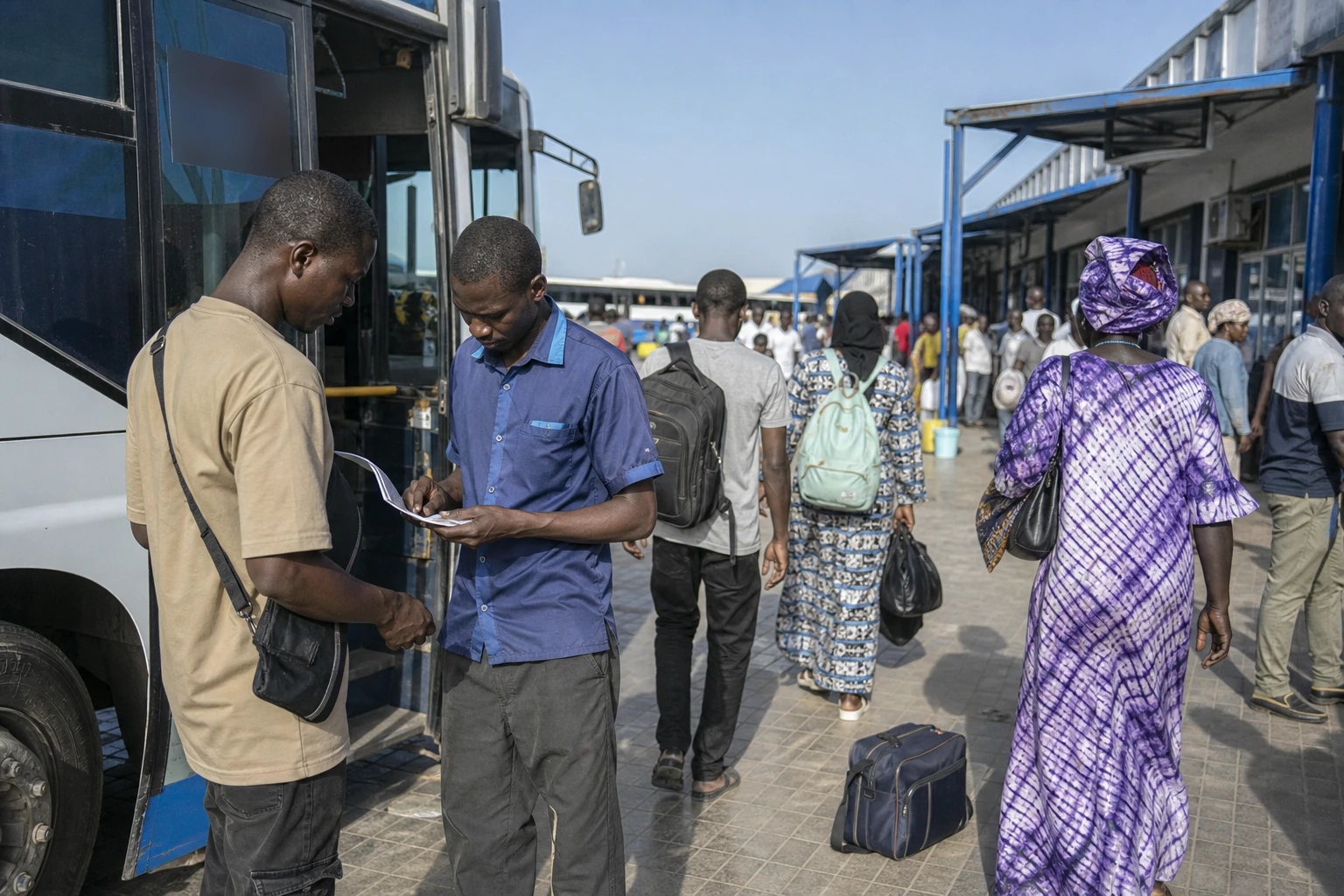
In New York, Senegalese President Bassirou Diomaye Faye put reform of multilateralism at the centre of his message. In Dakar, this diplomatic moment has particular significance: Senegal now chairs the ECOWAS Authority of Heads of State and Government, the West African organisation responsible for coordinating the region’s economic and political integration.
Senegal wants a say in the debate on the UN’s future
In an interview with RFI and France 24 on the sidelines of the United Nations General Assembly, Bassirou Diomaye Faye defended the idea that the UN remains indispensable, despite its deadlocks and limitations.
The Senegalese head of state notably backed his predecessor Macky Sall’s candidacy for the post of UN secretary-general. He believes the former president has useful international experience to represent African interests and advocate reform of the global financial architecture.
The candidacy comes amid diplomatic competition. The succession to secretary-general Antonio Guterres is opening a new contest for the representation of the world’s different regions. For several African states, the issue is not limited to the choice of an individual. It also concerns the continent’s place in global decision-making bodies.
Senegal has for several years called for more balanced international governance. In his address to the General Assembly, Bassirou Diomaye Faye also stressed the growing number of conflicts and the need to ensure the Sahel is not left out of international priorities. The official text of his address is available in the United Nations archives.
Senegalese diplomacy at the crossroads of West African tensions
Dakar’s position is set against a region marked by divisions. Mali, Burkina Faso and Niger have left ECOWAS to form the Alliance of Sahel States. The break has weakened regional mechanisms for dialogue, security and the movement of goods.
Senegal is now seeking to maintain a channel of discussion with all West African countries. Since the summit in Freetown on 19 July 2026, Bassirou Diomaye Faye has held the presidency of the ECOWAS Authority of Heads of State. The organisation aims to prove its value through tangible results: jobs, regional trade, reliable energy and access to affordable food.
This responsibility gives Dakar new visibility. It also requires a balancing act. Senegal must defend regional cohesion without ignoring criticism of ECOWAS, particularly over its responses to coups and the sense of distance between regional institutions and the people.
The appointment of Senegalese General Birame Diop as president of the ECOWAS Commission, effective from 1 September 2026, further strengthens Senegal’s influence in the organisation. The stated priority remains economic, however: developing regional value chains, reducing trade barriers and improving infrastructure. These priorities are set out in the official account of the ECOWAS summit.
In Morocco, PAM victory opens period of negotiations
In Morocco, the parliamentary elections of 23 September 2026 put the Authenticity and Modernity Party, or PAM, in first place with 97 seats, according to provisional results. This lead is not enough to govern alone. The party must assemble a coalition of at least 198 MPs to secure a majority in the House of Representatives.
The next stage will therefore be the formation of alliances. Fatima Zahra El Mansouri, coordinator of the PAM’s collegial leadership, said that no party was excluded from discussions. She also highlighted several priorities: purchasing power, young people and bringing institutions closer to citizens.
The election result carries another signal. The Justice and Development Party, or PJD, has made a comeback after its sharp decline in the previous election. This advance is being interpreted as an expression of protest voting among part of the electorate.
Turnout will also affect the legitimacy of the next majority. The institutional process can produce a stable coalition. It does not automatically resolve the question of political trust, particularly among voters who abstained.
Morocco is thus entering a period of parliamentary realignment. The next government will have to reconcile the kingdom’s economic commitments, social expectations and persistent disparities between regions. The trade-offs will have different effects in major cities, rural areas and among groups dependent on public income.
In Mali, mines under pressure ahead of possible strike
In Mali, the mining sector faces the threat of a work stoppage from 28 September 2026. Several union committees have filed strike notices concerning mining companies and government departments responsible for mining.
The demands concern wages, bonuses, social protection and working conditions. Trade unions are also calling for the resolution of cases involving overtime and the situation of staff at certain public bodies.
The risk to Mali’s economy is significant. Gold is a major source of public revenue and foreign currency. Even a partial interruption could disrupt exports, tax revenues and payments for the running of the state.
But the dispute is not simply a stand-off between unions and companies. In mining areas, the sector supports thousands of direct and indirect jobs. Formal workers, subcontractors, transporters and small traders would not be affected in the same way by a prolonged stoppage.
The Malian government will therefore have to avoid a breakdown that would weaken both public revenues and communities dependent on mining sites. Discussions in the coming days will show whether a compromise can be reached before 28 September.
Three issues that reveal Africa’s balance of power
The developments highlight three connected challenges. In Senegal, diplomacy is seeking to strengthen Africa’s voice in global institutions. In Morocco, parliamentary realignment raises the question of trust between voters and those in power. In Mali, dependence on mineral resources underscores the importance of social dialogue.
These issues also show that decisions taken in capital cities have very concrete effects. They affect households facing the cost of living, young people seeking jobs, workers in strategic sectors and communities far from centres of power.
What happens next will depend on several milestones: negotiations over Macky Sall’s candidacy for the UN, the formation of a Moroccan majority and the outcome of labour talks in Mali’s mines. These developments will show whether diplomatic and political announcements produce visible results for the people.