Algeria
 Egypt
 Libya
 Morocco
 Sudan
 Tunisia
 Benin
 Burkina Faso
 Cabo Verde
 Côte d'Ivoire
 Ghana
 Guinea
 Guinea-Bissau
 Liberia
 Mali
 Mauritania
 Niger
 Nigeria
 Sierra Leone
 The Gambia
 Togo
 Cameroon
 Central African Republic
 Chad
 DR Congo
 Equatorial Guinea
 Gabon
 Republic of the Congo
 São Tomé and Príncipe
 Burundi
 Comoros
 Djibouti
 Eritrea
 Ethiopia
 Kenya
 Madagascar
 Malawi
 Mauritius
 Mozambique
 Rwanda
 Seychelles
 Somalia
 South Sudan
 Tanzania
 Uganda
 Angola
 Botswana
 Eswatini
 Lesotho
 Namibia
 South Africa
 Zambia
 Zimbabwe
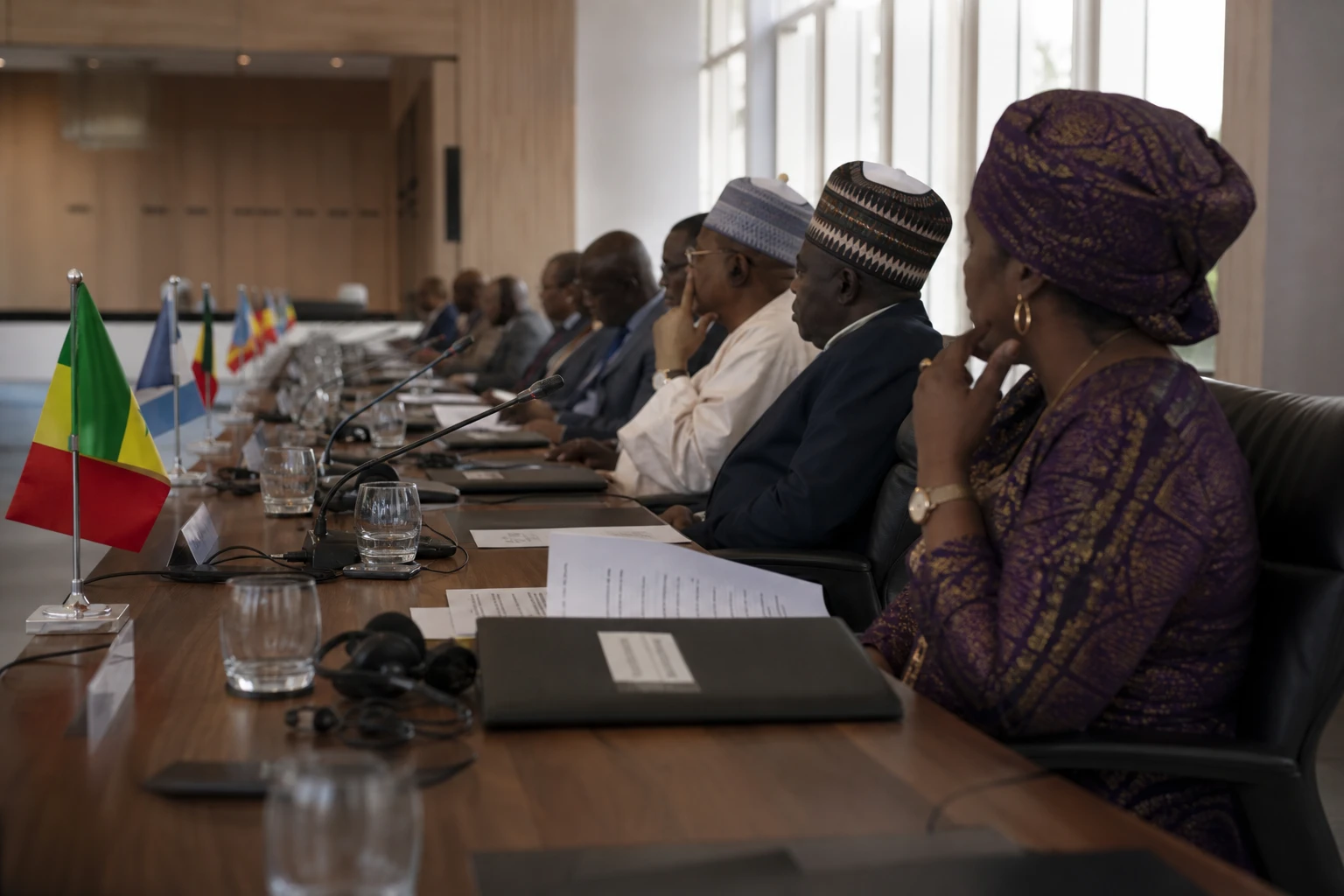
In Dakar, Bassirou Diomaye Faye’s support for Macky Sall now goes beyond the relationship between a sitting president and his predecessor. It touches on Senegalese diplomacy, the country’s political realignment and the place Africa wants to occupy in the next leadership of the United Nations.
A diplomatic choice after a period of distance
Macky Sall led Senegal from 2012 to 2024. Bassirou Diomaye Faye succeeded him after the presidential election of 24 March 2024, which he won in the first round. The change of power had been driven by a promise to break with the previous administration and by a determination to meet strong demands for justice and sovereignty.
In this context, a rapprochement between the two men was far from a foregone conclusion. The new majority has launched an audit of the country’s financial situation and has regularly criticised the former government’s economic decisions. The debate over public debt, state accounts and relations with the International Monetary Fund remains sensitive in Senegal.
Backing Macky Sall does not, therefore, mean setting aside political disagreements. It is primarily a decision by the state. On 20 July 2026, Senegal’s Ministry of African Integration and Foreign Affairs officially announced Dakar’s support for the former president’s candidacy for the post of secretary-general of the United Nations. The role involves leading the UN Secretariat and advancing its diplomatic priorities, without wielding executive power comparable to that of a head of state.
Why is Dakar backing Macky Sall’s candidacy?
The first reason is national. By supporting a former Senegalese president, Bassirou Diomaye Faye is seeking to make Dakar part of an international representation strategy. Senegal has a long diplomatic tradition, notably in peacekeeping operations, mediation and debates on multilateralism.
The second reason is Macky Sall’s profile. A former head of state, former chairperson of the African Union and former chair of the steering committee of the New Partnership for Africa’s Development, he can point to experience in regional and international negotiations. His proposal to the United Nations emphasises reform of multilateralism, the participation of countries in the Global South and stronger cooperation between states.
Dakar’s choice can also be seen as an effort to preserve diplomatic room for manoeuvre. At a time of tensions between West Africa, the Economic Community of West African States — ECOWAS — and the region’s transitional governments, Senegal is seeking to maintain channels of dialogue with several political groupings.
This interpretation is not universally accepted. Some Senegalese observers see it as a pragmatic move. Others question the political cost of backing a former leader who remains contested by part of the public and by figures close to the current government. These criticisms are part of the national debate and, on their own, do not establish President Faye’s personal intentions.
An African candidacy without continental consensus
Macky Sall’s candidacy was formally submitted on 2 March 2026 by Burundi, which was then the African Union’s rotating chair. The selection process is to choose the successor to António Guterres, whose term ends on 31 December 2026.
Senegal’s support is significant, but it is not enough to create a joint African candidacy. In March 2026, a draft decision seeking African Union backing was not adopted. Several member states broke the silence procedure, preventing collective endorsement of the bid.
The lack of consensus reveals the limits of African diplomatic solidarity when an international post becomes a matter of competition between states. It also serves as a reminder that the African Union does not always speak with one voice, even when a candidate comes from the continent.
Macky Sall’s record nevertheless comes with institutional credentials. He led Senegal for 12 years, represented Africa in several international forums and took part in mediation efforts on sensitive issues. By contrast, his opponents point to the political violence in Senegal before the 2024 change of power and call for his record to be examined in full.
A political calculation in Dakar?
The presidential backing also comes as Senegal’s political landscape remains unstable. The partnership between Bassirou Diomaye Faye and Ousmane Sonko brought about the change of power, but differences have emerged over the exercise of power, economic strategy and the role of the party in government.
In this climate, a rapprochement with Macky Sall could have several effects. It could ease tensions between the old and new elites, facilitate some institutional contacts and give President Faye the image of a leader able to rise above electoral clashes. It could also cause dismay among Senegalese who are seeking judicial or political answers over events in the 2021-2024 period.
The impact will vary between groups. Diplomatic and business circles may prioritise stable foreign relations. Citizens’ movements, victims’ families and some young people may instead see the support as a test of consistency with promises of change. In rural areas and the informal economy, the UN candidacy is likely to remain a secondary concern compared with prices, jobs and access to public services.
The next steps will play out in New York, but also in Africa
The UN secretary-general is not chosen by a direct vote of the public. The Security Council recommends a candidate, after which the General Assembly makes the appointment. The Council’s five permanent members — China, the United States, France, the United Kingdom and Russia — have veto power.
Macky Sall will therefore need more than Dakar’s support. He will have to win over African states, other regions of the world and the powers able to block his appointment. Public hearings and debates before member states have already seen candidates face questions about conflicts, Security Council reform, the funding of peacekeeping operations and the UN’s credibility.
For Senegal, the stakes go beyond the individual success of its former president. The question is whether Dakar can defend an independent diplomatic line while remaining attentive to the expectations of West Africa. It will also be important to see whether Senegal’s support is accompanied by a structured regional campaign or remains a bilateral decision between two Senegalese presidents.
Macky Sall’s candidacy thus leaves Bassirou Diomaye Faye facing a delicate task: protecting Senegal’s diplomatic interests without giving the impression of closing too quickly the debates opened by the 2024 change of power. The next step will be less about the declaration of support than about whether a consensus can be built around the bid in Africa.