Algeria
 Egypt
 Libya
 Sudan
 Tunisia
 Benin
 Burkina Faso
 Cabo Verde
 Côte d'Ivoire
 Ghana
 Guinea
 Guinea-Bissau
 Liberia
 Mali
 Mauritania
 Niger
 Nigeria
 Senegal
 Sierra Leone
 The Gambia
 Togo
 Cameroon
 Central African Republic
 Chad
 DR Congo
 Equatorial Guinea
 Gabon
 Republic of the Congo
 São Tomé and Príncipe
 Burundi
 Comoros
 Djibouti
 Eritrea
 Ethiopia
 Kenya
 Madagascar
 Malawi
 Mauritius
 Mozambique
 Rwanda
 Seychelles
 Somalia
 South Sudan
 Tanzania
 Uganda
 Angola
 Botswana
 Eswatini
 Lesotho
 Namibia
 South Africa
 Zambia
 Zimbabwe
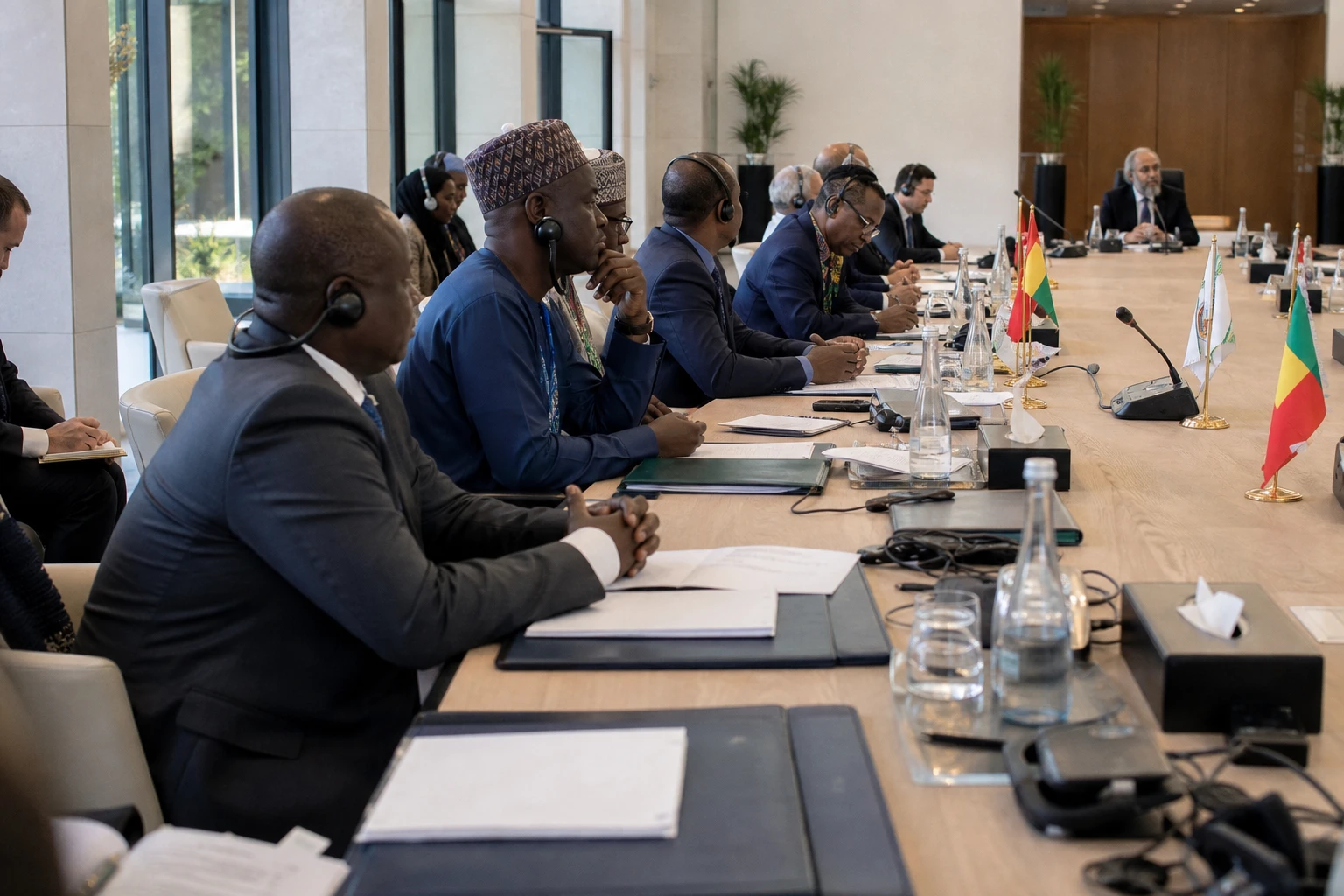
In Rabat and Morocco’s major cities, the 8 September 2021 election brought major political change. The Justice and Development Party (PJD), which had led the government since 2012, suffered a historic setback. The vote was above all a rebuke for a decade in power, rather than a simple switch between political parties.
A national election held amid high expectations
Moroccans voted on 8 September 2021 to renew the House of Representatives, as well as municipal and regional councils. Holding all three elections at once gave the vote particular significance, allowing the balance of power between parties to be measured at both national and local level.
The vote came after a period marked by the health crisis, pressure on employment and rising social expectations. In several regions, voters also assessed the tangible results of public policy: access to services, local development, support for economic activity and the management of cities.
Turnout reached 50.18%, compared with 42.29% in the 2016 parliamentary election. It therefore remained well short of a majority of the entire electorate, but was not the lowest level in 20 years. The increase did not prevent substantial abstention, particularly in urban areas and among groups who feel distant from party politics.
The election also took place under a revised system for calculating seats. The electoral quotient was based on registered voters, rather than only on valid votes cast. The PJD had opposed the change, arguing that it would reduce its chances. However, available analyses stress that the reform alone cannot explain the scale of its defeat.
PJD falls from first place to the margins
The final results put the National Rally of Independents (RNI) in first place, with 102 of the 395 seats. The Authenticity and Modernity Party (PAM) won 87 seats. The Istiqlal Party came third with 81 elected members.
The PJD won just 13 seats, down from 125 in the outgoing House. It therefore lost 112 MPs and finished eighth. Official figures submitted to the House of Representatives confirm this electoral rupture.
The defeat prompted the collective resignation of the party’s general secretariat, led by Saâdeddine El Othmani. It also opened a period of internal soul-searching. The party faced a central question: how could it retain a clear political identity after ten years of managing the constraints of government?
The PJD won the 2011 and 2016 elections in the wake of the regional protests of 2011. Its entry into government marked an important step in the integration of an Islamist party into Morocco’s institutional politics. In 2021, the electoral rebuke exposed the limits of that process.
A protest vote, but not simply a rejection of Islamism
The PJD’s defeat can first be read as a protest vote. After two terms in government, the party could no longer rely on its image as an outsider to power. It had to take responsibility for compromises, unpopular decisions and the results of public policy pursued in coalition.
The decision to normalise relations with Israel also fuelled tensions among its supporters. Party officials had criticised the policy politically while remaining within the framework of decisions taken by the Moroccan state. This situation fed a sense of disconnect between the PJD’s historic rhetoric and its conduct in government.
The rebuke does not, however, mean that voters moved en masse towards an opposing ideological camp. The RNI, which took first place, presents itself as a liberal, centrist party. Its result was built on a strong local organisation, a campaign focused on public policy and the profile of its leader, Aziz Akhannouch.
The election also confirmed the influence of local networks. In small towns and rural areas, candidates with long-established roots retained a significant advantage. In major cities, concerns about the cost of living, employment and public services carried greater weight. The vote therefore did not produce a uniform movement across Morocco.
A new majority centred on the RNI
After coming first, the RNI was tasked with forming a government. Aziz Akhannouch ultimately built a majority with the PAM and Istiqlal. The coalition brought together the three parties that finished at the top of the poll and had a sufficiently broad parliamentary base to govern.
This arrangement reduced the PJD’s institutional role. Above all, it shifted the centre of gravity of Moroccan politics towards a coalition dominated by parties focused on governance. The new government had to respond swiftly to the expectations voiced during the campaign: improving social protection, boosting employment, reducing regional inequalities and supporting the economic recovery.
For the public, the change of government was about more than a new party leading the executive. Its most tangible effects concerned prices, incomes, access to healthcare, schools and career prospects. Urban households and workers in the informal economy awaited different but urgent responses. In rural regions, infrastructure and access to services remained priorities.
A lesson for North African politics
The September 2021 Moroccan election showed that an Islamist party could come to power through the ballot box, govern and then suffer a heavy electoral defeat. This sequence sets Morocco apart from several countries in the region where political transitions have been cut short by institutional or security crises.
It also shows that participation cannot be measured solely by the announced turnout rate. An increase on 2016 does not erase the persistent distance between institutions and some citizens. The credibility of parties will therefore depend on their ability to turn programmes into visible results.
At the level of the African Union and the Maghreb, Morocco was meanwhile continuing to reposition itself economically and diplomatically on the continent. The new majority therefore had to manage domestic issues while advancing this regional role. The challenge was twofold: to preserve institutional stability and meet the social expectations behind the protest vote against the PJD.
The result of 8 September 2021 thus did more than change the make-up of parliament. It marked the end of a political cycle that had begun ten years earlier and placed the new majority under pressure to deliver. The next stage would depend on the government’s ability to turn its electoral advantage into tangible improvements in daily life.