Algeria
 Egypt
 Libya
 Morocco
 Sudan
 Benin
 Burkina Faso
 Cabo Verde
 Côte d'Ivoire
 Ghana
 Guinea
 Guinea-Bissau
 Liberia
 Mali
 Mauritania
 Niger
 Nigeria
 Senegal
 Sierra Leone
 The Gambia
 Togo
 Cameroon
 Central African Republic
 Chad
 DR Congo
 Equatorial Guinea
 Gabon
 Republic of the Congo
 São Tomé and Príncipe
 Burundi
 Comoros
 Djibouti
 Eritrea
 Ethiopia
 Kenya
 Madagascar
 Malawi
 Mauritius
 Mozambique
 Rwanda
 Seychelles
 Somalia
 South Sudan
 Tanzania
 Uganda
 Angola
 Botswana
 Eswatini
 Lesotho
 Namibia
 South Africa
 Zambia
 Zimbabwe
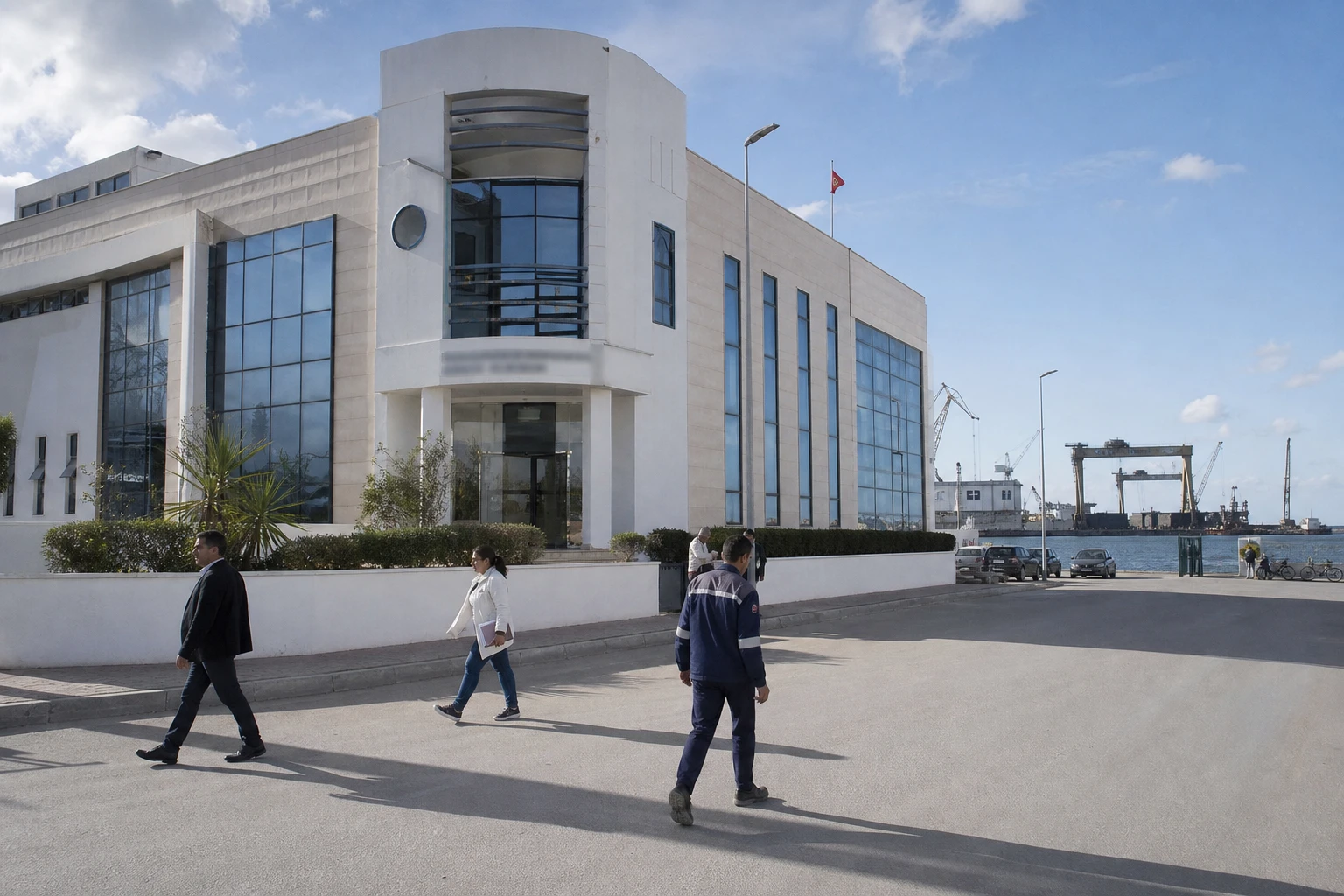
In Bizerte, Sfax and Zarzis, workshops serving the maritime sector are no longer making only fishing boats. Tunisia now wants to turn its naval expertise into a fully fledged industrial sector capable of building, repairing and exporting leisure boats, service vessels and yachts.
An established sector moves up a gear
Tunisia’s shipbuilding industry draws on a range of trades, from ship repair and hull construction to composite equipment, interior fittings and port maintenance.
The country has shipyards in Bizerte, Menzel Bourguiba, Sfax and Zarzis. The African Shipbuilding Company describes itself as specialising in the construction, refurbishment and repair of vessels. Other companies work on fishing boats, service vessels and components for foreign markets.
The sector is therefore not limited to high-end yachts. It also includes less visible but essential work: engine maintenance, the manufacture of technical parts, metalworking, composite-material treatment and the refurbishment of commercial vessels.
The Tunisian Export Promotion Centre lists companies supplying structural elements, hatches, consoles and fittings for the boating sector. Some work exclusively for export and apply quality standards designed for European markets.
Leisure boating becomes an industrial market
Leisure boating offers Tunisia a more diverse market. Recreational boats require expertise in design, electronics, composite materials and finishing. They also bring in subcontractors specialising in joinery, textiles, electrical work and mechanics.
A study published by the Agency for the Promotion of Industry and Innovation in April 2025 considered a project to build leisure boats between five and 20 metres long. The scenario envisaged production of 30 units in 2025, rising to 60 a year from 2028. The study also estimated that 70% of turnover could come from exports.
These figures are project projections, not an official account of national production. They nevertheless show the potential identified by Tunisian institutions: a specialised activity capable of creating skilled jobs while remaining connected to the needs of Mediterranean markets.
The Beneteau Group’s industrial presence in Tunisia illustrates the country’s integration into international value chains. The group says it operates 15 production sites in several countries and employs more than 6,200 people. Tunisia is among its industrial locations, alongside France, Italy, Portugal and Poland.
This arrangement brings orders and transfers of expertise. It also raises a strategic question: how much of the value added stays in Tunisia when models, brands and some components are designed abroad?
The push to move upmarket
To address this question, Tunis wants to strengthen local skills. The aim is to move from subcontracting towards a more integrated offering, with the capacity to design, produce and provide after-sales service.
In December 2025, a cabinet meeting on maritime industries announced several priorities. The Tunisian government cited port modernisation, the expansion of shipyard facilities, a review of the regulatory framework and the development of maritime training.
The same meeting proposed a comprehensive national strategy for the maritime sector. It is to cover shipbuilding, repair, port logistics and leisure boats. A partnership with vocational training institutes, universities and research centres was also announced for the ship and leisure-boat sector.
This approach matters in an industry that relies heavily on technicians. A shipyard may have a competitive workforce but still lose contracts if it lacks sufficient expertise in certification, naval architecture or maritime safety.
Port modernisation is another challenge. Bizerte already has a long track record in ship repair. The Menzel Bourguiba shipyard, described as one of the largest on the southern shore of the Mediterranean, can carry out technical work on large vessels. Competitiveness, however, also depends on the speed of procedures, the quality of land links and the availability of equipment.
Benefits beyond the coast
Naval development could initially benefit coastal regions. Bizerte, Sfax and Zarzis account for some of the port and industrial activity. But the benefits could extend inland through subcontractors and training centres.
The impact will not be the same for every player. Large companies have more direct access to foreign markets. Smaller businesses, meanwhile, must bear the costs of certification, raw materials and transport. Their ability to secure financing will determine their place in the new sector.
Environmental concerns add to these pressures. Shipyards must manage resins, paints, used oils and waste from repair work. Growth in the sector therefore cannot rely on volume alone. It will have to incorporate safety, materials traceability and a reduced environmental footprint.
A Mediterranean and African opportunity
Tunisia is strategically positioned between Europe, the Maghreb and sub-Saharan Africa. Its proximity could make it easier to export boats, parts and services to Algeria, Libya, Malta, Italy and other Mediterranean markets.
The country could also meet the needs of fishing fleets, shipping companies and African port operators. In this area, repair and maintenance are often a more accessible market than building large vessels.
The next stage will therefore be decisive. The maritime strategy announced by Tunis will need to set out funding, the sites concerned, applicable standards and employment targets. Above all, it will show whether Tunisia wants to remain a competitive link in the industrial chain or build a genuine national shipbuilding offering.