Egypt
 Libya
 Morocco
 Sudan
 Tunisia
 Benin
 Burkina Faso
 Cabo Verde
 Côte d'Ivoire
 Ghana
 Guinea
 Guinea-Bissau
 Liberia
 Mali
 Mauritania
 Niger
 Nigeria
 Senegal
 Sierra Leone
 The Gambia
 Togo
 Cameroon
 Central African Republic
 Chad
 DR Congo
 Equatorial Guinea
 Gabon
 Republic of the Congo
 São Tomé and Príncipe
 Burundi
 Comoros
 Djibouti
 Eritrea
 Ethiopia
 Kenya
 Madagascar
 Malawi
 Mauritius
 Mozambique
 Rwanda
 Seychelles
 Somalia
 South Sudan
 Tanzania
 Uganda
 Angola
 Botswana
 Eswatini
 Lesotho
 Namibia
 South Africa
 Zambia
 Zimbabwe
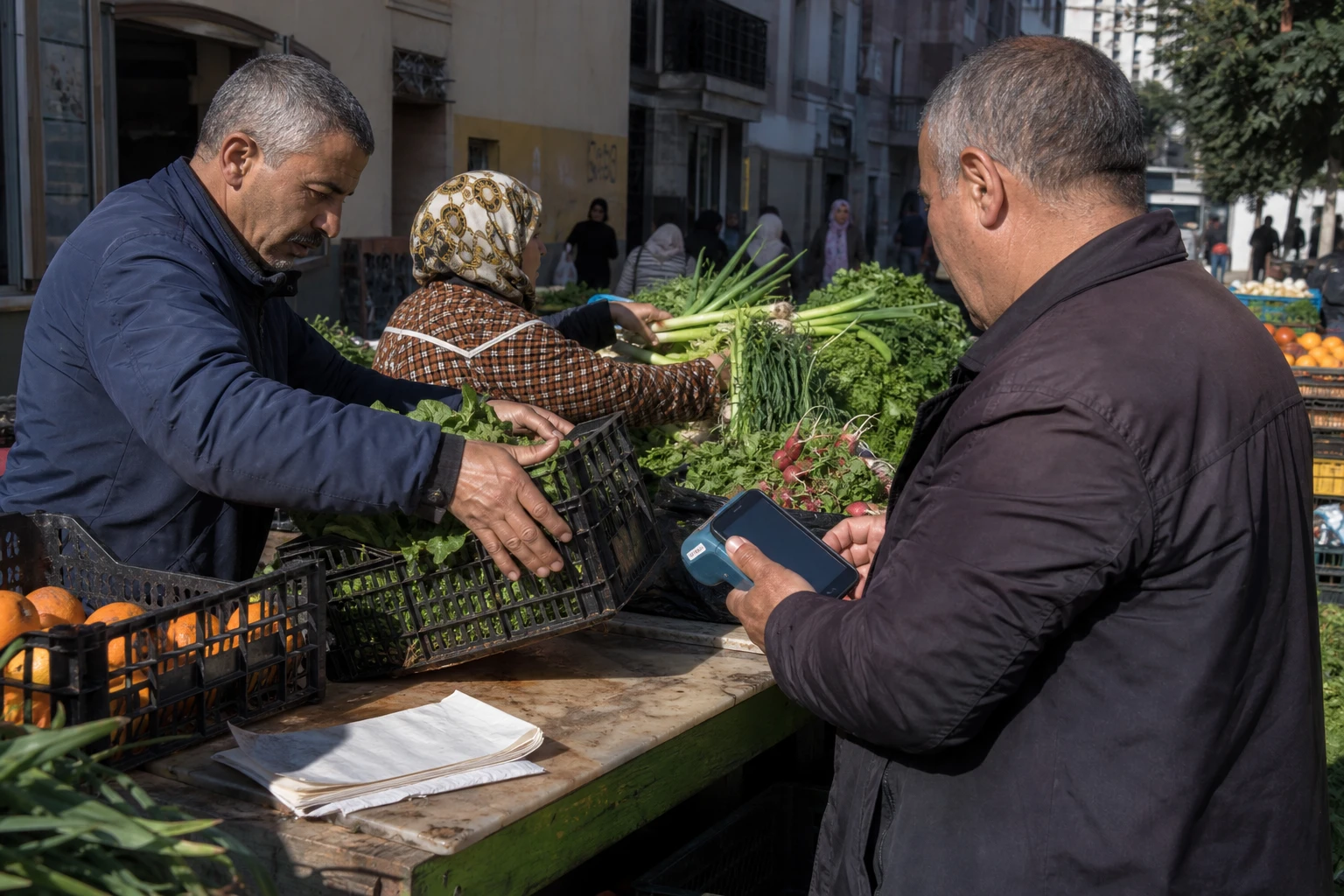
In Algiers, the organic sector is entering a phase in which commercial promise will have to rest on clear rules, credible checks and products that are clearly identified. For Algerian producers, the challenge is not simply to grow crops without synthetic inputs. They must also be able to prove compliance, from the field to the market.
A partnership focused on rules and certification
Algeria and the European Union launched an institutional twinning project on Wednesday 23 September 2026, focused on organic farming and the labelling of agricultural products. Funded with €1 million by the European Union, the programme is set to run for two years.
The initiative brings together Algeria’s Ministry of Agriculture, Rural Development and Fisheries, Italy’s Ministry of Agriculture, Food Sovereignty and Forestry, and France’s Ministry of Agriculture. Italy is leading the project, with France acting as a technical partner.
Institutional twinning is a form of cooperation between public administrations. It enables methods to be transferred, officials to be trained and procedures to be adapted. In Algeria’s case, the programme is primarily intended to bring the national framework closer to European requirements for organic products and quality labels.
The first strand concerns organic farming. It is intended to help clarify the responsibilities of public administrations, strengthen inspections and establish certification procedures. It also provides for building the capacity of organisations responsible for monitoring farms and products.
The second strand focuses on the Agricultural Quality Label, or LAQ. The tool is intended to better recognise a product’s characteristics and its link to a particular region or production method. Five pilot sectors will receive support. In each, stakeholders will have to define quality criteria and draw up specifications for submission to the National Labelling Committee.
The project will not automatically create preferential access to the European market. Its first aim is to build the administrative and technical framework needed to make Algerian products easier for buyers, authorities and consumers to verify.
A small sector already looking to exports
Available international data show how far there is to go. According to 2024 statistics published by the Research Institute of Organic Agriculture, Algeria had 4 103 hectares of organic agricultural land. The figure was 3 738 hectares in 2023.
That increase remains limited on a continental scale. Africa had more than 2.8 million hectares of organic agricultural land in 2024, leaving Algeria with only a very small share. These figures should, however, be treated with caution. They measure areas recorded in statistical databases and do not capture all farming practices involving low levels of inputs.
The same source estimates that Algeria exported 3 701 tonnes of organic products to the European Union and the United States in 2024. Around 84 % of this volume went to the European market. An export outlet therefore already exists, although volumes remain modest.
Across Africa, organic exports to the European Union and the United States reached 687 395 tonnes in 2024. The European Union absorbed 428 845 tonnes, or nearly two-thirds of the total. The European market thus remains strategically important for African sectors able to offer certified products on a regular basis.
The trade environment is, however, becoming more demanding. The European regulation on organic production, which has applied since 1 January 2022, tightened inspection and certification requirements for products imported from non-EU countries. Some approvals granted under the previous regime benefit from transition periods, some of which expire on 31 December 2026.
For Algerian operators, certification is therefore becoming a commercial tool as well as a means of demonstrating compliance. Without robust traceability, a product may be difficult to sell as organic, even if the practices used on the farm largely meet the criteria.
The challenge of national ownership
European funding brings expertise and resources. On its own, it will not be enough to create a competitive sector. Success will depend on the initiative being taken up by Algerian administrations, farmers, processors, laboratories and inspection bodies.
The cost of certification will be a sensitive issue. For a small farm, inspection, testing, compliance and renewal fees can weigh heavily on margins. If the system is designed mainly for large exporting businesses, it risks excluding family farms and small cooperatives.
Marketing will be just as important. A label does not automatically create a market. Producers will need collection networks, packaging capacity and suitable logistics. In areas far from major centres, particularly rural and Saharan regions, transport and the aggregation of volumes may pose a more immediate obstacle than certification itself.
The domestic market will also need to be taken into account. A strategy focused solely on exports would expose the sector to fluctuations in European demand and importers’ requirements. National recognition of organic and quality products could instead support local consumption, food processing and the added value of products linked to particular regions.
The initiative forms part of Algeria’s broader ambition to diversify its exports beyond hydrocarbons. Organic farming will not, by itself, change the structure of foreign trade. It can, however, help create more value around certain agricultural products, especially when quality, origin and local expertise are brought together.
Implications beyond Algiers and Brussels
The project is taking place in a North African region where agricultural trade with Europe plays a central role. Algeria is a member of the Arab Maghreb Union, a regional organisation established to promote cooperation between Maghreb countries, although its institutional activity remains limited. In this context, aligning inspection methods could eventually also help neighbouring countries share experience.
Regional comparisons will be instructive. Morocco, Tunisia and Egypt also have agricultural sectors geared towards foreign markets, with varying levels of certification, processing and professional organisation. Algeria’s challenge will be to build a model suited to its own regions rather than mechanically replicating standards designed elsewhere.
The next indicator to watch will be the programme’s implementation over 24 months. This will mean tracking the rules adopted, the bodies authorised, the training delivered and the sectors selected for the five pilot schemes. Above all, success will be measured by Algerian producers’ ability to obtain certification that is accessible, recognised and economically worthwhile.
The launch of the twinning project thus provides a framework for an ambition that is still taking shape. Algiers must now turn scattered agricultural potential into a structured sector able to meet international requirements without losing its national roots.