
 Algeria
 Egypt
 Libya
 Morocco
 Sudan
 Tunisia
 Benin
 Burkina Faso
 Cabo Verde
 Côte d'Ivoire
 Ghana
 Guinea
 Guinea-Bissau
 Liberia
 Mali
 Mauritania
 Niger
 Nigeria
 Senegal
 Sierra Leone
 The Gambia
 Togo
 Cameroon
 Central African Republic
 Chad
 Equatorial Guinea
 Gabon
 Republic of the Congo
 São Tomé and Príncipe
 Burundi
 Comoros
 Djibouti
 Eritrea
 Ethiopia
 Kenya
 Madagascar
 Malawi
 Mauritius
 Mozambique
 Rwanda
 Seychelles
 Somalia
 South Sudan
 Tanzania
 Uganda
 Angola
 Botswana
 Eswatini
 Lesotho
 Namibia
 South Africa
 Zambia
 Zimbabwe
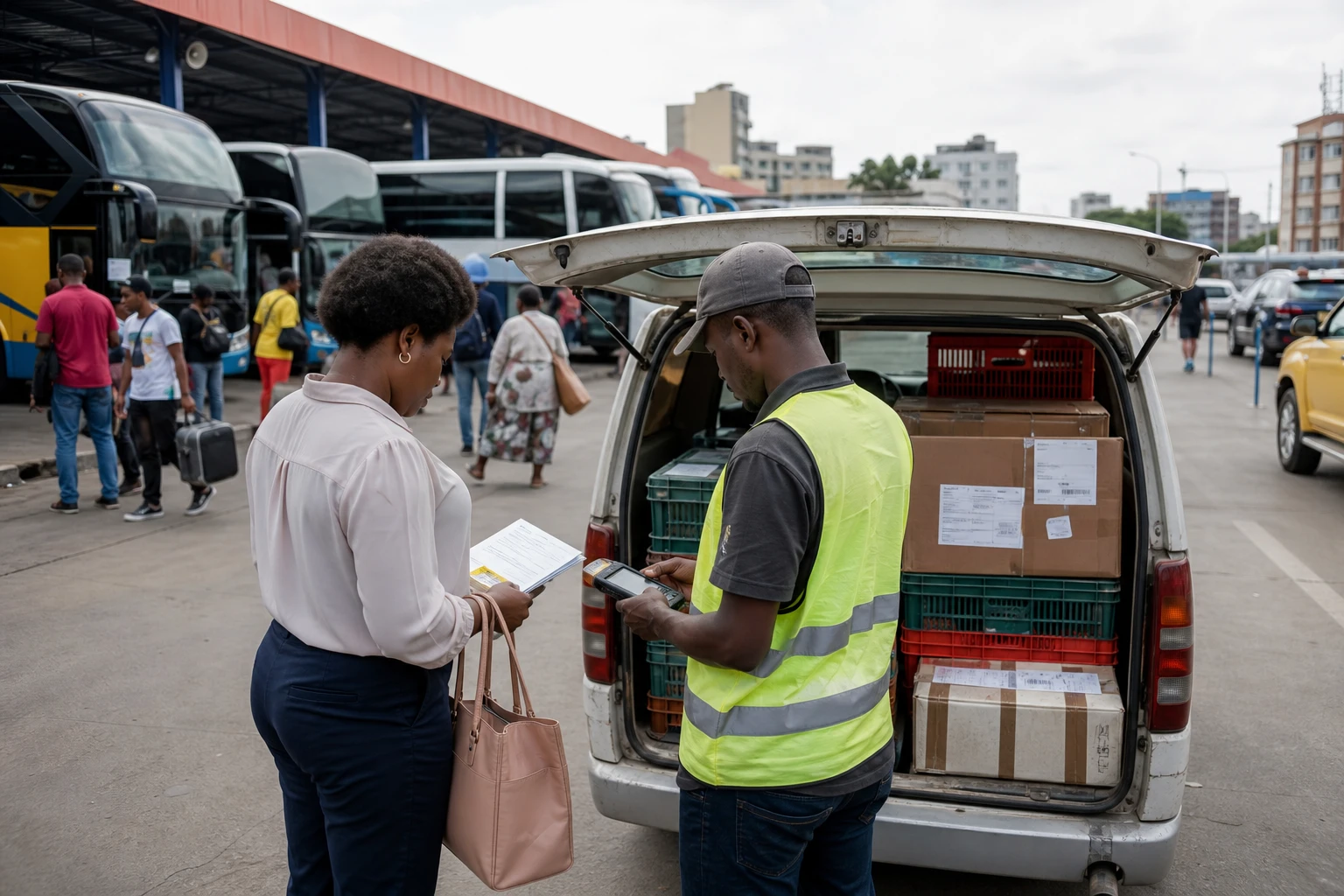
In Kinshasa, the challenge is no longer simply to secure tariff preferences. It is now to enable Congolese businesses to make practical use of them, despite sanitary requirements, logistics costs and delays at borders. It is in this context that the Democratic Republic of the Congo is preparing two new instruments with the UK and Ukraine.
Two negotiations to widen DR Congo’s markets
On 22 September 2026, the Ministry of Foreign Trade announced preparations for a memorandum of understanding with the UK. On the same day, Kinshasa said a bilateral trade agreement with Ukraine was expected to be concluded soon. The announcements followed meetings in the Congolese capital between Trade Minister Julien Paluku Kahongya, diplomatic representatives and experts from both countries.
The forthcoming memorandum is intended to set out how the trade partnership launched in November 2025 between DR Congo and the UK will be implemented. According to the Congolese Ministry of Foreign Trade, a joint team has one week to finalise the document.
With London, the text is expected to address several obstacles holding back Congolese exports. It notably provides for training producers and exporters in sanitary and phytosanitary standards. These rules govern food safety, animal health and plant protection.
The British Standards Institution, the UK’s standards body, could contribute to this support. The scheme is also to include assistance for local producers and the digitalisation of one-stop border posts. These posts bring together checks by several agencies at a single site to reduce crossing times.
British economic diplomacy has also confirmed its involvement in the DR Congo-UK Economic Forum. The event is scheduled to take place in London from 2 to 4 November 2026. It is expected to bring together businesses and representatives from both countries.
Preferential access remains underused
DR Congo already enjoys largely preferential access to the UK market. According to the Congolese authorities, 99.8 % of products made in DR Congo are exempt from UK customs duties under the partnership launched in November 2025.
That opening, however, is not enough to generate significant trade flows. The latest available UK data show that trade in goods and services between the two countries reached £145 million in the four quarters ending in March 2026. That figure is equivalent to about $192.8 million.
Bilateral trade fell by 21.2 % year on year. UK exports to DR Congo decreased by 6.3 % to £105 million. UK imports from DR Congo fell by 44.4 % to £40 million, according to the trade factsheet published by the UK government.
These figures show the gap between having a legal right of access to a market and being able to sell there in practice. A Congolese business may benefit from a customs exemption while still struggling to certify its goods, ensure traceability, finance transport or cross the border quickly.
The problem particularly affects small and medium-sized enterprises. They rarely have a department specialising in import standards. They also bear certification, packaging and international logistics costs more heavily.
Ukraine as a new agricultural and trade partner
The second initiative is aimed at Ukraine. Kinshasa and Kyiv are preparing a bilateral trade agreement. Reciprocal trade missions are to be organised ahead of the economic forum planned for London.
This relationship is less developed than the one with the UK. It is, however, building on agricultural co-operation already under way. On 16 January 2026, the Congolese and Ukrainian ministries responsible for agriculture signed a protocol on agriculture, food and nutrition, according to the Congolese Ministry of Agriculture and Food Security.
The protocol provides for an exchange of expertise and stronger productive capacity. For DR Congo, the focus is less on importing finished products than on improving agricultural production, processing and storage.
Kyiv, for its part, is seeking to strengthen its economic ties with several African countries. In November 2025, the “Food from Ukraine” programme broadened the former approach of humanitarian grain deliveries. It now combines food aid, economic co-operation and the transfer of agricultural technologies, according to the Ukrainian Ministry of Foreign Affairs.
For Kinshasa, closer ties could create opportunities in seeds, irrigation, mechanisation, storage and processing. They do not, however, guarantee results. Infrastructure, access to finance and the security of trade corridors will remain decisive.
Implementation will be the real test
Congo’s strategy is based on diversifying its partners. It seeks to reduce dependence on a handful of markets and better connect local producers to international value chains. This approach also aligns with the ambitions of the African Continental Free Trade Area, which aims to increase trade between African countries.
DR Congo must, however, ensure that the new agreements do not remain confined to diplomatic ceremonies. Their effectiveness will depend on customs authorities, testing laboratories, banks, transport operators and business associations.
The effects will vary by region. Businesses in Kinshasa and major urban centres have better access to information and financial services. Producers in the provinces will have to contend with the distance to markets, road conditions and the cost of transporting goods to export points.
The same challenge applies to informal-sector operators. They account for a significant share of commercial activity but often remain outside certification procedures and support schemes. Without a suitable framework, trade preferences will mainly benefit businesses that are already formalised.
A signal watched across the region
Kinshasa’s initiative goes beyond the bilateral relationship. DR Congo belongs to the East African Community and the Southern African Development Community. It therefore needs to align its external agreements with its regional commitments, particularly on standards, transport corridors and the movement of goods.
The schedule offers an initial concrete milestone: finalising the memorandum with London, followed by the DR Congo-UK Economic Forum from 2 to 4 November 2026. The trade missions with Ukraine will provide another indicator. They will show whether the announced agreement leads to identifiable projects.
For Congolese producers, the question is straightforward: will the new openings generate orders, investment and jobs beyond Kinshasa? The answer will depend less on the number of agreements signed than on whether they translate into activity on farms, in processing workshops and in exporting businesses.



