Algeria
 Egypt
 Libya
 Morocco
 Sudan
 Tunisia
 Benin
 Burkina Faso
 Cabo Verde
 Côte d'Ivoire
 Ghana
 Guinea
 Guinea-Bissau
 Liberia
 Mali
 Mauritania
 Niger
 Nigeria
 Sierra Leone
 The Gambia
 Togo
 Cameroon
 Central African Republic
 Chad
 DR Congo
 Equatorial Guinea
 Gabon
 Republic of the Congo
 São Tomé and Príncipe
 Burundi
 Comoros
 Djibouti
 Eritrea
 Ethiopia
 Kenya
 Madagascar
 Malawi
 Mauritius
 Mozambique
 Rwanda
 Seychelles
 Somalia
 South Sudan
 Tanzania
 Uganda
 Angola
 Botswana
 Eswatini
 Lesotho
 Namibia
 South Africa
 Zambia
 Zimbabwe
In Dakar and several other parts of Senegal, power cuts are a reminder of a simple reality: rising demand can quickly absorb the grid’s reserves when several pieces of equipment are unavailable at the same time. For several days, Senelec has been trying to balance record consumption with temporarily reduced generating capacity.
Peak consumption exceeds forecasts
Senelec director-general Papa Toby Gaye said on Monday 21 September 2026, during an appearance on RTS, that demand had reached about 1,400 megawatts in August. The state-owned company had expected a peak of close to 1,300 MW in October.
This increase confirms a trend already evident in national data. Senelec’s 2024 annual report records a peak of 1,159 MW on 13 August 2024. Demand has therefore quickly approached new levels, particularly during periods of intense heat.
Rising consumption affects households, businesses and productive activities. As temperatures rise, the use of air conditioners, fans and refrigeration equipment increases. This pressure is concentrated especially during peak hours, when the grid must supply large amounts of electricity over a short period.
In this context, the loss of a few hundred megawatts can be enough to put the entire system under strain. Load shedding then becomes a way to protect the grid. It involves temporarily cutting power to certain lines to prevent a wider outage that would be more difficult to restore.
Two major pieces of equipment reduce available supply
Senelec attributes the current disruptions to a combination of technical, logistical, financial and climate-related factors. The first incident concerns the Karpowership, a floating power plant that generates electricity using liquefied natural gas.
A booster pump on the FSRU — the floating unit that stores and regasifies LNG — broke down. According to explanations given by Papa Toby Gaye and reported by several Senegalese and African media outlets, the failure removed nearly 200 MW of capacity from the grid.
The second problem affects a gas turbine at the West African Energy power plant, located at Cap des Biches in the Dakar region. One of its two turbines is undergoing maintenance. The work has been complicated by the unavailability or damage of the equipment used to carry out a technical assessment of the machine.
Neither incident would have the same effect on its own. Their coincidence, however, reduces the safety margin just as demand reaches its highest level. Senelec must then call on all the units still available to avoid a more serious imbalance between production and consumption.
“All the units we have available today are being used to meet peak demand,” the Senelec director-general said. He also cited supply, cash-flow and logistical constraints that complicate the rapid return to service of some generating assets.
Improvement announced, but vulnerability persists
Senelec’s management has announced a gradual improvement from Thursday 24 September 2026, subject to the successful completion of repair work. Parts for the Karpowership system are said to have arrived in Dakar. Technical teams must now carry out the necessary work before the lost capacity can be fully restored.
This prospect could ease pressure on the grid in the short term. It does not, however, resolve the underlying problem. An electricity system becomes vulnerable when its installed capacity does not match the capacity actually available. A power plant may be counted as part of the national fleet while remaining out of service because of maintenance, a breakdown or difficulties securing fuel.
Events in June and early September had already exposed this vulnerability. Maintenance on the Karpowership, followed by a technical constraint at Cap des Biches, reduced available supply while consumption remained high.
The impact on households is not uniform. In Dakar, power cuts disrupt businesses, services, telecommunications and activities that rely on refrigeration. In rural areas, an interruption can affect small businesses, workshops, health services and water supply systems. Users with generators have a backup option, unlike most households and small businesses.
Informal-sector businesses are also exposed. A tailor, welder, restaurant owner or seller of chilled goods cannot always absorb the cost of fuel needed to generate their own power. Larger organisations are better able to spread or offset the risk, although they too suffer losses from unplanned stoppages.
The regional challenge of energy security
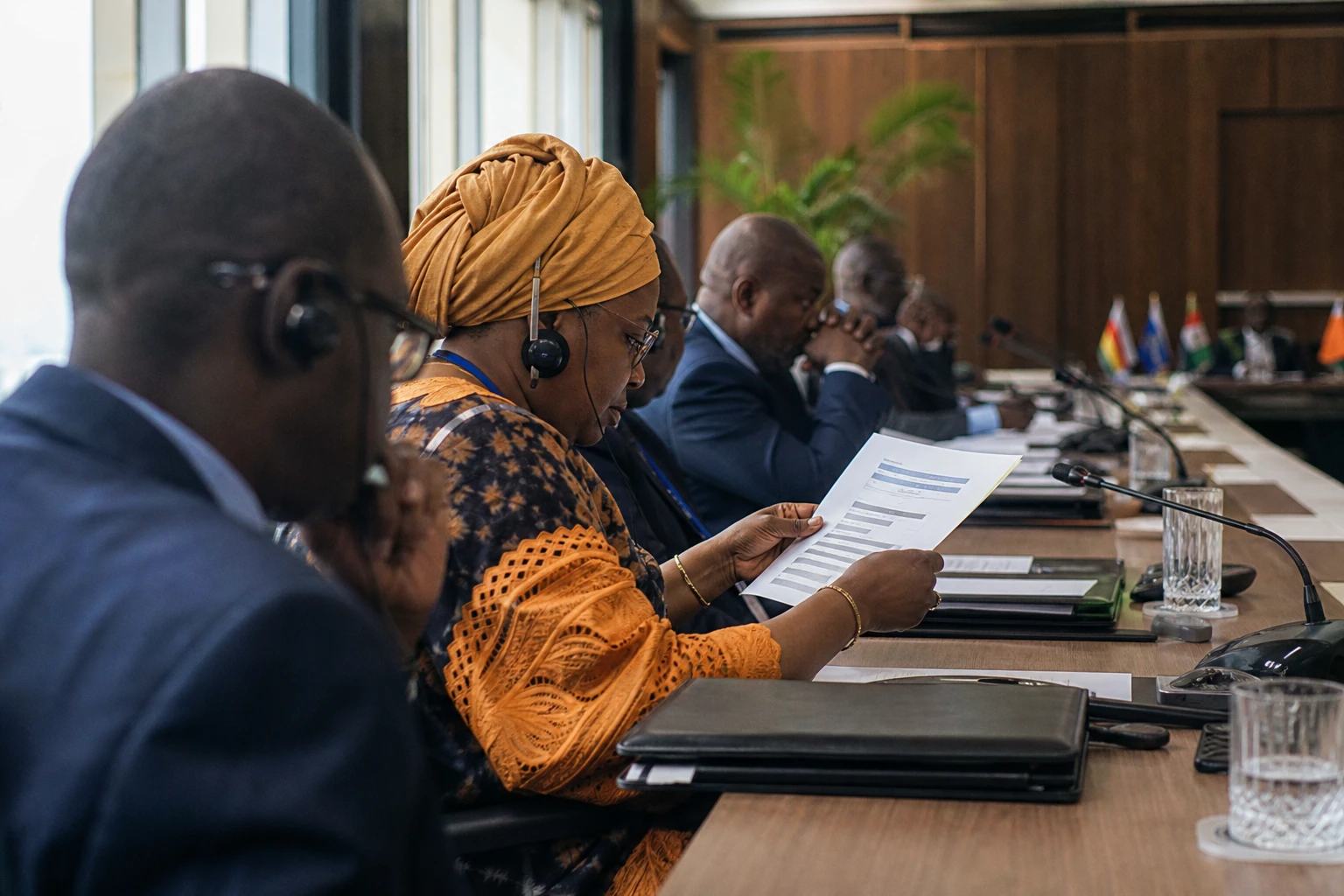
Senegal’s situation is part of a wider challenge in West Africa. Senegal is a member of the West African Power Pool, known as WAPP, a specialised ECOWAS institution tasked with integrating national grids and facilitating regional electricity exchanges.
This co-operation can strengthen the resilience of member countries when interconnectors, contracts and transmission capacity function properly. It does not, however, remove the need for countries to have well-maintained equipment and sufficient reserves to absorb peaks in consumption.
Senegal is also seeking to diversify its energy mix and increase the use of gas in electricity generation. This shift could reduce dependence on certain liquid fuels. It also brings new requirements: the availability of regasification infrastructure, reliable turbines, access to spare parts and secure payments to operators.
The next test will be whether the grid can regain a sufficient margin after repairs to the Karpowership and the return to service of the turbine in question. Over the longer term, the challenge will be to match demand growth with investment in maintenance, storage, transmission networks and renewable sources.
The current crisis is therefore not just the result of a one-off breakdown. It exposes the cost of a system that is growing rapidly but has narrow margins when heat, demand and several technical failures coincide.