Algeria
 Egypt
 Libya
 Morocco
 Sudan
 Tunisia
 Benin
 Burkina Faso
 Cabo Verde
 Côte d'Ivoire
 Ghana
 Guinea
 Guinea-Bissau
 Liberia
 Mali
 Mauritania
 Niger
 Nigeria
 Sierra Leone
 The Gambia
 Togo
 Cameroon
 Central African Republic
 Chad
 DR Congo
 Equatorial Guinea
 Gabon
 Republic of the Congo
 São Tomé and Príncipe
 Burundi
 Comoros
 Djibouti
 Eritrea
 Ethiopia
 Kenya
 Madagascar
 Malawi
 Mauritius
 Mozambique
 Rwanda
 Seychelles
 Somalia
 South Sudan
 Tanzania
 Uganda
 Angola
 Botswana
 Eswatini
 Lesotho
 Namibia
 South Africa
 Zambia
 Zimbabwe
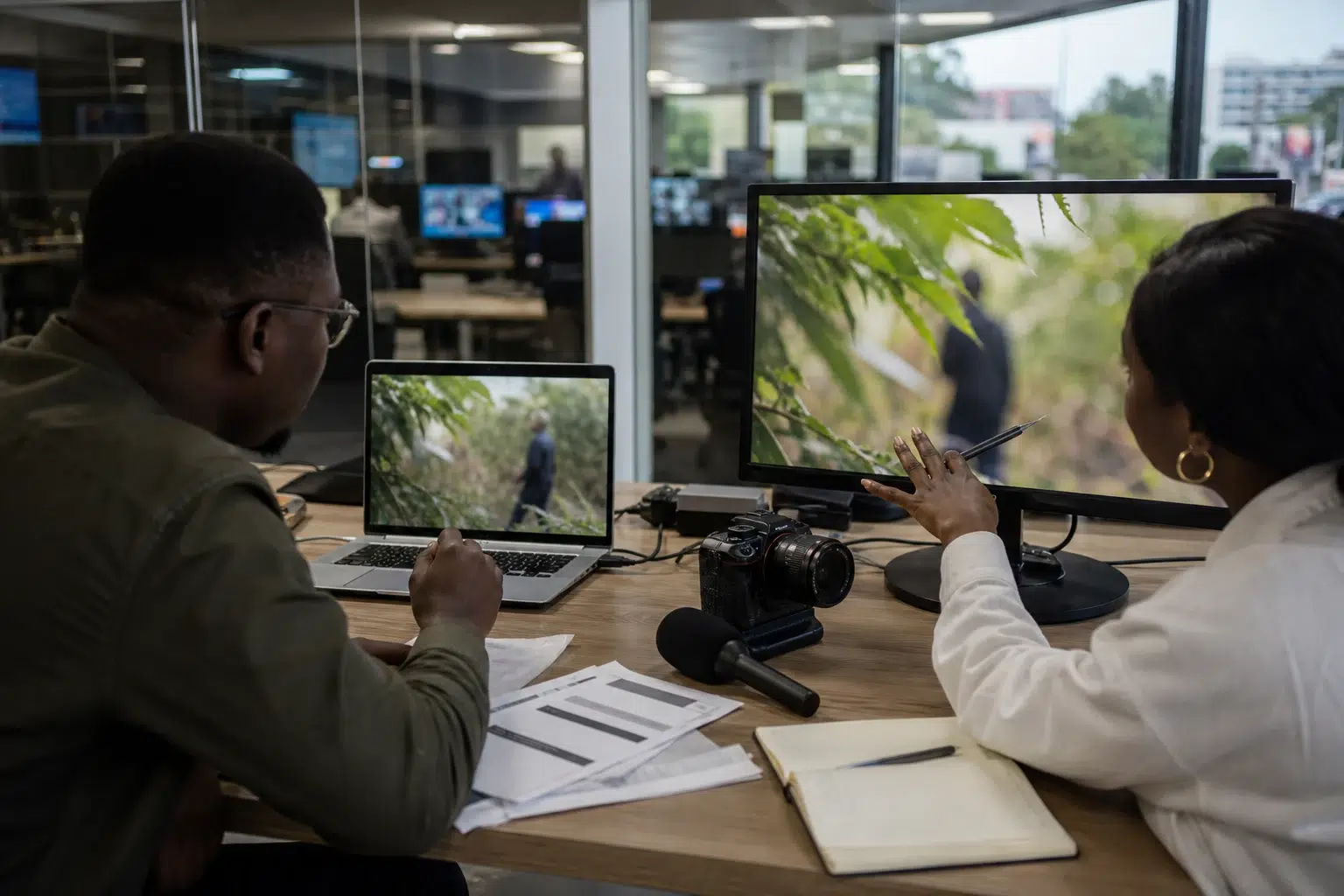
A tree, harvests and a whole rural balance
In Senegal’s groundnut basin, losing a tree means more than losing shade. It can also weaken soils and harvests, and disrupt the very organisation of fields. In Diohine, in the Fatick region, Faidherbia albida — known as kad in Wolof — remains one of the species most valued by farmers, precisely because it nourishes the soil as much as it shapes the landscape. Its distinctive role has been well documented in agricultural and agroforestry research carried out in Senegal over several decades.
The issue goes beyond botany. In Senegal, agroforestry parklands in the centre-west have long offered a compromise between food crops, livestock and soil protection. In these systems, trees outside forests are not decorative: they are productive. Research institutions such as the IRD and Cirad, along with Senegalese field teams, have shown that Faidherbia albida improves the immediate growing environment for crops, particularly in the country’s semi-arid central regions.
In Diohine, the decline of kad is worrying farmers
In Diohine, farmers are seeing Faidherbia albida gradually become scarcer in their fields. This local observation is part of a wider trend: agroforestry parklands in the groundnut basin have deteriorated under the combined effects of past droughts, pressure on land, more intensive cultivation and a decline in tree cover. Recent scientific studies note that the regeneration of these trees has declined since the major Sahelian droughts.
The value of Faidherbia albida is well established. Research in central Senegal shows that its presence can limit water stress in millet and improve growing conditions around the trunk. Other studies point to beneficial effects on yields and the availability of nutrients in the soil. The tree also has a useful characteristic for farmers: it sheds its leaves during the rainy season, reducing competition with crops for light when they need it most.
The field report also highlights a sensitive issue: the management of trees on farmland. In rural Senegal, forestry rules have long created tensions between species protection and producers’ room for manoeuvre. The current legal framework continues to regulate the felling and pruning of trees, as well as the transport of certain forest products, which can complicate traditional practices for maintaining trees in fields. For families whose livelihoods depend on fragile farmland, this is no abstract issue: it affects the day-to-day management of ageing trees, the security of harvests and the passing on of farming knowledge.
Agroecology, land and climate adaptation
The debate over Faidherbia albida points to a broader challenge: how to farm land at risk of exhaustion without abandoning the practices that have kept it alive? In Senegal, the answer increasingly lies in agroecology, agroforestry and soil restoration. The IRD describes Faidherbia as a major resource tree in Sudano-Sahelian agroforestry, valued for its wood, shade and fodder. Cirad, for its part, notes that in central Senegal these Faidherbia parklands constitute a fully fledged farming system that is still sustained by farmers.
The national context reinforces this view. Senegal has made food sovereignty, rural resilience and the sustainable management of resources part of its recent development plans. In this approach, the tree is no mere embellishment. It becomes a tool for production, adaptation and income stability, especially in areas where access to manure, water and agricultural inputs remains limited. This is precisely what research teams studying Faidherbia’s ecological flows at the Sob research station, near Niakhar, in the heart of the groundnut basin, are highlighting.
This reality affects different groups in different ways. For farming households, a tree can make the difference between an exhausted field and one that remains productive. For women organised in local groups, it is also a heritage to protect, though sometimes under management rules they consider too rigid. For the forestry administration, the challenge is to reconcile conservation, sustainable use and control of felling. In practice, the tension is less about the principle of protection than about how to apply it without undermining the farming practices that sustain tree cover.
What its disappearance signals for Senegal and the region
The growing scarcity of kad is not confined to Diohine. It matters across the Sahel. Faidherbia albida has become a defining species in West Africa’s agroforestry systems, particularly where drought, the expansion of cultivated areas and declining soil fertility are driving producers to seek local solutions. That is also why the African Union includes it in nature-based approaches and the restoration of degraded land through the Great Green Wall.
In other words, if Faidherbia is declining in the groundnut basin, a part of the rural adaptation strategy is weakening. Senegal remains a leading player in this field. Its agroforestry parklands, farmers’ knowledge and research stations provide a practical foundation for agriculture that seeks to produce without further exhausting the soil. The issue, then, is not simply saving an emblematic tree. It is preserving a farming model in which fertility is built with nature, not against it.