Algeria
 Egypt
 Libya
 Morocco
 Sudan
 Tunisia
 Benin
 Burkina Faso
 Cabo Verde
 Côte d'Ivoire
 Ghana
 Guinea
 Guinea-Bissau
 Liberia
 Mali
 Mauritania
 Niger
 Nigeria
 Senegal
 Sierra Leone
 The Gambia
 Togo
 Cameroon
 Chad
 DR Congo
 Equatorial Guinea
 Gabon
 Republic of the Congo
 São Tomé and Príncipe
 Burundi
 Comoros
 Djibouti
 Eritrea
 Ethiopia
 Kenya
 Madagascar
 Malawi
 Mauritius
 Mozambique
 Rwanda
 Seychelles
 Somalia
 South Sudan
 Tanzania
 Uganda
 Angola
 Botswana
 Eswatini
 Lesotho
 Namibia
 South Africa
 Zambia
 Zimbabwe
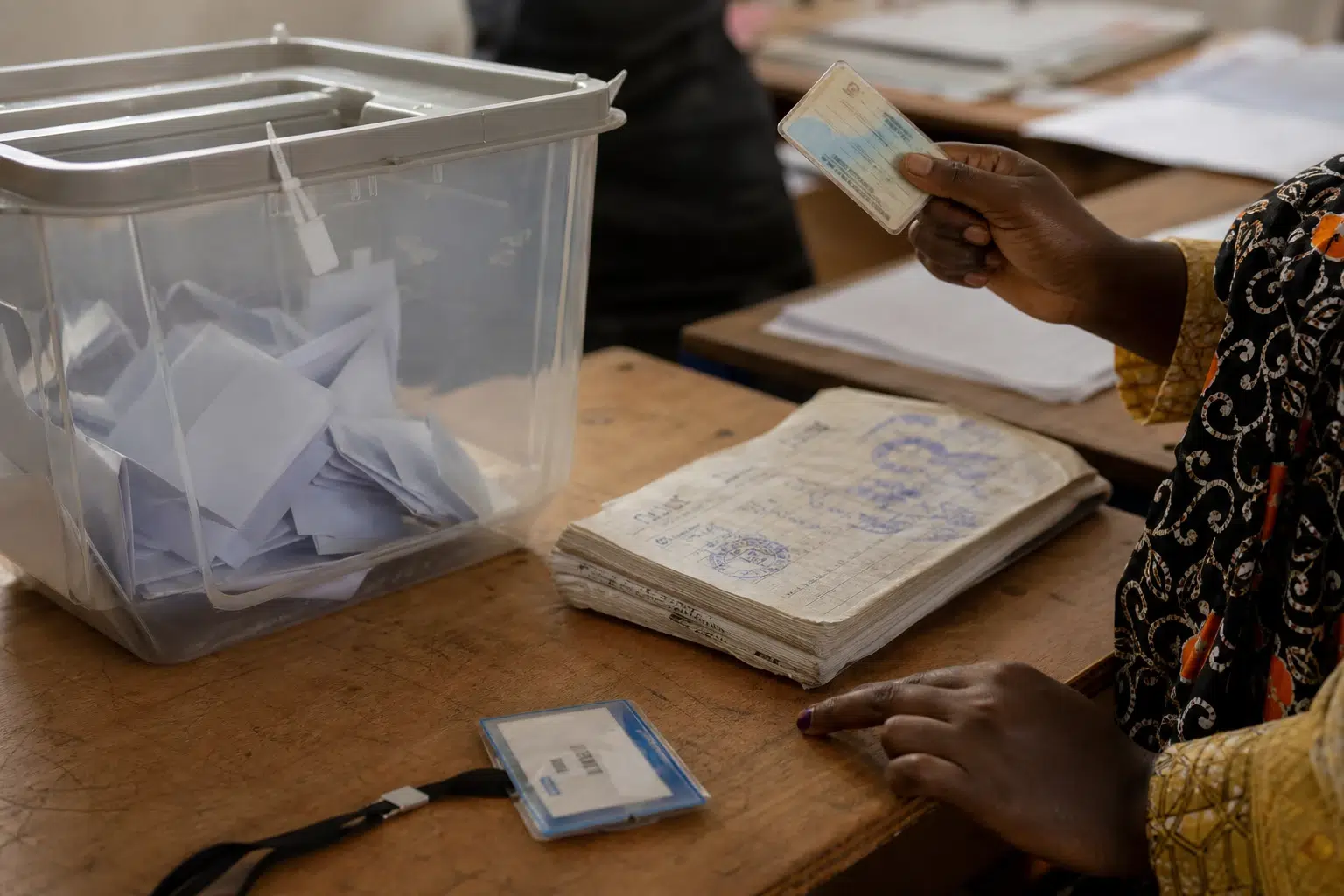
An election also depends on a cable, a server and a building
In Bangui, a fire does more than destroy walls. It can also slow down an electoral register, delay the printing of voter lists or complicate the logistics of an already tense vote. In the Central African Republic, the incident at the National Elections Authority’s data processing centre on the night of 18 to 19 September is a reminder of this very concrete reality: behind an electoral calendar lie fragile infrastructure, teams, archives and machines.
The shock comes at a sensitive moment. The residual elections—that is, polls held to fill seats or constituencies that have remained vacant—were rescheduled for 25 October after a postponement announced on 15 September. They cover legislative, regional and municipal elections. The National Elections Authority had already temporarily suspended some campaign activities a few days earlier, citing operational, financial and logistical constraints.
The technical heart of the electoral process hit again
According to reports in the Central African press and initial information relayed by the National Elections Authority, the fire broke out in the main building of the data processing centre. Staff had already left the premises when it started. Private fire crews, supported by MINUSCA and Civil Protection, brought the blaze under control around midnight.
The material damage is extensive. The roof was largely destroyed. Walls were cracked by the heat. Several rooms, offices, archives, printers, scanners and computers were affected. The president of the NEA, Mathias Barthélemy Morouba, said the institution’s archives had burned, along with the voter-list printing room and around 70 new computers. He said, however, that the server containing the electoral register had been saved.
The cause of the fire had not been established when the first reports were published. Witnesses cited an electrical short circuit, a theory repeated in initial local news reports. Others in civil society raised the possibility of arson. This remains an unconfirmed supposition at this stage. An investigation has been opened to determine the exact circumstances of the fire.
Beyond the fire, a question of public trust
The most important issue in this case is not just the amount of equipment lost. It is administrative continuity. The data processing centre plays a central role in consolidating, managing and processing electoral information. When this chain is weakened, the entire voting process must be revalidated and documented, and sometimes reorganised.
In the Central African Republic, this kind of incident cannot be viewed in isolation. The country is emerging from a dense electoral cycle, with combined elections held in 2025 followed by run-offs and partial elections in 2026. MINUSCA has said it continues to provide multifaceted support to the electoral process, even after the closure of its electoral assistance division, in order to support the residual elections scheduled for this year. In other words, the Central African state is gradually taking the lead, but technical and logistical support remains crucial.
For voters, the issue is straightforward: will the lists, official records and equipment be ready in time? For candidates, it is about preserving clear rules and a credible timetable. For the electoral administration, the priority is to show that the data integrity chain has not been broken. In a capital such as Bangui, where access to public services is closely scrutinised, every incident of this kind fuels suspicion if information takes too long to be confirmed.
The NEA says the 25 October vote can go ahead because the data were backed up. This assurance will need to be confirmed through technical checks and by demonstrating that everything destroyed in the fire can be replaced within the time available. The question, therefore, is not just whether the ballot boxes will be brought out. It is also necessary to verify that preparatory operations can continue without interruption.
What this incident says about the Central African Republic and the region
In Central Africa, elections are not decided only at polling stations. They also depend on warehouses, data centres, transport networks and security systems. In the Central African Republic, this fire is a reminder that an election is a full institutional undertaking, dependent on security, technical resilience and trust between the administration and political actors.
The fact that the data processing centre was hit by another fire six months earlier adds to the gravity of the case. It raises a broader question: how can electoral equipment be modernised sustainably in an environment where breakdowns, electrical hazards and political tensions can all disrupt the same timetable? The institution’s call to rehabilitate and modernise its premises therefore goes beyond this fire. It concerns the credibility of the state and the continuity of the democratic cycle.
The implications extend beyond Bangui. Across the sub-region, electoral bodies are watching how the Central African Republic secures its elections and protects its data. As MINUSCA winds down one of its main electoral support structures and the Central African authorities are expected to demonstrate their autonomy, the fire at the data processing centre has become a test of resilience. 25 October will show whether the country has merely lost equipment or has, despite everything, strengthened its institutional capacity.