Algeria
 Egypt
 Libya
 Morocco
 Sudan
 Tunisia
 Benin
 Burkina Faso
 Cabo Verde
 Ghana
 Guinea
 Guinea-Bissau
 Liberia
 Mali
 Mauritania
 Niger
 Nigeria
 Senegal
 Sierra Leone
 The Gambia
 Togo
 Cameroon
 Central African Republic
 Chad
 DR Congo
 Equatorial Guinea
 Gabon
 Republic of the Congo
 São Tomé and Príncipe
 Burundi
 Comoros
 Djibouti
 Eritrea
 Ethiopia
 Kenya
 Madagascar
 Malawi
 Mauritius
 Mozambique
 Rwanda
 Seychelles
 Somalia
 South Sudan
 Tanzania
 Uganda
 Angola
 Botswana
 Eswatini
 Lesotho
 Namibia
 South Africa
 Zambia
 Zimbabwe
Quiet cooperation with political weight
In Abidjan, defence is not just a matter of uniforms and equipment. It also reflects how a state prepares, benchmarks itself and chooses its partners in an increasingly demanding regional environment. For Côte d’Ivoire, the issue is not to theorise about the threat, but to strengthen practical capabilities at a time when security in the country’s north remains linked to developments across the Sahel.
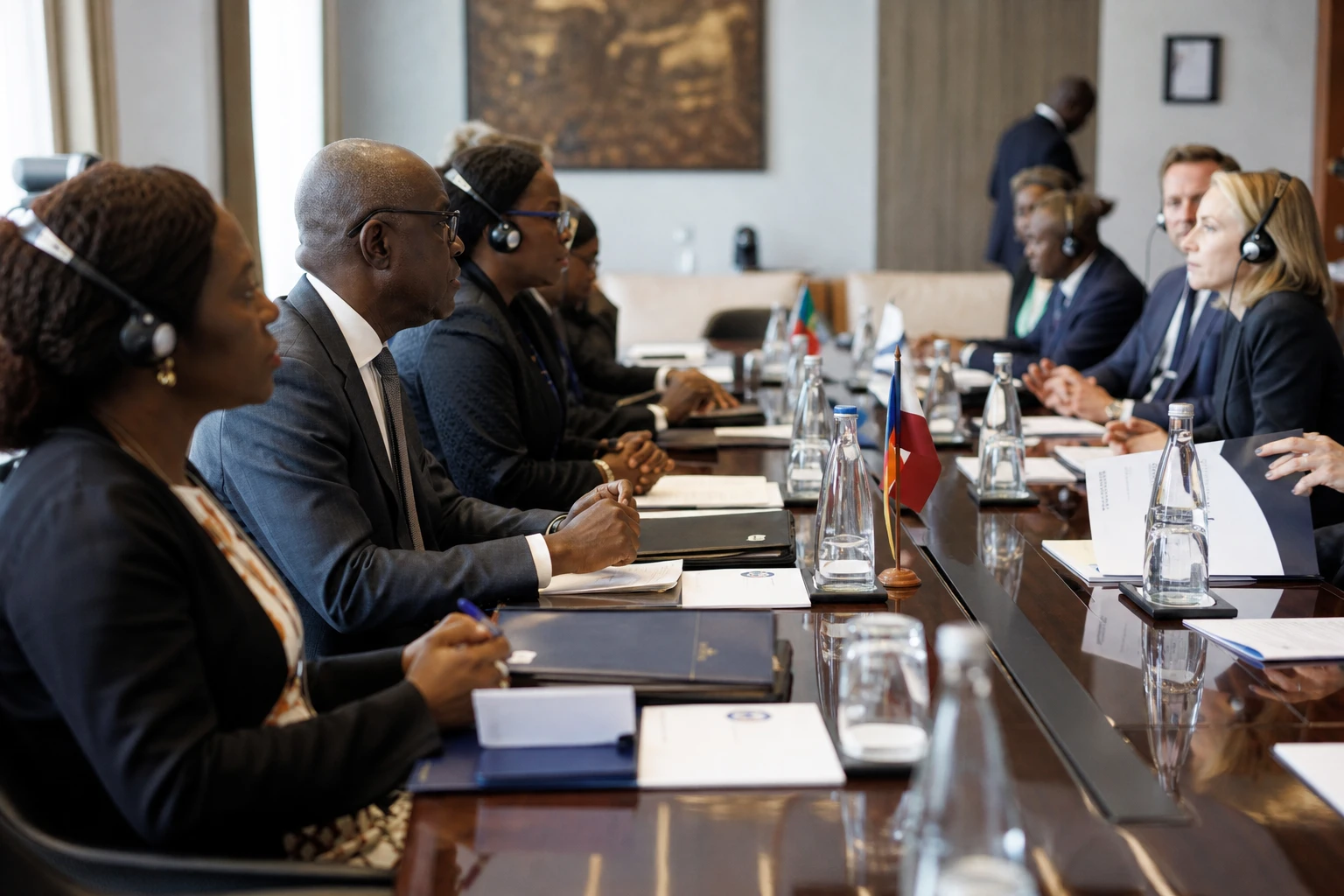
It was in this context that the first meeting of the Ivorian-Moroccan joint commission opened in Abidjan on 16 and 17 September 2026, according to local media and reports carried that same day. The meeting stems from the military cooperation agreement signed on 9 May 2025 in Rabat, which provides for an annual meeting alternating between the two countries. This is no mere formality: it turns a political agreement into a monitoring mechanism, with priorities, reviews and deadlines.
A framework for follow-up, not just a protocol
According to information published around the meeting, discussions covered training, logistics, intelligence and preparations for an operational roadmap for 2027. Côte d’Ivoire’s Ministry of Defence also said that a set of minutes would conclude the proceedings. This approach matters as much as the substance. It shows that the two capitals want to move beyond one-off announcements towards regular follow-up, with a clearer framework for both military staffs.
Morocco is not coming to this issue empty-handed. For several years, the kingdom has built a reputation as a structured security partner, able to underpin military cooperation with training, the prevention of radicalisation and highly active defence diplomacy in Africa. US State Department documents on terrorism note that the country continues to face sporadic threats from cells or lone actors, often linked to Islamic State, despite a counter-terrorism strategy that Washington considers comprehensive.
On the Ivorian side, the approach is complementary. In 2025, the National Security Council said the average annual security index had fallen from 3.6 in 2012 to 1.53 in 2025, an improvement of 77.5%. But this statistical progress does not erase the vulnerability of the northern front, or the pressure of trafficking, cross-border crime and illegal gold mining. In Côte d’Ivoire, security remains a long-term effort, carried out in border regions and among the populations who live there.
What the commission changes in practice
The joint commission first makes it possible to prioritise needs. Training is useful if it addresses specific gaps: the supervision of non-commissioned officers, intelligence, technical support, maintenance, maritime cooperation or border surveillance. Logistics matter as much as grand speeches, because an army’s ability to deploy also depends on transport, supply and interoperability. In this kind of partnership, an agreement’s real value is measured by how its resources are used, not by the number of signatures.
For the Ivorian state, the challenge is twofold. In the short term, it is about supporting the defence apparatus amid regional uncertainty. In the medium term, it must consolidate a diversified approach to cooperation without relying on a single partner. Abidjan already works with several countries and actors on security, training and counter-terrorism. The agreement with Rabat adds another element to this strategy, as part of an explicit effort to diversify.
For people in northern Côte d’Ivoire, the implications are simpler: more coordination means, in theory, better anticipation of threats moving between Mali, Burkina Faso, Côte d’Ivoire and other coastal countries. The states of the Gulf of Guinea have understood that they are not immune to spillovers from the Sahel. Armed groups, traffickers and smuggling networks exploit porous borders. This is where bilateral cooperation takes on very practical significance.
A West African perspective, not just a bilateral one
The issue goes beyond the relationship between Abidjan and Rabat. In West Africa, ECOWAS is still seeking to hold together states with differing security trajectories, as the Sahel undergoes profound change. In this landscape, coastal states such as Côte d’Ivoire, Benin and Togo have an interest in strengthening their prevention, intelligence and training systems. Structured South-South military partnerships can help avoid dependence on a single partner and build responses better suited to African realities.
That is where the continental significance lies. Morocco is establishing itself as a platform for African cooperation in the north of the continent, while Côte d’Ivoire is consolidating its role as a pillar of stability in West Africa. Between the two, the joint commission becomes a tool for extending their reach: it links training, border security and military diplomacy. This is not a spectacular alliance. It is more useful than that: a mechanism for follow-up, capable of establishing working habits between institutions that, across Africa, are often worth more than a communiqué.
The next development to watch is the implementation of the 2027 roadmap and the holding of the annual meetings set out in the agreement. That is when it will become clear whether the partnership remains symbolic or delivers measurable results, particularly in training, technical coordination and adapting to the risks facing West African coastal states.