Algeria
 Egypt
 Morocco
 Sudan
 Tunisia
 Benin
 Burkina Faso
 Cabo Verde
 Côte d'Ivoire
 Ghana
 Guinea
 Guinea-Bissau
 Liberia
 Mali
 Mauritania
 Niger
 Nigeria
 Senegal
 Sierra Leone
 The Gambia
 Togo
 Cameroon
 Central African Republic
 Chad
 DR Congo
 Equatorial Guinea
 Gabon
 Republic of the Congo
 São Tomé and Príncipe
 Burundi
 Comoros
 Djibouti
 Eritrea
 Ethiopia
 Kenya
 Madagascar
 Malawi
 Mauritius
 Mozambique
 Rwanda
 Seychelles
 Somalia
 South Sudan
 Tanzania
 Uganda
 Angola
 Botswana
 Eswatini
 Lesotho
 Namibia
 South Africa
 Zambia
 Zimbabwe
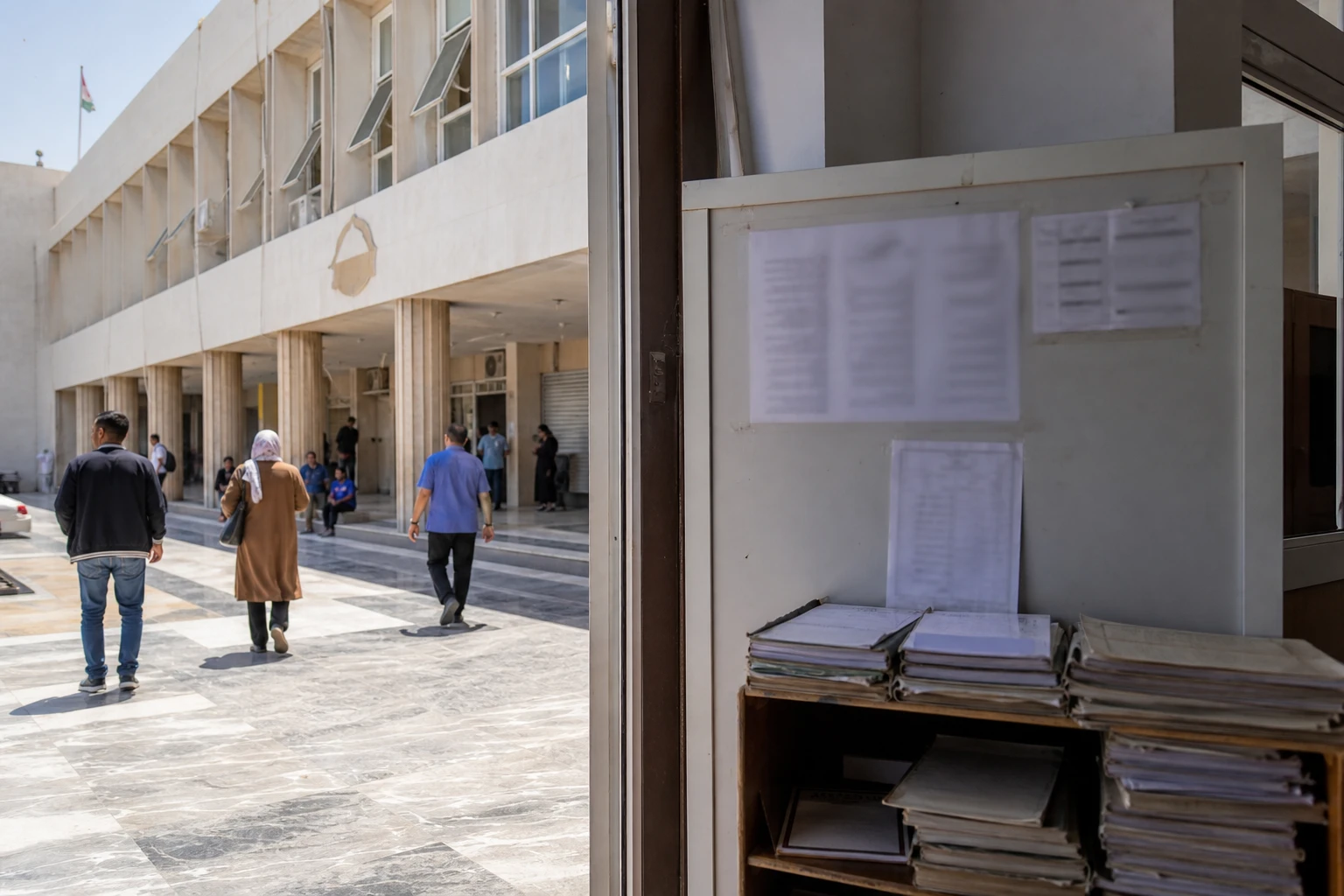
Executions reopen a political wound
In Libya, the resumption of executions in the east of the country speaks not only to the harshness of the judicial system. It also shows how a divided state can quietly leave lives suspended between two systems of power. Since late August, warnings have mounted over death-row inmates held in an area controlled by the Libyan Arab Armed Forces, also known by the acronym LAAF, the camp of Marshal Khalifa Haftar.
The country remains divided between Tripoli, seat of the UN-recognised Government of National Unity, and the east, where Haftar’s military authority has become entrenched over many years. This fragmentation affects justice, security and prison management. It also explains why fundamental rights are not advancing at the same pace from one region to another.
What the established facts show
The United Nations Support Mission in Libya, UNSMIL, called on 16 September 2026 for an immediate halt to executions and a credible review of the cases. It says it has held repeated discussions with eastern authorities to secure this pause, reminding them of Libya’s obligations on human rights and fair trials. The UN Human Rights Office had already reported that these executions ended a de facto moratorium observed for about 15 years.
Amnesty International says that, since 23 August 2026, at least 30 people have been executed in eastern Libya and at least 50 other men sentenced to death face an imminent risk. The NGO describes secret trials before military courts, with allegations of torture and confessions obtained under duress. These accounts broadly echo the UN warning, although full names, the exact dates of each execution and all the court rulings have not been made public.
Several African media outlets also reported on 25 August the execution of ten prisoners at Garnada military prison, near Shahat, highlighting the opacity of the case and the absence of full texts of the judgments. This point matters: the first wave of executions was not an isolated incident, but the start of a series.
Military justice under intense pressure
The core problem is not only the death penalty. It is the way it is applied. Human rights organisations describe civilians being sentenced by military courts in closed proceedings, amid allegations of torture and ill-treatment. In such circumstances, capital punishment ceases to be a mere penal instrument. It becomes a marker of institutional domination.
For families, the anguish continues beyond the verdict. Amnesty says some relatives learn of an execution only afterwards, when a phone call asks them to go to a hospital in Benghazi to identify the body. If confirmed case by case, this practice reveals an administration of punishment that leaves little room for transparency or judicial oversight.
The Government of National Unity based in Tripoli has also called for executions to stop and for the cases of those sentenced to be reviewed. This does not resolve the underlying sovereignty conflict, but it shows that a red line still exists, at least in official statements: the idea that justice cannot be replaced by an opaque execution.
What this means for Libya, from Tripoli to Benghazi
The case first affects people detained in the east, but its impact quickly spreads across the country. In a fragmented Libya, control of prisons, courts and security services becomes a tool of power. It is used to consolidate local alliances, intimidate perceived opponents and project an ability to maintain order where national unity remains incomplete.
It also weighs on the credibility of institutions. Libya’s transition remains on hold, pending electoral reforms, the reconstitution of the High National Elections Commission and a still-fragile political agreement facilitated by the UN in late August 2026. But an electoral roadmap loses force if justice operates according to parallel systems in different regions.
For ordinary Libyans, the stakes are concrete. In both the west and the east, people already live with the effects of a fragmented system: unequal services, competing institutions, uneven security and an economy dependent on oil. The executions therefore revive a question broader than the penal debate alone: who controls the state, exactly, and on what guarantees?
A regional impact extending beyond Libya
The Libyan case also matters across North Africa and the continent. Libya is a major transit point on the central Mediterranean route, an area where security, migration and armed rivalries intersect. When the rule of law weakens in the east, the effects are felt far beyond Benghazi or Shahat: they affect detention networks, migration flows and the stability of Saharan borders.
Diplomatically, the UN is maintaining pressure. The Security Council has recently welcomed progress on a Libyan agreement on the next steps towards elections, while UNSMIL’s mandate runs until 31 October 2026. In short, a political window remains open, but it is narrow. If executions continue, they risk further hardening relations between Libya’s centres of power and complicating any future compromise.
The case is also a reminder of an essential point for North Africa and the African Union: an electoral timetable is not enough to stabilise a country if the justice system, prisons and armed forces remain fragmented. In Libya, then, the battle is being fought as much in the elections to come as in the way the state treats its prisoners today.