
 Algeria
 Egypt
 Libya
 Morocco
 Sudan
 Tunisia
 Benin
 Burkina Faso
 Cabo Verde
 Côte d'Ivoire
 Ghana
 Guinea
 Guinea-Bissau
 Liberia
 Mali
 Mauritania
 Niger
 Nigeria
 Senegal
 Sierra Leone
 The Gambia
 Togo
 Cameroon
 Central African Republic
 Chad
 Equatorial Guinea
 Gabon
 Republic of the Congo
 São Tomé and Príncipe
 Burundi
 Comoros
 Djibouti
 Eritrea
 Ethiopia
 Kenya
 Madagascar
 Malawi
 Mauritius
 Mozambique
 Rwanda
 Seychelles
 Somalia
 South Sudan
 Tanzania
 Uganda
 Angola
 Botswana
 Eswatini
 Lesotho
 Namibia
 South Africa
 Zambia
 Zimbabwe
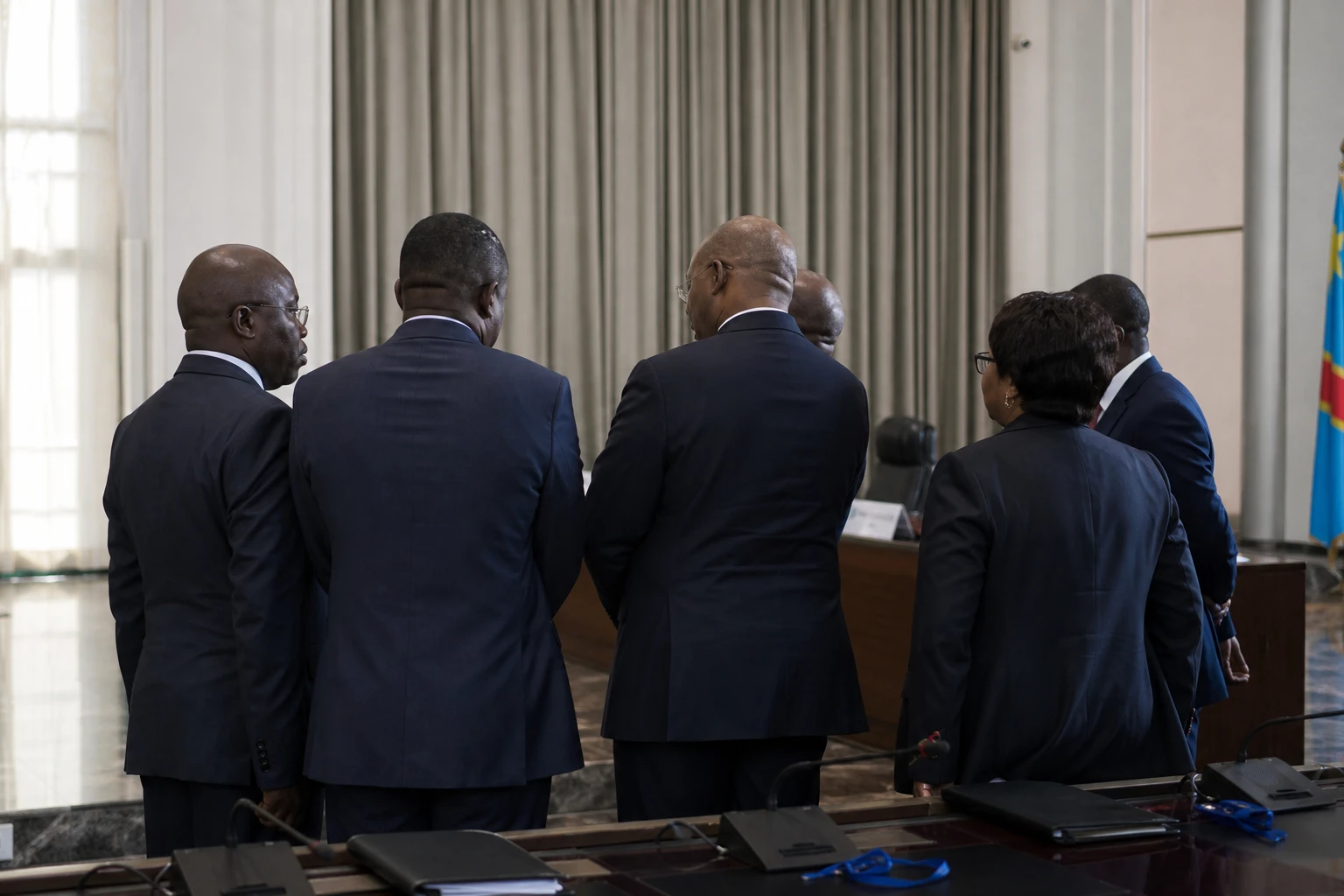
In Kinshasa, the streets remain a political test
In Kinshasa, protest is no longer confined to speeches. It is also measured by a camp’s ability to occupy public space, hold a march and make its case. On Tuesday 15 September 2026, the opposition coalition C64 sought to turn this show of strength into a political signal against any constitutional reform project presented as a risk of a third term for Félix Tshisekedi. The march did take place in some areas, but it was also held back, dispersed or prevented, depending on the city and the route.
In the Congolese capital, the issue goes beyond the schedule of a single rally. It touches on the freedom to demonstrate, the interpretation of the Constitution and the balance between the majority, the opposition and the security forces. The Democratic Republic of the Congo, a Central African country governed from Kinshasa, is also facing a new Ebola outbreak, which has prompted health authorities to reiterate measures to monitor and limit large gatherings. This gave 15 September an added dimension: political, health-related and security-related all at once.
A longstanding standoff over the Constitution
The heart of the disagreement is well known. The 2006 Congolese Constitution, revised in 2011, explicitly protects the number and duration of presidential terms in Article 220. It also sets out rules for constitutional amendments and recognises, in Article 26, the freedom to demonstrate peacefully, subject to prior notification of the authorities. The opposition has built its campaign on this legal ground for several months.
C64, a coalition formed around several leading figures in the Congolese opposition, launched its mobilisation drive in spring 2026. Its members include Martin Fayulu, Jean-Marc Kabund, Moïse Katumbi, Augustin Matata Ponyo and Delly Sesanga. Since May, it has repeatedly said it opposes both revision and amendment of the Basic Law, and that a debate on a referendum would pave the way for the dismantling of institutional safeguards. This interpretation has been echoed by several Congolese media outlets and in accounts from institutional and political actors.
The government, for its part, has urged the opposition to follow the process and engage in dialogue. The day after the 15 September march, government spokesman Patrick Muyaya rejected accusations of manipulation and called on political actors to join the dialogue process announced by the president. He also denounced the circulation of fake statements attributed to the opposition, which were accused of sowing confusion over children’s schooling.
What happened on 15 September
In Kinshasa, the march began amid tension. Hundreds of people gathered along roads in the capital, where a large police deployment was in place. Clashes broke out when demonstrators encountered roadblocks set up by pro-government activists in the Limete commune, before police used tear gas. The protest did not take the form of a controlled, linear procession; it instead resembled a march that was blocked and then broken up.
The opposition says the dispersal was not solely a matter of policing. It also accuses groups close to the government of trying to provoke or block the mobilisation. The executive disputes this account, saying it is defending public order. In other cities, the situation was even harsher. In Matadi, in Kongo Central, police stopped the march at its starting point. In Kananga, the demonstration was dispersed with tear gas, with several arrests reported. In Lubumbashi, the mobilisation could not proceed as planned.
The overall picture, then, is of a day of real political pressure, but one that unfolded differently from city to city. It confirms that C64 remains an opposition platform capable of bringing together disparate forces, without guaranteeing a uniform mobilisation across the country. Congolese sources had already described, in recent weeks, preparations, postponements and tensions surrounding other planned street demonstrations.
What this episode means for Congolese people
For the leaders, the stakes are institutional. The government wants to retain the initiative on constitutional reform while avoiding the appearance of forcing it through. The opposition, for its part, seeks to make the Constitution an unassailable political safeguard. The Basic Law gives it a strong argument: Article 220 places the number and duration of presidential terms beyond the reach of ordinary revision. The battle is therefore less technical than it might seem. It is about the legitimacy of competing interpretations, and the balance of power in the streets, Parliament and public opinion.
For residents, the impact is more tangible. In the capital, each mobilisation revives fears of traffic blockages, tear gas, arrests and disruptions to commercial activity. In the provinces, where the informal economy shapes a large part of daily life, a march can affect transport, markets and access to services. During an Ebola outbreak, health concerns add another constraint: authorities and health partners have called for appropriate measures on gatherings and mobility, further blurring the line between public safety and political restrictions.
The regional implications are clear. In Central Africa, the DRC is not alone: battles over presidential terms, constitutional amendments and control of the streets are playing out across several countries on the continent. But Kinshasa holds a special place, because of its population, political centrality and position in the Southern African Development Community, SADC. Every flare-up there is watched beyond the country’s borders, because it says something about the state of checks and balances, the strength of institutions and a government’s ability to manage a transition without a rupture.
The next steps remain uncertain. The government has announced political dialogue, the opposition continues to reject any idea of reform affecting presidential terms, and public health concerns already call for additional precautions. In a vast, fragmented and politically sensitive country, what comes next will not be decided solely in statements. It will depend on how Kinshasa, the provinces and institutions balance public order, freedoms and political stability.



