Algeria
 Egypt
 Libya
 Morocco
 Sudan
 Tunisia
 Benin
 Burkina Faso
 Cabo Verde
 Côte d'Ivoire
 Ghana
 Guinea
 Guinea-Bissau
 Liberia
 Mali
 Mauritania
 Niger
 Nigeria
 Sierra Leone
 The Gambia
 Togo
 Cameroon
 Central African Republic
 Chad
 DR Congo
 Equatorial Guinea
 Gabon
 Republic of the Congo
 São Tomé and Príncipe
 Burundi
 Comoros
 Djibouti
 Eritrea
 Ethiopia
 Kenya
 Madagascar
 Malawi
 Mauritius
 Mozambique
 Rwanda
 Seychelles
 Somalia
 South Sudan
 Tanzania
 Uganda
 Angola
 Botswana
 Eswatini
 Lesotho
 Namibia
 South Africa
 Zambia
 Zimbabwe
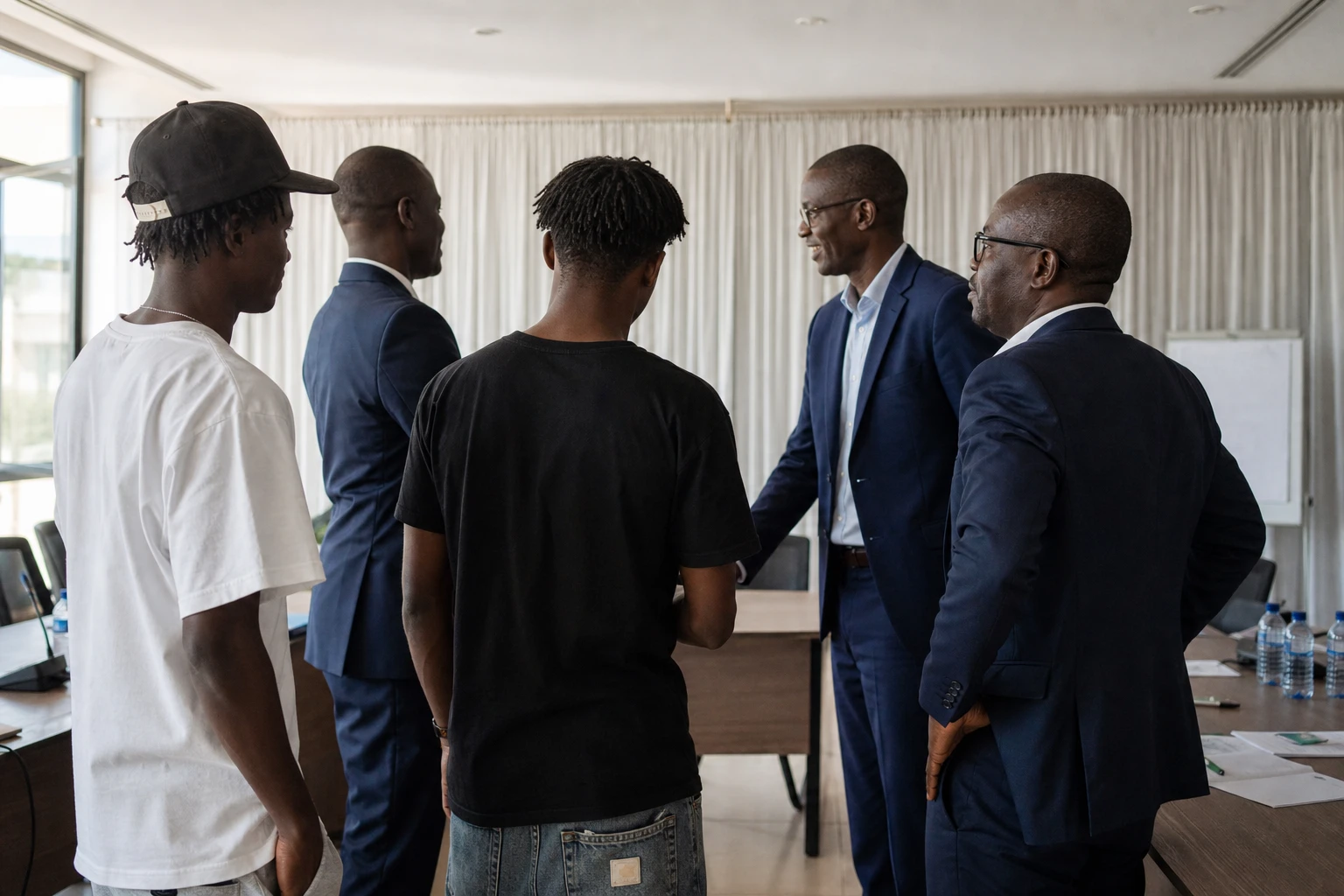
In Dakar, a generation of urban athletes seeks its place at a historic event
With the Youth Olympic Games just weeks away, Dakar is seeing two rare forces converge in one place: the ambition of a major global event and the rise of an urban culture long kept at a distance from major stadiums. For young Senegalese skaters, the stakes go beyond landing a trick or reaching speed on the ramp. They also want to show that a discipline born in the street can establish itself in organised sport, and then in a national team.
The Dakar 2026 Youth Olympic Games, scheduled for 31 October to 13 November 2026, will be the first Olympic competition held on African soil. The official programme includes 25 competition sports, including street skateboarding, and 10 engagement sports intended to root the Games in their local context. The Senegalese capital, Dakar, will be one of the main competition centres, alongside Diamniadio and Saly. The Tour de l’Œuf venue is due to host skateboarding. Official Dakar 2026 sports programme
A young discipline, but already organised in Senegal
In Senegal, skateboarding does not yet have the long history of established sports such as football, athletics or wrestling. Yet the discipline has become organised in recent years. The Senegalese Roller Skateboard Federation was established in 2017, under the presidency of Awa Nar Fall, who was subsequently re-elected to lead the organisation. The federation now claims several clubs and a growing base of participants, a sign that a sport considered marginal can gain structure and visibility when it has a federated framework. Organisation of the Senegalese Roller Skateboard Federation
This growth has not come out of nowhere. Dakar has invested in facilities for urban activities, including the creation of a public skatepark as part of the Place des Cultures Urbaines. Designed for skateboarding as well as other cultural and sporting activities, the facility reflects an important shift: the city no longer treats these activities as roadside pastimes, but as disciplines capable of creating sporting and social pathways. Dakar’s first public skatepark project
Young Senegalese balance Olympic hopes with the reality of a sport in development
Enthusiasm is palpable in the capital’s clubs. Young skaters are training with a simple goal: to make the team, then compete internationally. Thierno, 16, embodies a generation that talks fast, aims high and looks ahead without hesitation. His ambition is clear: to represent Senegal on home soil and turn the Youth Olympic Games experience into a career springboard.
But the path remains narrow. The discipline still lacks a participant base comparable to that of the country’s major sports. International qualification is earned through a demanding schedule, involving a world ranking, leading tournaments and limited places. For a host country, this creates a particular tension: the Youth Olympic Games offer a showcase, but also demand a high level of preparation, with the risk that athletes still learning the sport will be left behind.
Senegalese skateboarding does, however, benefit from an emerging ecosystem. Technical partnerships are in place, including with foreign organisations, to transfer experience. In Dakar, this openness matters. It can help address a shortage of coaching without trapping young people in a narrative of dependence. What is at stake here, by contrast, is the development of a generation that wants to learn quickly, build structure and compete.
A sporting and urban legacy beyond the competition itself
For Senegal, the stakes of the Youth Olympic Games are not limited to the medal table. The country is hosting a rare event, but above all it must retain something once the spotlight has faded. This is where skateboarding becomes significant: it requires the authorities to consider lasting, accessible spaces that serve young people from low-income neighbourhoods as well as participants already involved in community organisations. The Youth Olympic Games can thus reinforce the idea that a sports facility is not merely a competition venue, but a place for socialising, learning and urban expression.
This also matters at a regional level. In West Africa, urban disciplines are growing, but they often lack infrastructure, funding and regular national calendars. Dakar could therefore serve as a model for other ECOWAS capitals. If the Youth Olympic Games leave behind active clubs, trained coaches and well-maintained facilities, Senegal will have shown that a multi-sport event can create a tangible legacy rather than just a ceremonial backdrop.
The countdown also brings political and logistical pressure. Senegalese authorities want to deliver Games worthy of the occasion in a city of Dakar that combines popular expectations, transport constraints and international visibility. The coming months will show whether the current momentum turns into lasting participation. For the skaters, the stakes are already clear: to make Dakar 2026 not a brief interlude, but a starting point.