Algeria
 Egypt
 Libya
 Morocco
 Sudan
 Tunisia
 Benin
 Burkina Faso
 Cabo Verde
 Côte d'Ivoire
 Ghana
 Guinea
 Guinea-Bissau
 Liberia
 Mali
 Mauritania
 Nigeria
 Senegal
 Sierra Leone
 The Gambia
 Togo
 Cameroon
 Central African Republic
 Chad
 DR Congo
 Equatorial Guinea
 Gabon
 Republic of the Congo
 São Tomé and Príncipe
 Burundi
 Comoros
 Djibouti
 Eritrea
 Ethiopia
 Kenya
 Madagascar
 Malawi
 Mauritius
 Mozambique
 Rwanda
 Seychelles
 Somalia
 South Sudan
 Tanzania
 Uganda
 Angola
 Botswana
 Eswatini
 Lesotho
 Namibia
 South Africa
 Zambia
 Zimbabwe
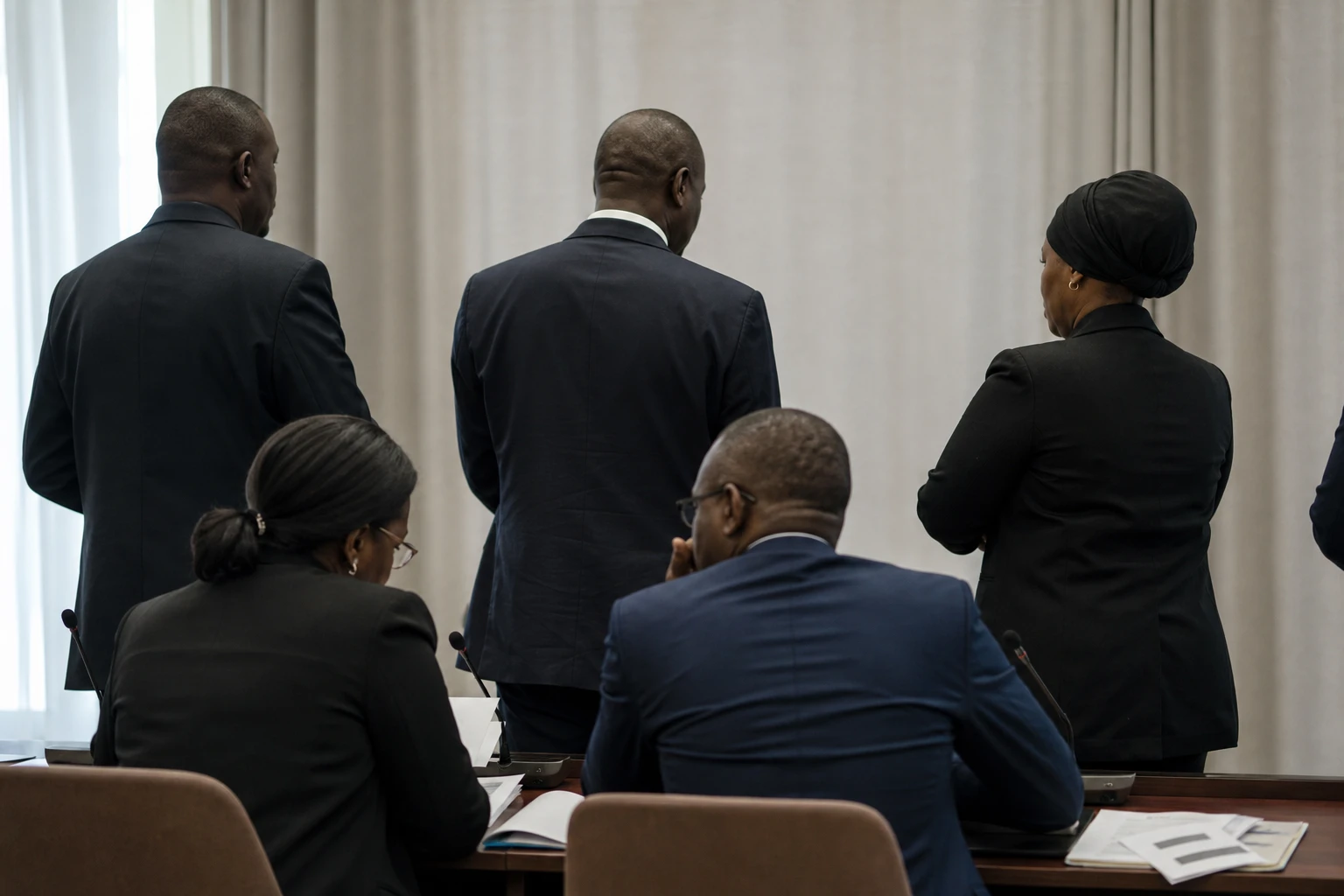
In Niamey, information is narrowing as the authorities tighten their grip
When a journalist disappears after leaving his office in Niamey, the question goes beyond his fate alone. It also concerns what Nigeriens can know, verify and debate. For the past two years, the press in Niger has worked in a climate where security, state communications and the monitoring of critical voices are increasingly intertwined.
The country is still emerging from the military takeover of 26 July 2023, which brought General Abdourahamane Tiani to the head of the transition after Mohamed Bazoum was ousted; he remains detained. This period has shifted the balance of power in Niamey and across the Sahel, where the juntas in Niger, Mali and Burkina Faso have strengthened a discourse of security sovereignty, often at the cost of a narrower civic space.
What is known about Moussa Kaka and the reactions to his disappearance
Moussa Kaka, director of the Radio Télévision Saraounia group, has not been heard from since 31 August 2026. According to information corroborated by several press freedom and human rights organisations, he left his premises in Niamey at about 7pm to go home. Since then, people close to him and several NGOs have called for an investigation to be opened without delay.
The case immediately raised concern among organisations including RSF, Human Rights Watch, the CPJ, OMCT and the Media Foundation for West Africa. All have raised the possibility of an abduction or enforced disappearance, while saying they cannot yet determine who was responsible or the precise motive. Such caution is necessary. At present, the only established fact is that he has not been heard from since the evening of 31 August.
The disappearance came a few days after the failed coup attempt in Niamey on 29 August, an episode that further heightened the political climate. The sources consulted explicitly link these two episodes, without claiming a direct causal connection between them.
Moussa Kaka is no stranger to Niger’s media landscape. His career has often placed him at the intersection of political reporting and periods of intense pressure on the press. That partly explains the current alarm: in a country where journalists already face summonses, suspensions and prosecutions, the disappearance of a prominent figure is immediately seen as a warning sign.
An increasingly restrictive legal and economic environment
Niger has fallen 37 places in Reporters Without Borders’ 2026 World Press Freedom Index, ranking 120th out of 180 countries. RSF describes it as the country that recorded the sharpest fall of the year, in a Sahel where military authorities often invoke national security to restrict access to information.
This poor ranking has not come out of nowhere. Since 2023, the signals of France 24 and RFI have been cut. In January 2024, the Press House was suspended by ministerial order. In May 2026, the National Communication Observatory suspended a further nine foreign media outlets, citing social cohesion, institutional stability and the morale of the defence and security forces.
On 10 September 2026, the government also presented new legislation to regulate online news media and foreign media correspondents. The executive says it wants to modernise the legal framework. Media organisations see this instead as a further step towards control, in a context already marked by arrests, intimidation and difficulty obtaining reliable public information.
The Moussa Kaka case also highlights the recurring use of cybercrime legislation against media professionals. Amnesty International and other organisations have documented several cases, including those of Samira Sabou and Moussa Aksar, as well as the detention of journalists in 2024 and 2025. Even when people are later released, the effect on the profession is lasting: self-censorship, excessive caution and weakened scrutiny of public administration.
Economically, Nigerien media also suffer from a narrow advertising market and heavy dependence on a handful of public or semi-public advertisers. When political pressure is added to financial fragility, a newsroom loses more than readers. It loses time, resources and sometimes voices. This point is often underestimated, but it is crucial to understanding why the media space is contracting so quickly in Niger.
What the case says about Niger and the Sahel
The Moussa Kaka case is not merely a political news story. It is part of a regional pattern in which states belonging to the Alliance of Sahel States tend to link media criticism with security risks. Under this logic, the independent press is easily treated as a source of trouble, even though it is also a means of democratic accountability.
For Niger’s authorities, the stakes are clear: they want to control the narrative around the transition, the fight against terrorism and foreign relations. For journalists, the stakes are just as tangible: working without strong institutional protection, without guarantees that communications with sources are secure, and with the fear of prosecution, suspension or loss of liberty. For the public, the consequence is immediate: less verified information, and therefore less ability to understand decisions made in Niamey.
The implications are continental. Niger remains a pivotal country in West Africa, at the intersection of ECOWAS, the AES and African debates on sovereignty, security and the flow of information. When a state weakens the press in the name of public order, other capitals are watching. When a journalist disappears in this context, it becomes a test of the authorities’ credibility, as well as of the strength of regional protections for fundamental rights.
What happens next will depend first on the ability of the authorities in Niamey to establish the facts surrounding Moussa Kaka’s disappearance. But it will also say something else: if Niger wants to restore a pluralistic public debate, it must stop treating the press as an adjustment variable in the transition. In a country already marked by security tensions, that distinction matters as much as any official statement.