Algeria
 Egypt
 Libya
 Morocco
 Sudan
 Tunisia
 Benin
 Burkina Faso
 Cabo Verde
 Côte d'Ivoire
 Ghana
 Guinea
 Guinea-Bissau
 Liberia
 Mali
 Mauritania
 Niger
 Nigeria
 Sierra Leone
 The Gambia
 Togo
 Cameroon
 Central African Republic
 Chad
 DR Congo
 Equatorial Guinea
 Gabon
 Republic of the Congo
 São Tomé and Príncipe
 Burundi
 Comoros
 Djibouti
 Eritrea
 Ethiopia
 Kenya
 Madagascar
 Malawi
 Mauritius
 Mozambique
 Rwanda
 Seychelles
 Somalia
 South Sudan
 Tanzania
 Uganda
 Angola
 Botswana
 Eswatini
 Lesotho
 Namibia
 South Africa
 Zambia
 Zimbabwe
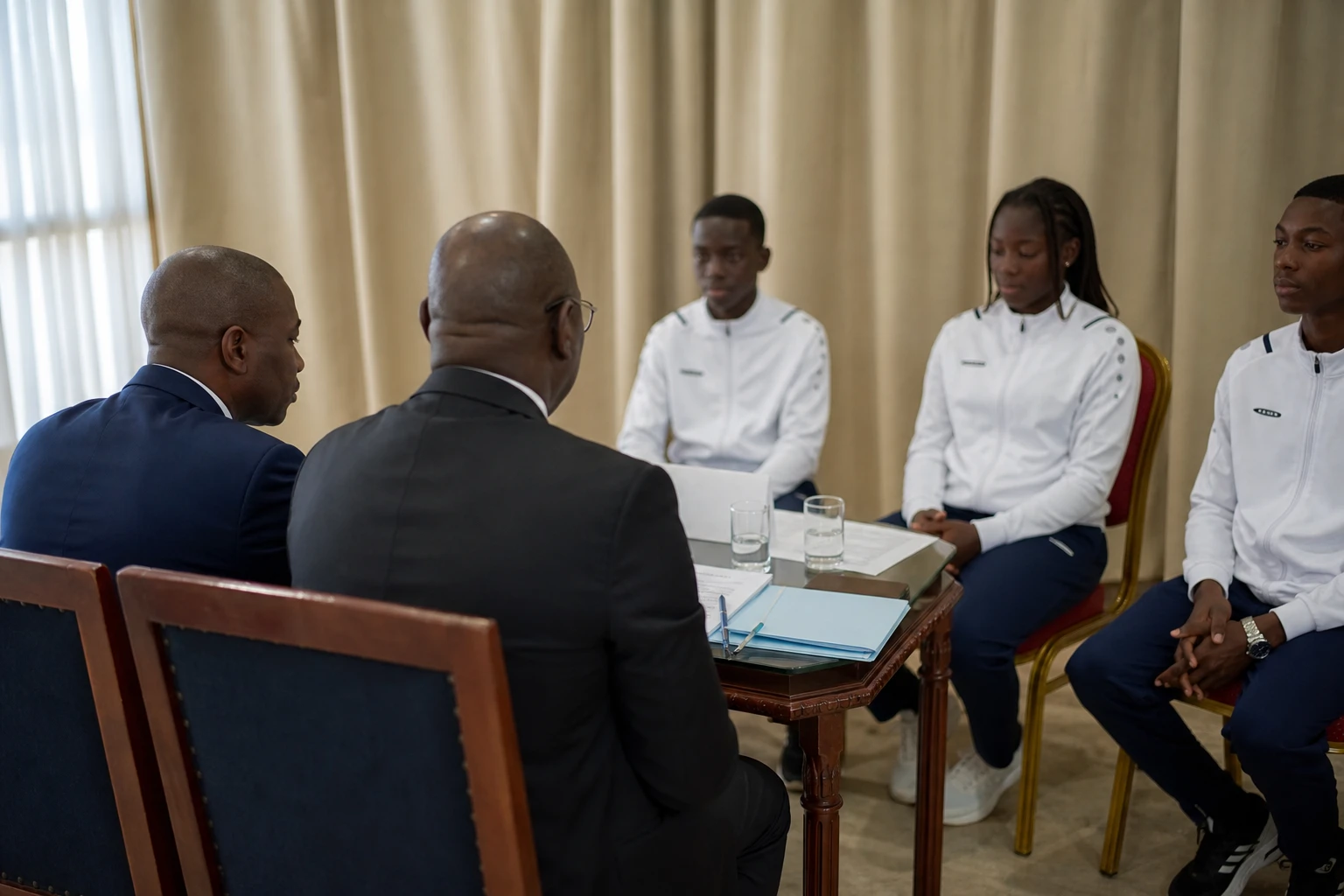
An unprecedented Olympic event for Senegal, and for young people who have already experienced flight
As Dakar prepares to host the Youth Olympic Games, the symbolism goes far beyond the opening ceremony. For the first time, an Olympic team of young refugees will take part. It will serve as a reminder that a stadium can also become a place of recognition, not just rankings. The Games will be held from 31 October to 13 November 2026 in Dakar, Diamniadio and Saly, and will be the first Olympic Games ever staged on African soil.
In this context, Senegal is doing more than playing host. Dakar is becoming a showcase for a continent keen to demonstrate its organisational capacity, hospitality and sporting innovation. The organising committee has built the event around a slogan that sums up this ambition: Africa welcomes, Dakar celebrates. The venues are spread across the capital, the new city of Diamniadio and the seaside resort of Saly, reflecting a desire to leave a territorial legacy beyond central Dakar alone.
Six young people, three disciplines, a historic first
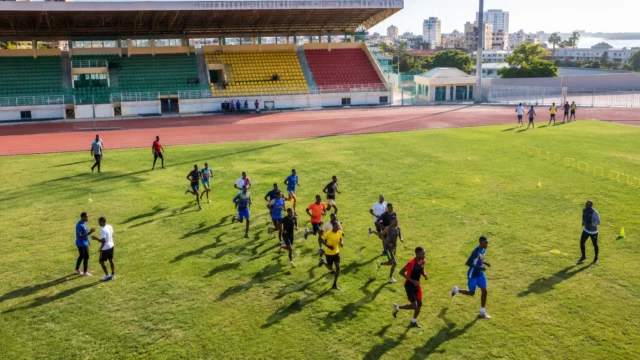
The Olympic team of young refugees will comprise six athletes. According to World Athletics, four runners have already been announced for the Dakar 2026 programme: Clement Niyomuhoza and Nyataba Gatloth, both supported by the Kenyan Olympic Committee, as well as Florence Masumbe and Rachid Rochene, who are supported in Uganda. They are due to compete in the 200 metres and 800 metres. The final six-athlete line-up, with equal numbers of women and men, has also been reported by Olympic movement organisations and the UNHCR.
This is no small matter. The UNHCR says Dakar 2026 will host the first refugee team in the history of the Youth Olympic Games. The same organisation notes that, at the end of 2025, 117.8 million people were forcibly displaced worldwide, including about 45 million children under the age of 18. In a regional assessment, West and Central Africa had more than 21 million forcibly displaced or stateless people as of September 2025, amid sustained pressure from conflict, insecurity and climate shocks.
The selected young athletes live in Kenya and Uganda, two countries that have become important places of refuge for displaced people in the region. Their paths are supported by the IOC, the Olympic Refuge Foundation, the national Olympic committees concerned, World Athletics and the UNHCR. This coordination shows one simple thing: in elite sport, access to training, mobility and administrative protection matters as much as raw talent.
Yiech Pur Biel, from Kakuma camp to team leader
At the head of the delegation, Yiech Pur Biel embodies the depth of the project. A refugee from South Sudan, he grew up largely in Kakuma camp in Kenya, where he discovered athletics. He went on to represent the Refugee Olympic Team in Rio in 2016 and then in Tokyo in 2020. The IOC and its official archives list him among the first faces of the sporting representation that emerged in Rio, alongside other athletes from several conflict-affected countries.
His role at Dakar 2026 is different, but just as significant. He is no longer running towards a finish line. He is accompanying a younger generation in an Africa where forcibly displaced people are often reduced to numbers. His message is therefore political in the noblest sense of the word: to remind people that young refugees are not merely victims of uprooting, but people who can deliver performance, connection and collective purpose when given the means to do so. The UNHCR has also emphasised this idea for several years through its sports programmes for displaced young people.
The announced mentorship of Eliud Kipchoge, who will support the delegation, further strengthens the initiative’s significance. The presence of a Kenyan marathon icon is not merely symbolic. It creates a chain of transmission between two generations of African athletes: one recognised in Olympic history, the other seeking visibility and legitimacy. The message to young people is clear: where the journey began does not determine where it ends.
What Dakar 2026 can change, beyond the tracks and tatamis
The significance of this selection goes well beyond the competition itself. For Dakar and Senegal, it places the Youth Olympic Games within an African understanding of youth: welcome, mobility, inclusion and diverse life journeys. For refugee families settled in East Africa, it offers a powerful counter-narrative to discourse that confines displaced people to waiting or receiving aid. For the organisers, it also gives a human face to an event expected to bring together about 2,700 athletes, according to official Senegalese and Olympic sources.
Senegal, for its part, gains a particular reputation. It is not merely hosting the continent’s first major Olympic competition. It is also hosting an institutional first: a team of young refugees at an Olympic youth competition. This double first strengthens Dakar’s place in West African sport, at a time when ECOWAS continues to be beset by security crises, internal displacement and forced migration. Sport cannot resolve these divisions. But it can open up a shared space that is visible to the whole region.
The next few months will bring the final logistical preparations, the torch relays and confirmation of the selections. But the essential point is already clear: Dakar 2026 will not tell only a story of medals. It will also show how Africa chooses to view its displaced youth, and how these young people can stand in public at the centre of the stage.