Egypt
 Libya
 Morocco
 Sudan
 Tunisia
 Benin
 Burkina Faso
 Cabo Verde
 Côte d'Ivoire
 Ghana
 Guinea
 Guinea-Bissau
 Liberia
 Mali
 Mauritania
 Niger
 Nigeria
 Senegal
 Sierra Leone
 The Gambia
 Togo
 Cameroon
 Central African Republic
 Chad
 DR Congo
 Equatorial Guinea
 Gabon
 Republic of the Congo
 São Tomé and Príncipe
 Burundi
 Comoros
 Djibouti
 Eritrea
 Ethiopia
 Kenya
 Madagascar
 Malawi
 Mauritius
 Mozambique
 Rwanda
 Seychelles
 Somalia
 South Sudan
 Tanzania
 Uganda
 Angola
 Botswana
 Eswatini
 Lesotho
 Namibia
 South Africa
 Zambia
 Zimbabwe
When terrestrial fibre becomes a matter of digital sovereignty
In Niamey, connectivity is not merely a technical issue. For a landlocked country such as Niger, every new route to the outside world matters. It affects the cost of internet access, the quality of public services, data hosting and businesses’ ability to operate without relying on a single border crossing.
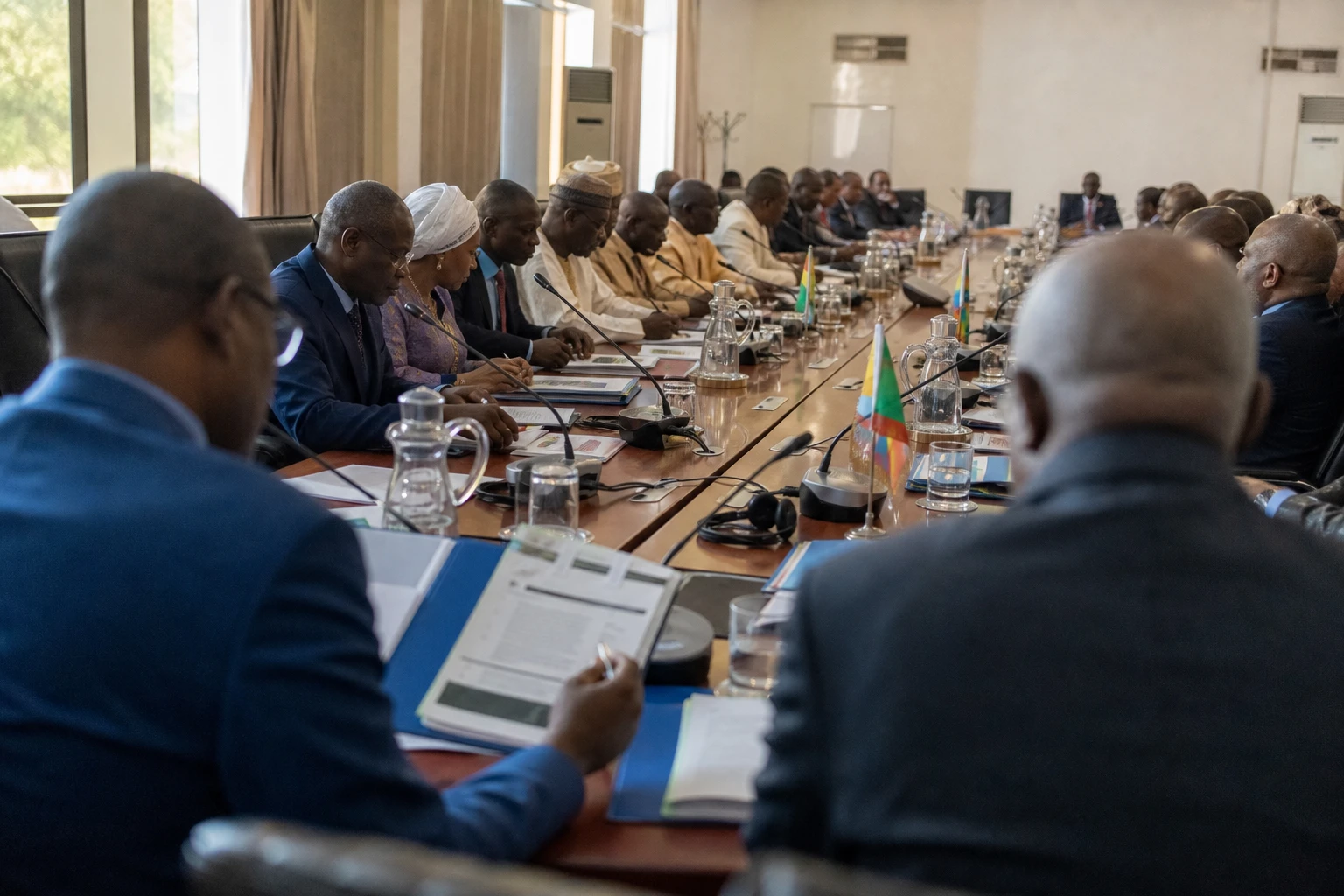
The newly announced next step between Algeria and Niger fits into this context. The two state-owned operators are preparing a terrestrial fibre-optic link between In Guezzam, on the Algerian side, and Agadez, on the Nigerien side, with an initial capacity of 100 Gb. The idea is not an isolated one. It extends a much broader project: the Trans-Saharan Fibre Optic Backbone, designed to connect several Sahelian countries to major international networks and reduce their digital isolation. The project brings together Algeria, Niger, Nigeria, Chad, Mali and Mauritania.
A regional backbone designed to overcome landlockedness
The logic is clear. In the Sahara, distances are long and infrastructure is scarce. But geography does not prevent exchanges; it makes them more expensive. The Trans-Saharan Backbone was specifically designed to create a digital transit route between the north of the continent and West Africa, in the spirit of NEPAD, the continent-wide development programme launched by the African Union. Algeria says it has completed its main 2,548 km segment as far as In Guezzam. The Nigerien News Agency, for its part, reported in January 2025 that work in Niger was 97% physically complete, although the national data centre component remained significantly behind schedule.
This detail matters. Fibre-optic cable alone, without the associated equipment, is not enough to transform the digital ecosystem. A data centre, local expertise, operators able to use the capacity and data governance rules must follow. This is also why the two agreements signed in Niamey cover not only the link itself, but also training for Niger Telecom staff and a partnership with Niger’s Higher School of Electronic Communications and Postal Services.
What the agreements signed in Niamey provide for
The first agreement provides for Algeria Telecom to donate transmission equipment to establish the link between In Guezzam and Agadez. The second covers team training and the training of trainers. A third partnership brings together Algeria Telecom and ESCEP-Niger to create a Skills Centre within the institution. The stakes go beyond straightforward institutional co-operation. The aim is to build the skills of technicians and trainers and, ultimately, of the entire digital services chain.
The In Guezzam–Agadez corridor is more than symbolic. It connects northern Niger to an established Algerian interconnection point. Within Niger, this could strengthen the national backbone—the network’s main structure—and provide a new international gateway. For government departments, it could improve data exchange. For businesses, it could reduce reliance on longer or more fragile communications routes. For users, the aim is simple: more stable, faster and, eventually, potentially cheaper internet access.
A digital project that also affects the real economy
In Niger, the issue goes beyond telecommunications. The government has made digital technology one of the levers of its economic transformation, alongside infrastructure, diversification and governance. The current transition also aims to strengthen sovereignty over data. In this context, the national data centre is no gimmick. It is intended to enable public and private data to be stored locally rather than dispersed outside the country. This is a matter of security, cost control and user trust.
For Algeria, the project confirms a strategy of regional outreach through infrastructure. Algiers wants to make its territory a transit route to the Sahel and, further afield, to international networks. This choice reflects a broader view advanced by several African institutions: transport, energy and telecommunications infrastructure are tools for integration, not just technical projects. The African Development Bank made this point in relation to the Trans-Saharan project in Niger: the project also aims to reduce the cost of accessing ICT and facilitate the growth of mobile financial services, e-government and digital commerce.
In practice, the effects will not be the same for everyone. Capitals and administrative centres will benefit first from network improvements. Remote regions, such as the Aïr and northern Niger, are looking for greater stability and coverage. Operators, meanwhile, see it as a driver of commercial development. But the social benefits will only be lasting if prices come down, maintenance is ensured and local training prevents prolonged dependence on imported expertise.
A signal for the Sahel and African integration projects
This link is a reminder of a simple fact: Africa’s most useful corridors are often the ones we cannot see. Fibre beneath the sand can change as much as a road or a modernised border post. In the Sahel region, where states are seeking to keep public services running despite security tensions and logistical constraints, every new interconnection route strengthens collective resilience. Niger, Algeria and their regional partners are therefore advancing a project that combines technology, economics and geopolitics.
Its continental significance is clear. The Trans-Saharan Backbone fits into a long-standing vision of integration championed by African organisations: linking markets, supporting the movement of services and giving landlocked countries more direct access to global networks. The next steps will depend on the link between In Guezzam and Agadez becoming operational, the completion of associated equipment in Niger and the ability of state-owned operators to turn this infrastructure into a useful, visible and accessible service for users.