Algeria
 Egypt
 Libya
 Morocco
 Sudan
 Tunisia
 Benin
 Burkina Faso
 Cabo Verde
 Côte d'Ivoire
 Guinea
 Guinea-Bissau
 Liberia
 Mali
 Mauritania
 Niger
 Nigeria
 Senegal
 Sierra Leone
 The Gambia
 Togo
 Cameroon
 Central African Republic
 Chad
 DR Congo
 Equatorial Guinea
 Gabon
 Republic of the Congo
 São Tomé and Príncipe
 Burundi
 Comoros
 Djibouti
 Eritrea
 Ethiopia
 Kenya
 Madagascar
 Malawi
 Mauritius
 Mozambique
 Rwanda
 Seychelles
 Somalia
 South Sudan
 Tanzania
 Uganda
 Angola
 Botswana
 Eswatini
 Lesotho
 Namibia
 South Africa
 Zambia
 Zimbabwe
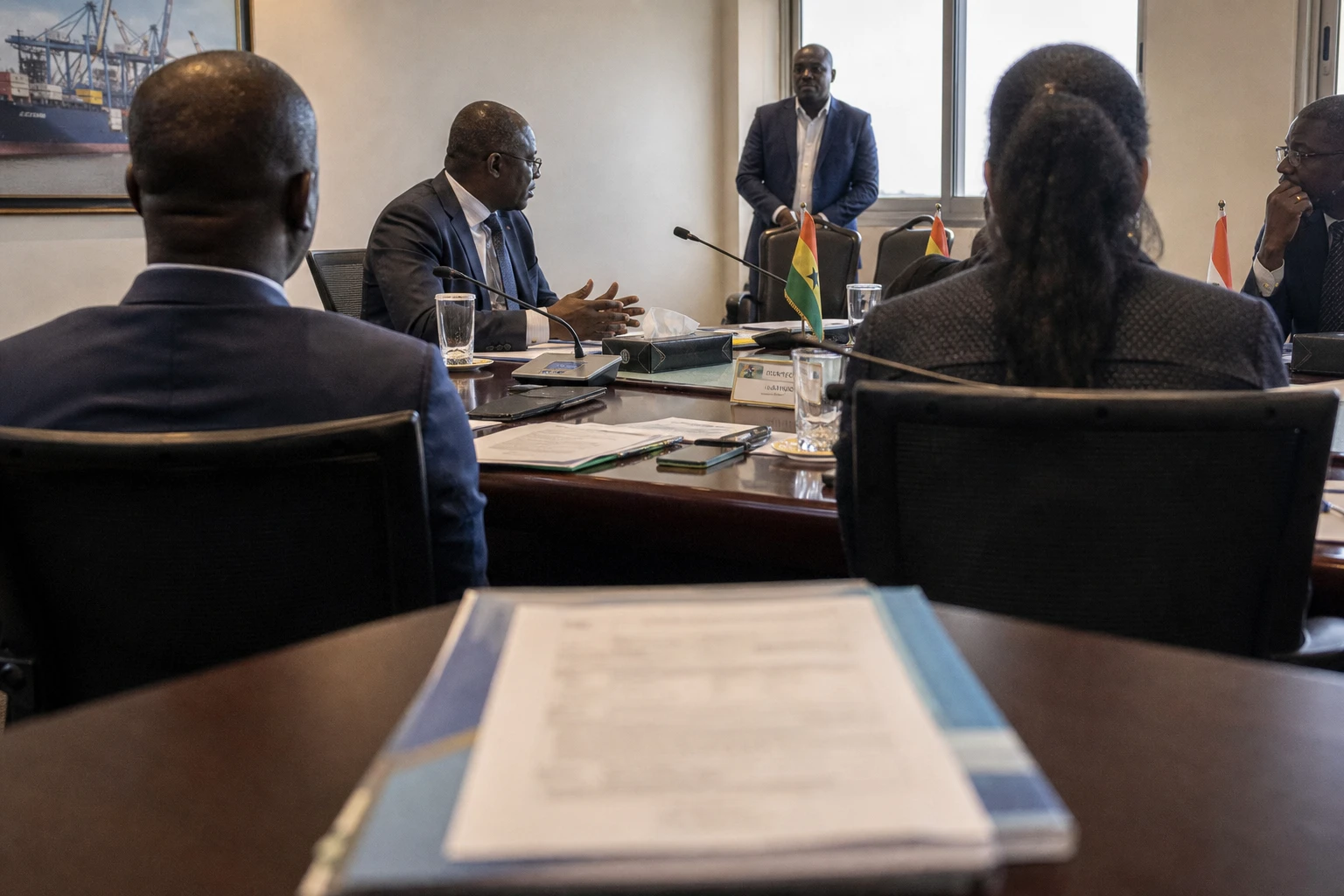
A modern terminal, but an exit that is still too slow
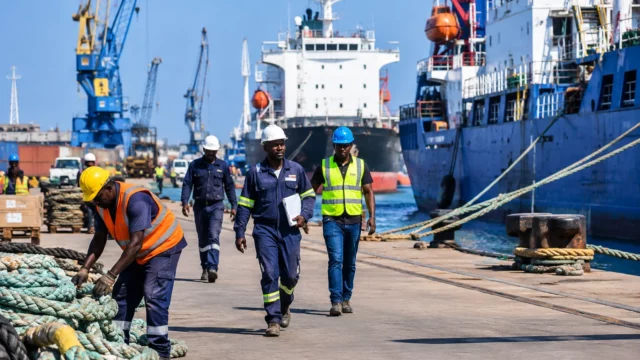
At Tema, the question is no longer simply how many ships can dock. It is now about how quickly goods actually leave the port and reach Accra, industrial zones and then the West African hinterland. Ghana has invested heavily in its main maritime hub. Yet the promised flow of goods is still being held back by a link older than the quays: procedures, inspections and access by road.
The Port of Tema is about 30 kilometres from Accra, in a city designed as an industrial and logistics hub. Ghana’s port authority describes it as a base for inland depots, warehouses, transport companies and transit operators. In the national strategy, it is also meant to support Ghana’s ambition to become a leading trade platform in West Africa, in a region where ports compete to attract traffic bound for Burkina Faso, Mali and Niger.
The facts: when port capacity outstrips the system
On 3 September 2026, the Ghana Shippers’ Authority conducted an assessment visit to Terminal 3 at the Port of Tema. On that occasion, terminal officials said that around 70% of containers were subject to intrusive physical inspection. This proportion is far higher than the approach recommended by international risk-management standards, which favour targeting cargo deemed high-risk rather than carrying out mass, indiscriminate checks.
The contrast is striking. On the seaward side, Terminal 3 was designed as a state-of-the-art facility. Ghana’s Ministry of Finance says the project, which began operating in 2019, has an annual capacity of 3 million TEUs, the standard unit of measurement for twenty-foot containers. The same public programme states that the concession runs for 35 years and is part of the partnership between Meridian Port Services and the Ghana Ports and Harbours Authority. Other official Ghanaian sources have confirmed that the expansion was presented as a major driver of Tema’s development into a sub-regional hub.
On the landward side, however, the system has not kept pace. The road to the port remains congested. Rail links to the hinterland are still inadequate, even though the government and its agencies have recently reiterated their intention to connect Tema more extensively to rail corridors and inland industrial zones. Inland depots, intended to absorb some of the traffic and prevent congestion on the quays, remain underused. Congestion is therefore not caused by a lack of maritime capacity. It stems from an imbalance between investment in the port and the organisation of the wider logistics system.
The stakes: from the cost of passage to the cost of living
This slow pace comes at a very real cost. It drives up demurrage charges, the penalties imposed when a container or ship remains idle for too long. Industry data reported in Ghana showed that petroleum-product distributors had incurred more than $44 million in demurrage in the first half of 2025. In the cement sector, other operators cited between $45 million and $50 million over eight months. These costs rarely fall solely on freight forwarders. They are passed along the supply chain and ultimately translate into higher costs for households, small traders and transport companies.
The formal sector is not the only one affected. Drivers, stevedores, customs agents and small importers also bear the cost of hours lost at port entrances. For industrial companies based around Tema, in Accra or along the coastal zone, every additional day strains cash flow and delays the launch of products on the market. For regional trade operators, congestion sends another signal: if passage through Tema costs too much or takes too long, traffic may shift to Lomé or Abidjan, which are also seeking to attract trade from the Sahelian hinterland.
Customs remains the most sensitive issue. The widespread use of physical inspections points to the underuse of risk management, which is central to modern practice. The World Customs Organization believes administrations should focus their resources on consignments that are genuinely suspicious. In practice, opening more containers slows the chain, increases handling and extends clearance times. The problem is therefore not merely administrative. It is also organisational, involving coordination between customs, the port, transport companies, scanners, depots and sectoral regulatory authorities.
Ghana’s authorities are not starting from scratch. In August 2026, the Ghana Ports and Harbours Authority announced measures to ease congestion in the port’s yards, including tighter management of empty containers, support for truck deployment and better coordination with operators. For its part, the Ministry of Transport has described the Port of Tema as a pillar of the country’s trade policy and of the broader African Continental Free Trade Area (AfCFTA), which aims to facilitate intra-African trade. But without free-flowing roads, active depots and more targeted customs inspections, maritime infrastructure will remain ahead of the rest of the chain.
Continental significance: a test for African logistics
The case of Tema extends beyond Ghana. It says something about the new port competition in West Africa. The major ports of the Gulf of Guinea are no longer competing solely on the depth of their quays. Above all, they are vying over the reliability of corridors, the speed of inspections and the quality of their links with the continent’s interior. The Port of Lomé has established itself as a transshipment hub for Burkina Faso, Mali and Niger. Abidjan is increasingly highlighting its access to the hinterland and its corridor links. Tema, meanwhile, wants to retain its place in this strategic triangle.
For the African Union and the AfCFTA, the issue is clear: a modern port alone cannot accelerate continental trade. It is complete supply chains that make the difference. Quays, customs, railways, roads, depots and data systems must all advance at the same pace. Ghana has a major asset here: a strong port base, a central position on the Atlantic coast and logistical ambitions embraced by the national authorities. The challenge is to turn this maritime strength into a lasting advantage on land. It is on this less visible front, rather than at the inauguration of a terminal, that the real battle for the Port of Tema will be fought.