Algeria
 Egypt
 Libya
 Morocco
 Sudan
 Tunisia
 Benin
 Burkina Faso
 Cabo Verde
 Côte d'Ivoire
 Ghana
 Guinea
 Guinea-Bissau
 Liberia
 Mali
 Mauritania
 Niger
 Nigeria
 Sierra Leone
 The Gambia
 Togo
 Cameroon
 Central African Republic
 Chad
 DR Congo
 Equatorial Guinea
 Gabon
 Republic of the Congo
 São Tomé and Príncipe
 Burundi
 Comoros
 Djibouti
 Eritrea
 Ethiopia
 Kenya
 Madagascar
 Malawi
 Mauritius
 Mozambique
 Rwanda
 Seychelles
 Somalia
 South Sudan
 Tanzania
 Uganda
 Angola
 Botswana
 Eswatini
 Lesotho
 Namibia
 South Africa
 Zambia
 Zimbabwe
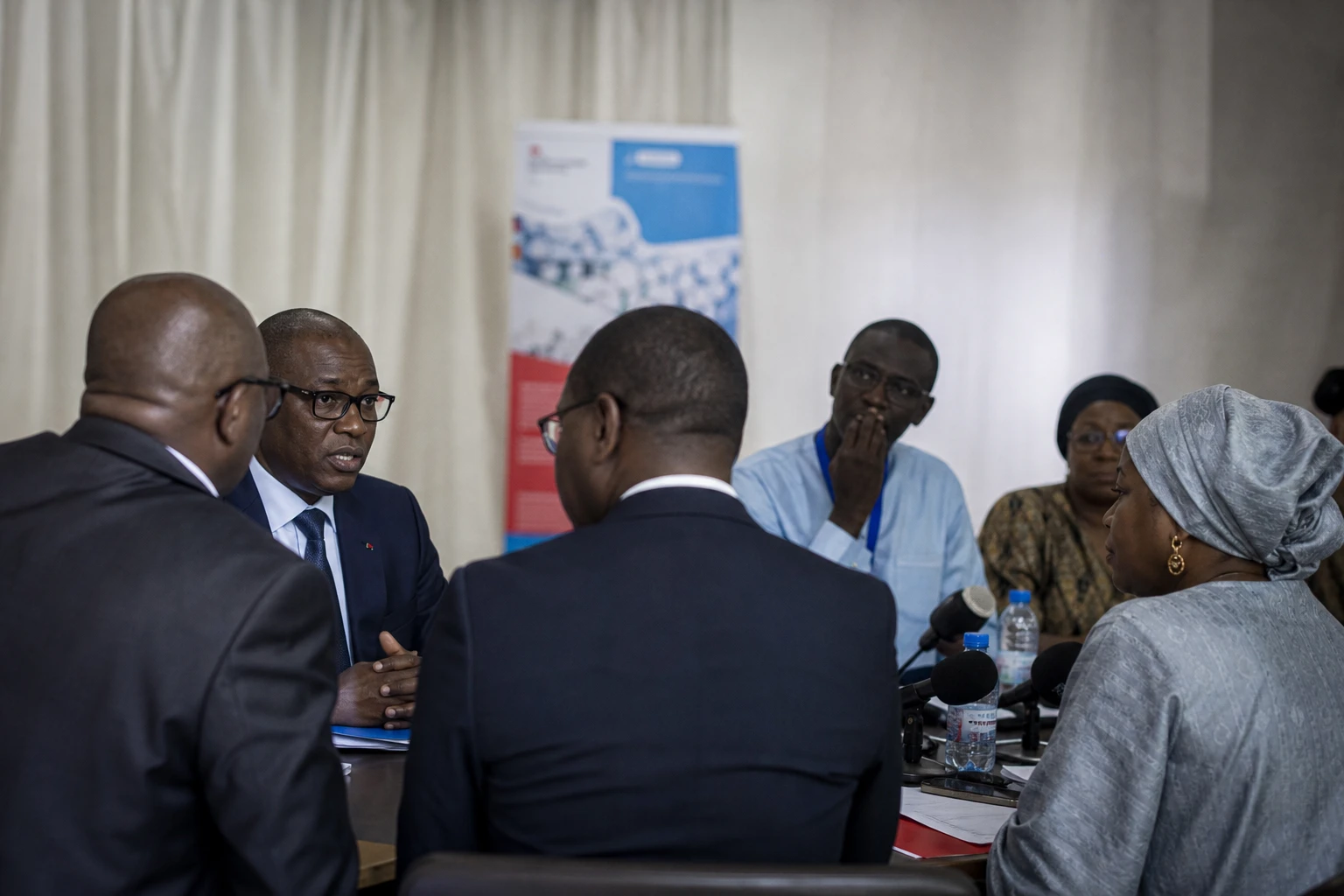
A gesture presented as solidarity, received as a political test
In Dakar, an announcement intended to make the Youth Olympic Games accessible to as many people as possible quickly took on a different character. Within hours, the debate was no longer about sport, but about the source of the CFAF 500 million announced to buy tickets for schools and associations.
Senegal is preparing for the Dakar 2026 Youth Olympic Games, scheduled to run from 31 October to 13 November 2026, the first Olympic Games to be held on the African continent. The event is led by COJOJ Dakar 2026, the organising committee, which also manages the official ticketing service and a solidarity ticketing programme.
In this context, President Bassirou Diomaye Faye announced at the launch of the “Dundal JOJ” campaign that a CFAF 500 million contribution would be raised by the Senegal Solidarity Foundation, at the initiative of First Lady Marie Khone Faye, to acquire 200,000 tickets. According to the announcement, the measure is intended to enable pupils and young people from modest backgrounds to attend the competitions.
What the facts say, and what the controversy reveals
The first point of friction concerns the source of the funds. The president’s party and the foundation quickly said the sum would not come from the state budget, but from international donors, companies and sponsors. At the same time, tickets are indeed distributed through an official ticketing platform, where COJOJ oversees sales, free allocations and solidarity ticketing.
The second point concerns the social context. On 5 September 2026, a peaceful march against the high cost of living and prepaid electricity bills took place in Dakar, just as the announcement about the Youth Olympic Games was setting social media alight. In a country where purchasing power remains a sensitive issue, half a billion CFA francs spent on sports tickets may be seen either as a generous gesture or as out of step with the pressing needs of everyday life.
The political calendar adds another layer of tension. Senegal is going through a period of institutional realignment following the rise to power of the Diomaye Faye–Ousmane Sonko duo, with Sonko now president of the National Assembly. In this context, every initiative backed by the presidential circle is scrutinised for its social significance, as well as its communications impact and internal power dynamics. The criticism is therefore not just about sport. It also touches on how public and para-public solidarity is governed and funded.
At its core, the initiative highlights a genuine issue of access to culture and sport. The official Youth Olympic Games ticketing plan includes paid seats, free access to some events, and free or solidarity tickets for certain groups. In other words, the question is not only how to fund seats, but who gets in, how, and according to what criteria. This is where expectations of transparency become central.
For Dakar 2026, the stakes go beyond the day’s controversy
The Dakar Youth Olympic Games are more than a sporting event. They are also meant to showcase a capital seeking to strengthen its infrastructure, its image and its capacity to host visitors. The Games’ planning documents also refer to a lasting legacy, gender parity between girls and boys, and the involvement of thousands of volunteers from across Senegal. The project therefore goes beyond the opening ceremony alone.
But the success of this legacy will depend on trust. If the promised tickets do reach schools in Dakar, Saint-Louis, Thiès, Kaolack and Ziguinchor, the initiative may be seen as an effort at inclusion. If the arrangements remain unclear, the controversy could overshadow the original message. This is often the case with major events: intentions matter, but the way they are carried out determines how they are received.
At the regional level, this episode also says something about West Africa. Across the ECOWAS region, states are seeking to reconcile budgetary discipline, social stability and major symbolic projects. Senegal, which wants the Youth Olympic Games to be a continental moment, finds itself at a crossroads: showing that an international event can remain accessible without giving the impression of diverting attention from economic difficulties.
The continental significance is clear. Dakar 2026 is presented by the Olympic movement as a first for Africa, with a slogan that emphasises the continent’s role in hosting the Games. For Senegal, the challenge is not only to organise a competition. It is also to prove that a major global event can foster popular participation, transparency and lasting benefits for young people. The controversy over the CFAF 500 million is already a test of that.