Algeria
 Egypt
 Libya
 Morocco
 Sudan
 Tunisia
 Benin
 Burkina Faso
 Cabo Verde
 Côte d'Ivoire
 Ghana
 Guinea
 Guinea-Bissau
 Liberia
 Mali
 Mauritania
 Niger
 Nigeria
 Senegal
 Sierra Leone
 The Gambia
 Togo
 Cameroon
 Central African Republic
 DR Congo
 Equatorial Guinea
 Gabon
 Republic of the Congo
 São Tomé and Príncipe
 Burundi
 Comoros
 Djibouti
 Eritrea
 Ethiopia
 Kenya
 Madagascar
 Malawi
 Mauritius
 Mozambique
 Rwanda
 Seychelles
 Somalia
 South Sudan
 Tanzania
 Uganda
 Angola
 Botswana
 Eswatini
 Lesotho
 Namibia
 South Africa
 Zambia
 Zimbabwe
By the lake, a crisis moving faster than aid
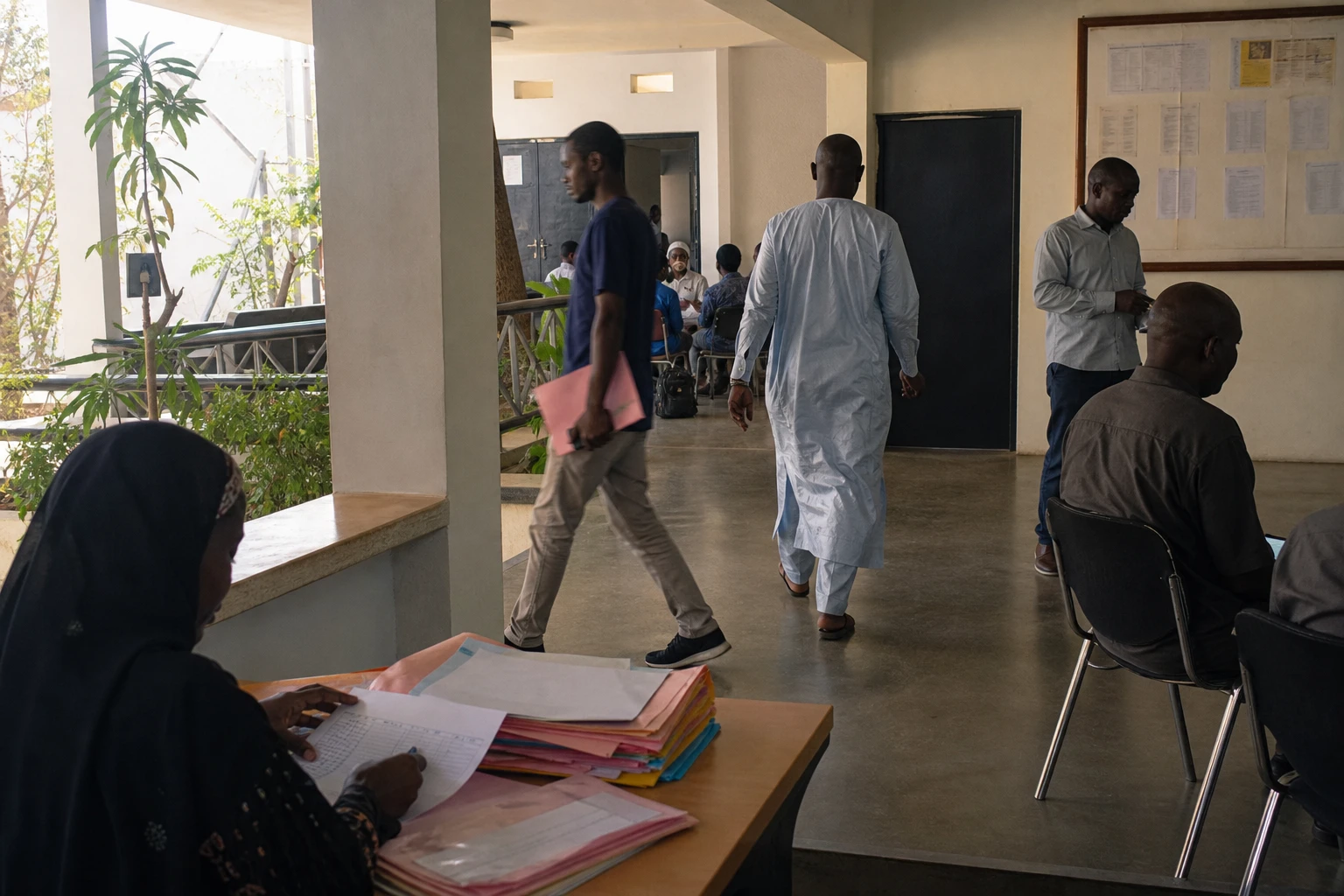
In the province of Lac, Chadian families no longer count only the days. They also count departures, impossible returns and villages emptied by the pace of attacks. As insecurity spreads along the shores and islands of Lake Chad, it first hits livelihoods: fishing, livestock farming, small-scale trade and travel between the islets and markets. The consequences are immediate for households, then lasting for the entire local economy.
This new wave of displacement is part of a wider crisis that extends beyond Chad’s borders. The Lake Chad Basin links Chad, Nigeria, Niger and Cameroon. In this area, population movements are driven by violence by non-state armed groups, poverty, climate pressures and weak public services. Regional institutions, from the Lake Chad Basin Commission to the African Union, regularly stress that security, mobility and territorial stability are now interconnected.
What the figures show — and what they conceal
In Chad, recent estimates had already shown the scale of the problem. The International Organization for Migration said in its 2025-2026 response plan that the province of Lac had 268,054 displaced people across 296 sites in January 2025. Nationwide, UNHCR estimated that around 2.26 million people were forcibly displaced at the end of June 2026. These figures point to chronic pressure, far beyond a one-off episode.
The figure of more than 75,000 new displaced people in the province of Lac, attributed to a resurgence of Boko Haram attacks, is therefore part of a trend already documented by UN agencies. In August 2026, UNHCR warned of an upsurge in violence across the Lake Chad Basin, with more than 77,500 people displaced since January 2026 across the four countries in the region. The warning concerns not one territory, but a shared corridor of crisis.
In the province of Lac, the consequences are visible not only in the figures. They can be seen in deserted classrooms, overstretched health centres and repeated displacement among families who had already fled once. In July 2026, UN reports indicated that more than 75% of children in the province of Lac were out of school, a stark measure of the knock-on effects between insecurity and the breakdown of services.
Lac, a test case for overlapping vulnerabilities
Chad faces particular geographical and political constraints. A landlocked country, it is simultaneously affected by the conflict in Sudan to the east, security tensions in the north and persistent instability in Lac to the west. In its response plan, the IOM noted that Chad shares borders with Libya, Niger, Nigeria, Cameroon, Sudan and the Central African Republic, multiplying the sources of vulnerability. Lac is therefore not a forgotten periphery. It is a crossroads of regional crises.
This reality affects different groups in different ways. For the authorities, it means spending on security, logistics and assistance across a vast and hard-to-reach area. For households, it means greater exposure to food insecurity, debt, disrupted schooling and dependence on aid. For lakeside municipalities, it also creates fiercer competition for water, grazing land and farmland. The African Union, for its part, stresses that climate change acts as a threat multiplier in the Sahel and the Lake Chad Basin.
The recent precedent is significant. In May 2026, the African Union condemned an attack on a military base at Barka Tolorom, on the Chadian shore of the lake, and reaffirmed its solidarity with the member states of the Lake Chad Basin Commission. The statement highlights a central point: the threat is not only humanitarian; it remains a security issue, with direct consequences for civilian displacement and the state’s ability to maintain control on the ground.
What this means for N’Djamena and the region
For N’Djamena, there are two challenges. It must respond to the emergency without locking the province of Lac into an exclusively military approach. Tools already used by the IOM, such as the Displacement Tracking Matrix and early-warning systems, show that on-the-ground information remains essential to directing shelter, water, healthcare and protection. But without local stabilisation, displacement will recur. The humanitarian response alone is not enough.
The regional dimension is just as clear. The Lake Chad Basin has moved beyond the stage of a national crisis. IOM data for April 2026 referred to more than 6.4 million people affected across the four basin countries, including more than 3.3 million internally displaced people. UNHCR describes the situation as reaching a tipping point, with 8.2 million people in the region needing humanitarian assistance. This puts the Lake Chad area at the heart of an issue also being monitored by the African Union, the United Nations and sub-regional mechanisms.
For the countries around the lake, the challenge is now to combine security, basic services and local recovery. The Lake Chad Basin Governors’ Forum, backed by the African Union, was specifically created to improve coordination between local authorities, civil society and technical partners. If the newly displaced people in Lac move from a temporary crisis to protracted displacement, the social and budgetary cost will rise further. The issue then goes beyond Chad alone: it tests the ability of Central Africa and the Sahel as a whole to contain violence that displaces people, disrupts lives and takes root.