Algeria
 Egypt
 Libya
 Morocco
 Sudan
 Tunisia
 Benin
 Burkina Faso
 Cabo Verde
 Côte d'Ivoire
 Ghana
 Guinea
 Guinea-Bissau
 Liberia
 Mali
 Mauritania
 Niger
 Nigeria
 Sierra Leone
 The Gambia
 Togo
 Cameroon
 Central African Republic
 Chad
 DR Congo
 Equatorial Guinea
 Gabon
 Republic of the Congo
 São Tomé and Príncipe
 Burundi
 Comoros
 Djibouti
 Eritrea
 Ethiopia
 Kenya
 Madagascar
 Malawi
 Mauritius
 Mozambique
 Rwanda
 Seychelles
 Somalia
 South Sudan
 Tanzania
 Uganda
 Angola
 Botswana
 Eswatini
 Lesotho
 Namibia
 South Africa
 Zambia
 Zimbabwe
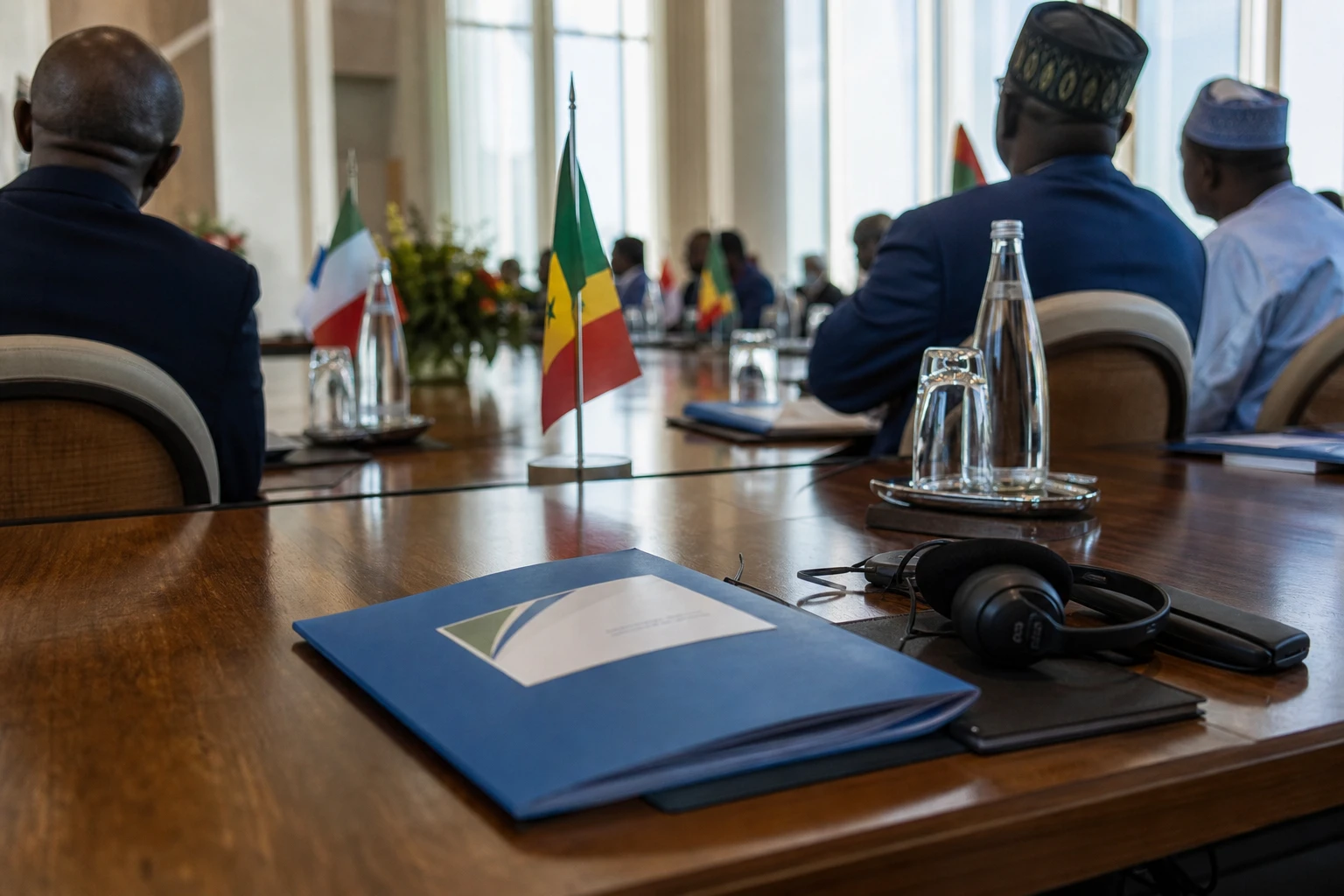
When the sea takes a son, an entire family is left in limbo
In Mbour, on Senegal’s Petite-Côte, departures by pirogue leave more than empty seats behind. They leave mothers without news, brothers without answers and children without guidance. In this city facing the Atlantic, irregular migration has become a matter for neighbourhoods, families and collective memory, extending far beyond the shipwrecks that make the headlines.
It was against this backdrop that Aminata Boye built a commitment that grew into a collective effort. After one of her sons disappeared, she turned personal grief into organised support for other families. Her work is part of a wider phenomenon: Senegal remains a country of emigration, immigration and transit, and the West African Atlantic route to the Canary Islands has seen a marked revival in recent years. The International Organization for Migration has, since 2019, been monitoring several departure points along Senegal’s coast.
In Mbour, the migration crisis is also prompting a social response
In 2020, Aminata Boye watched two of her sons leave by pirogue three days apart. The younger one reached Spain, where he continued his studies. The older, Waly, 19, disappeared after a boat was reported in difficulty off Mauritania. His disappearance lies at the heart of what makes the crisis of missing migrants so distinctive: the absence of certainty, sometimes more painful than news of a death. For years, the International Committee of the Red Cross has stressed that families need to search, to know and to receive support, not simply to be informed after the fact.
That same year, Aminata Boye founded the Collective of Victims of Irregular Emigration in Senegal, known by its French acronym, COVES. The initiative helps relatives gather photographs, names and details of a missing person’s journey in an effort to find a trace of loved ones who left by sea. This work is in line with initiatives already under way in Senegal by the ICRC and the Senegalese Red Cross, which have been supporting families of missing migrants for nearly a decade, with contacts in several regions of the country, including Dakar, Saint-Louis, Ziguinchor and the interior.
The collective’s work is not limited to the search. It also provides material assistance, organises collections for the start of the school year and runs sewing workshops to help some women earn an income. In a context where the disappearance of a loved one puts both the grieving process and household finances under strain, this local response matters as much as psychological support. ICRC research also shows that, for families, uncertainty can last for years and calls for sustained human support, not just administrative assistance.
Irregular migration in Mbour reflects national tensions
Mbour’s name often features in reports on departures and shipwrecks. In September 2024, Senegalese authorities again faced a deadly capsizing off the city, while the African Commission on Human and Peoples’ Rights voiced concern over the rising number of deaths and disappearances on the West African route to the Canary Islands. It also recalled the phenomenon’s root causes: youth unemployment, socio-economic vulnerabilities, political tensions and the effects of climate change.
The Senegalese government has also put the fight against irregular migration on the public agenda. The Interministerial Committee for the Fight against Irregular Migration, known by its French acronym CILMI, coordinates administrative, security, religious, economic and civil-society actors on prevention and awareness-raising. In October 2024, the Interior Ministry announced a further workshop on the “concerted governance” of the phenomenon. This framework points to a simple reality: the response cannot be solely a policing matter. It must also involve employment, training, fishing, schools and local support.
In Mbour, the issue particularly affects households reliant on the informal economy, fishing, small-scale trade and activities linked to the coast. When a young person leaves, the entire household often places its hopes in them. When they disappear, the support network breaks down. Initiatives such as Aminata Boye’s fill a tangible gap: they offer a place to search, talk, sort through memories and ensure that a disappearance is not reduced to a mere statistic.
A cause that reaches beyond Senegal and speaks to all of West Africa
The struggle in Mbour resonates beyond Senegal. The Atlantic route links several West African countries to the Canary Islands, and its use exposes the limits of solutions based solely on border controls. IOM data show that departures continue and that deaths and disappearances remain difficult to document precisely. In short, states see the boats, but families are left above all with a lack of information.
This is also why the African approach to migration cannot be reduced to security alerts. Senegal, a member of ECOWAS, shares with its neighbours a common area of movement, as well as the same demographic and economic pressures on young people of working age. At continental level, the issue is connected to the African Union’s work on protecting migrants and the families of missing people, as well as repeated calls from humanitarian organisations to create safe and regular routes. Aminata Boye embodies this discreet but essential dimension: where the state is sometimes slow to find traces, communities organise solidarity, document the absence and maintain connections.
In Mbour, then, the problem is not only about departure. It is about what comes afterwards. Who searches? Who provides information? Who offers support? And who helps a mother carry on when the sea has returned neither a body nor an answer? This is where Aminata Boye’s work has its full significance: it gives social shape to a pain too many families endure alone.