Algeria
 Egypt
 Libya
 Morocco
 Sudan
 Tunisia
 Benin
 Burkina Faso
 Cabo Verde
 Côte d'Ivoire
 Ghana
 Guinea
 Guinea-Bissau
 Liberia
 Mali
 Mauritania
 Niger
 Nigeria
 Sierra Leone
 The Gambia
 Togo
 Cameroon
 Central African Republic
 Chad
 DR Congo
 Equatorial Guinea
 Gabon
 Republic of the Congo
 São Tomé and Príncipe
 Burundi
 Comoros
 Djibouti
 Eritrea
 Ethiopia
 Kenya
 Madagascar
 Malawi
 Mauritius
 Mozambique
 Rwanda
 Seychelles
 Somalia
 South Sudan
 Tanzania
 Uganda
 Angola
 Botswana
 Eswatini
 Lesotho
 Namibia
 South Africa
 Zambia
 Zimbabwe
Domestic debt to protect, but a structure that changes the picture
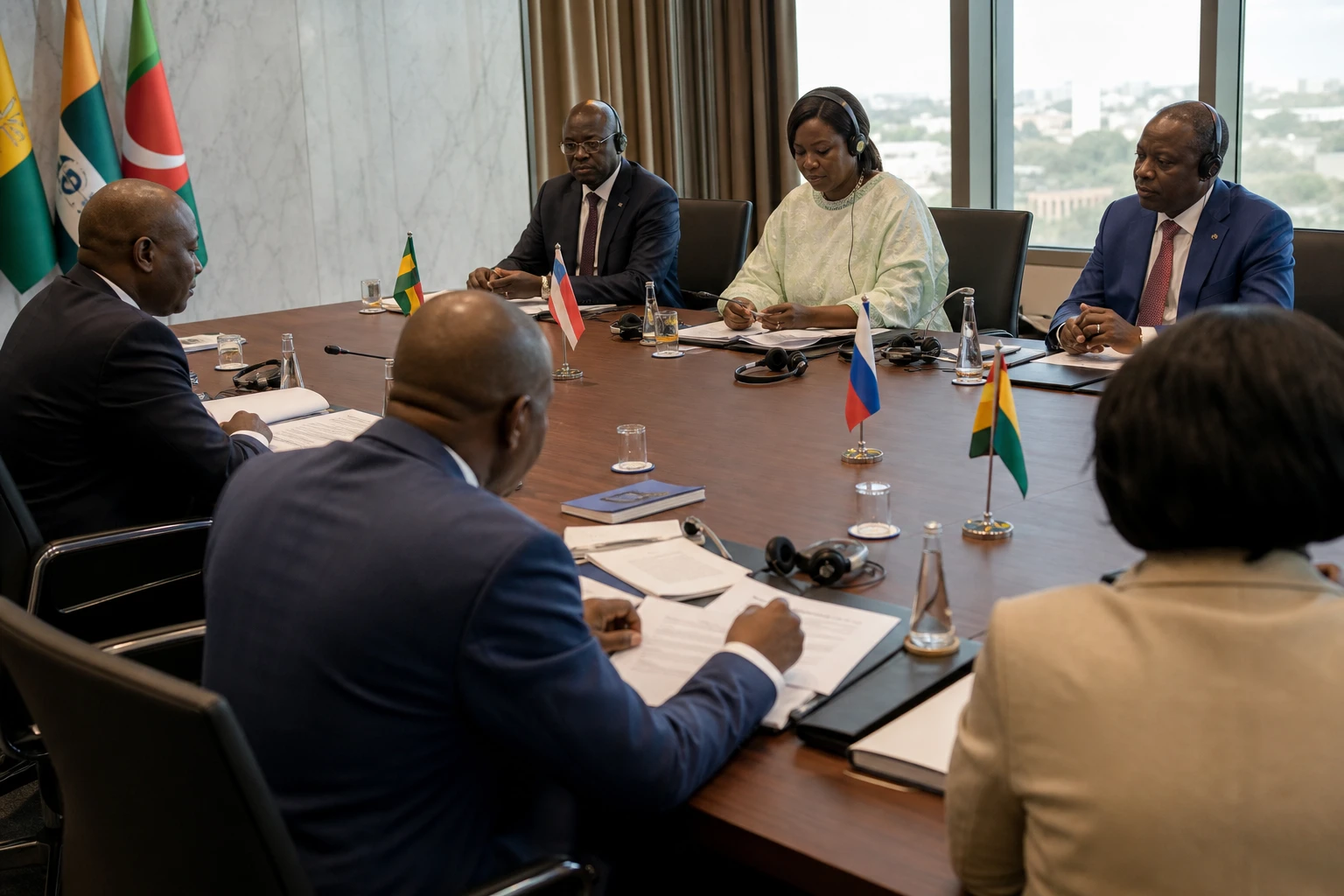
In Senegal, the question of debt no longer sets the state against its creditors alone. It also requires a distinction between what falls within the WAEMU regional market, the West African economic and monetary union, and what has been structured with external investors. This is where Total Return Swaps, or TRS, complicate the task. The mechanism allows a creditor to take economic exposure to sovereign securities while the state receives cash immediately. In practice, the line between domestic and external debt becomes less clear.
This distinction matters to Dakar, Senegal’s capital, because the country wants to address its debt in an orderly framework without disrupting the CFA franc bond market. Senegal’s finance ministry has explained that TRS-type transactions were conducted on the public securities market between April and November 2025, as part of the issuance calendar and with the parliamentary authorisation provided for in that year’s finance laws. The same ministry published an official clarification on 1 September 2026 after the subject was taken up again in the international press.
What Dakar did in 2025
According to the ministry’s clarification, Senegal carried out seven TRS transactions in 2025, totalling 721 billion CFA francs, or about $1.2 billion. The official statement also specifies that the transactions were conducted in line with the medium-term debt management strategy and were the subject of regular discussions with the International Monetary Fund. The counterparties cited include First Abu Dhabi Bank and Africa Finance Corporation.
Africa Finance Corporation’s case warrants particular attention. The institution, established by African states and with Senegal among its members, says it enjoys preferred creditor status in its member countries. In other words, its claims are not treated like those of an ordinary commercial bank. That does not resolve the issue; on the contrary, in a restructuring, it becomes more difficult to define precisely which claims are covered.
Why the IMF framework is not enough on its own
Senegal began discussions on a new IMF-supported programme at the Annual Meetings in October 2025. In November and then December 2025, the Fund confirmed that the discussions also concerned debt, while reiterating that any restructuring would be a sovereign decision for Dakar. The Fund also explained that recourse to the G20 Common Framework requires an IMF-supported programme and efforts to ensure comparability of treatment among creditors.
In this context, the real question is not simply whether an instrument is “domestic” or “external”. It is also necessary to determine which value matters: the amount received by the state, the value of the securities posted as collateral or the final value of the contract. This is a technical question, but it has very tangible effects. If CFA franc debt remains outside the scope of treatment, the burden of adjustment could be concentrated on a smaller group of external creditors. Conversely, if some structures backed by domestic securities are treated as external debt, the hierarchy of losses changes. This interpretation follows from the rules of the Common Framework and the principle of comparability of treatment.
What the rating agencies say, and what it reveals
Rating agencies do not analyse TRS as simple domestic debt. In July 2025, S&P Global Ratings downgraded Senegal’s sovereign rating to B-, citing high financing needs and a sharply increased revised debt burden. The logic of the markets is clear: once a structure allows public securities to be mobilised as collateral or as an economic backing, it becomes part of the assessment of sovereign risk, even if the original bond is denominated in CFA francs.
Fitch, for its part, notes in its analysis that mechanisms backed by sovereign collateral can be procyclical: when the value of securities falls, pressure on the state’s cash position increases at the worst possible moment. This observation sheds light on Senegal’s case. The country is seeking fiscal room for manoeuvre, but it obtains it through structures that can increase the bill tomorrow if the market turns. This is a classic trade-off in active debt management, but it is more sensitive when full transparency over liabilities remains a matter of debate.
A West African issue, not just a Senegalese one
The issue extends beyond Senegal. In WAEMU, where public securities in CFA francs circulate within an integrated financial area, any poorly calibrated restructuring could send a signal of mistrust to the regional market. Dakar must therefore balance the interests of its external creditors, multilateral partners and investors in the region. This is also why the state insists on protecting debt denominated in CFA francs: the aim is to avoid weakening a regional market that is already central to financing public budgets in West Africa.
At the continental level, the case highlights a broader trend: African states are seeking more flexible financing solutions, but sophisticated instruments sometimes blur the traditional categories of debt. Senegal is thus becoming a test case for discussions on transparency, comparability of treatment and the role of African multilateral institutions. What happens next will depend on negotiations with the IMF, the architecture of the G20 Common Framework and how Dakar defines the precise scope of any potential debt treatment.