Algeria
 Libya
 Morocco
 Sudan
 Tunisia
 Benin
 Burkina Faso
 Cabo Verde
 Côte d'Ivoire
 Ghana
 Guinea
 Guinea-Bissau
 Liberia
 Mali
 Mauritania
 Niger
 Nigeria
 Senegal
 Sierra Leone
 The Gambia
 Togo
 Cameroon
 Central African Republic
 Chad
 DR Congo
 Equatorial Guinea
 Gabon
 Republic of the Congo
 São Tomé and Príncipe
 Burundi
 Comoros
 Djibouti
 Eritrea
 Ethiopia
 Kenya
 Madagascar
 Malawi
 Mauritius
 Mozambique
 Rwanda
 Seychelles
 Somalia
 South Sudan
 Tanzania
 Uganda
 Angola
 Botswana
 Eswatini
 Lesotho
 Namibia
 South Africa
 Zambia
 Zimbabwe
Training instructors, not just signing an agreement
When a country wants to make artificial intelligence a driver of growth, the real question is not just about algorithms. It is simpler and more practical: who will teach them, deploy them and secure them? In Egypt, the answer increasingly lies in training. Cairo has therefore chosen to expand its pool of digital trainers as the state seeks to embed AI in the real economy and public services.
This approach follows a path already mapped out. Egypt has launched a second version of its national AI strategy for 2025-2030, with a stated goal of AI accounting for 7.7% of GDP by 2030. The country also adopted a national AI governance framework and a roadmap with 56 indicators in 2026. In the language of public policy, this means training is no longer an accessory: it is becoming a central policy lever.
In Cairo, Cisco is betting on a multiplier effect
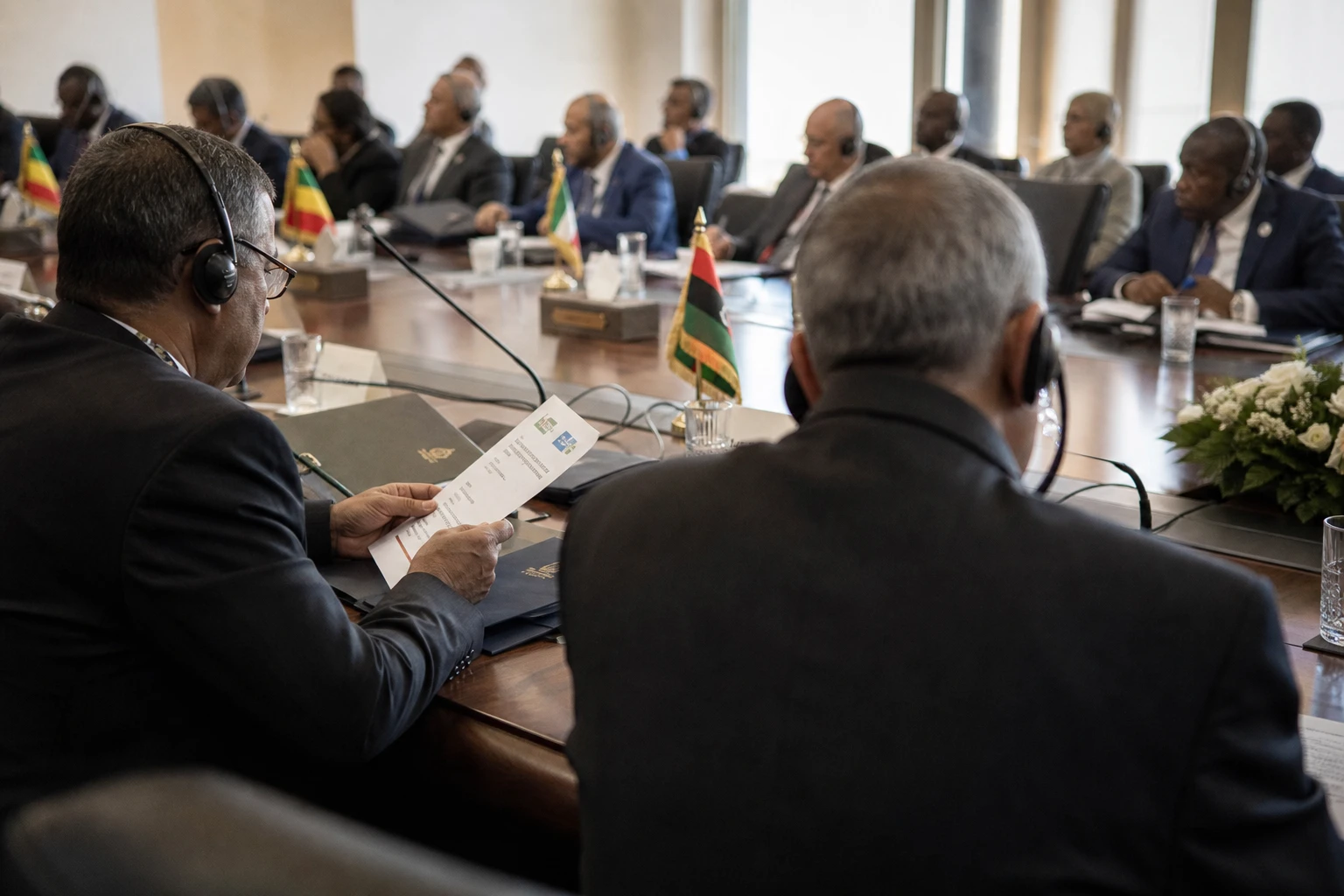
On 1 September 2026 in Cairo, Egyptian Prime Minister Mostafa Madbouly attended the signing of two agreements with Cisco Systems. The first is a letter of intent with the Ministry of Communications and Information Technology. The second is a memorandum of understanding with the National Telecommunication Institute (NTI) to train 3,000 certified technology instructors.
According to published details, Cisco will train 1,000 university lecturers and independent instructors each year for three years. The modules will cover data networks, cybersecurity, operating systems and AI. The idea is simple: train trainers to extend the impact beyond a small core of experts. The government also wants Cisco to support the deployment of AI solutions in public sectors considered priorities, with an emphasis on operational efficiency, decision support and cybersecurity.
This is not the first collaboration. Cisco says it has already helped train or support nearly 670,000 Egyptian students. The NTI, for its part, says it has worked with Cisco for more than 20 years and already serves as a training and support centre for the region. This continuity matters. It shows that the September 2026 agreement fits into an established ecosystem rather than starting from scratch.
What this means for Egypt’s economy
This is the heart of the matter: without teachers, digital strategies remain theoretical. Egypt needs technicians, teachers, researchers and managers able to turn AI into practical applications. For universities, the challenge is to update curricula that often lag behind the market. For students, it is about gaining marketable skills in a labour market where cybersecurity, cloud computing and networks are becoming more important.
For the state, the benefits are also fiscal and administrative. An administration with stronger digital skills can better automate some tasks, protect its systems and use its data. But the impact will only be lasting if training leads to jobs, projects and local ecosystems. Otherwise, talent will move abroad or remain underused. This tension between upskilling and retaining qualified professionals runs through Egypt’s entire digital economy.
Egypt is not starting from zero. The country has expanded its initiatives, from setting up dedicated centres to scaling up training programmes, and hosted the first regional edition of the “AI Everything Middle East & Africa” conference in Cairo in 2026. Events of this kind are more than a showcase. They position the country as a technological hub between North Africa, the Middle East and the rest of the continent.
A reach that extends beyond Egypt
Across Africa, the issue is part of a broader trend. The African Union adopted a continental AI strategy in 2024, then reiterated in 2025 that AI must be built on digital infrastructure, quality data, computing capacity and, above all, skills. In other words, Egypt is moving in the same direction as the continental framework, which urges states to build local capacity rather than rely solely on imported tools.
The impact also extends beyond the telecoms sector. If the announced training reaches campuses, technical centres and government departments, it could benefit healthcare, education, finance and public services. This is where the difference between an image-building policy and an industrial policy will be decided. North Africa is already watching this kind of shift, as countries able to train their digital workforce quickly and at scale gain an advantage in regional competition.
The next milestone to watch will be implementation. The plan is in place, as are the indicators. It remains to be seen whether the promised 3,000 instructors will be certified, whether universities will follow suit, and whether the announced public-sector AI applications will deliver measurable gains. It is at this very practical level that Egypt’s ambition will be judged.