
 Algeria
 Egypt
 Libya
 Sudan
 Tunisia
 Benin
 Burkina Faso
 Cabo Verde
 Côte d'Ivoire
 Ghana
 Guinea
 Guinea-Bissau
 Liberia
 Mali
 Mauritania
 Niger
 Nigeria
 Senegal
 Sierra Leone
 The Gambia
 Togo
 Cameroon
 Central African Republic
 Chad
 DR Congo
 Equatorial Guinea
 Gabon
 Republic of the Congo
 São Tomé and Príncipe
 Burundi
 Comoros
 Djibouti
 Eritrea
 Ethiopia
 Kenya
 Madagascar
 Malawi
 Mauritius
 Mozambique
 Rwanda
 Seychelles
 Somalia
 South Sudan
 Tanzania
 Uganda
 Angola
 Botswana
 Eswatini
 Lesotho
 Namibia
 South Africa
 Zambia
 Zimbabwe
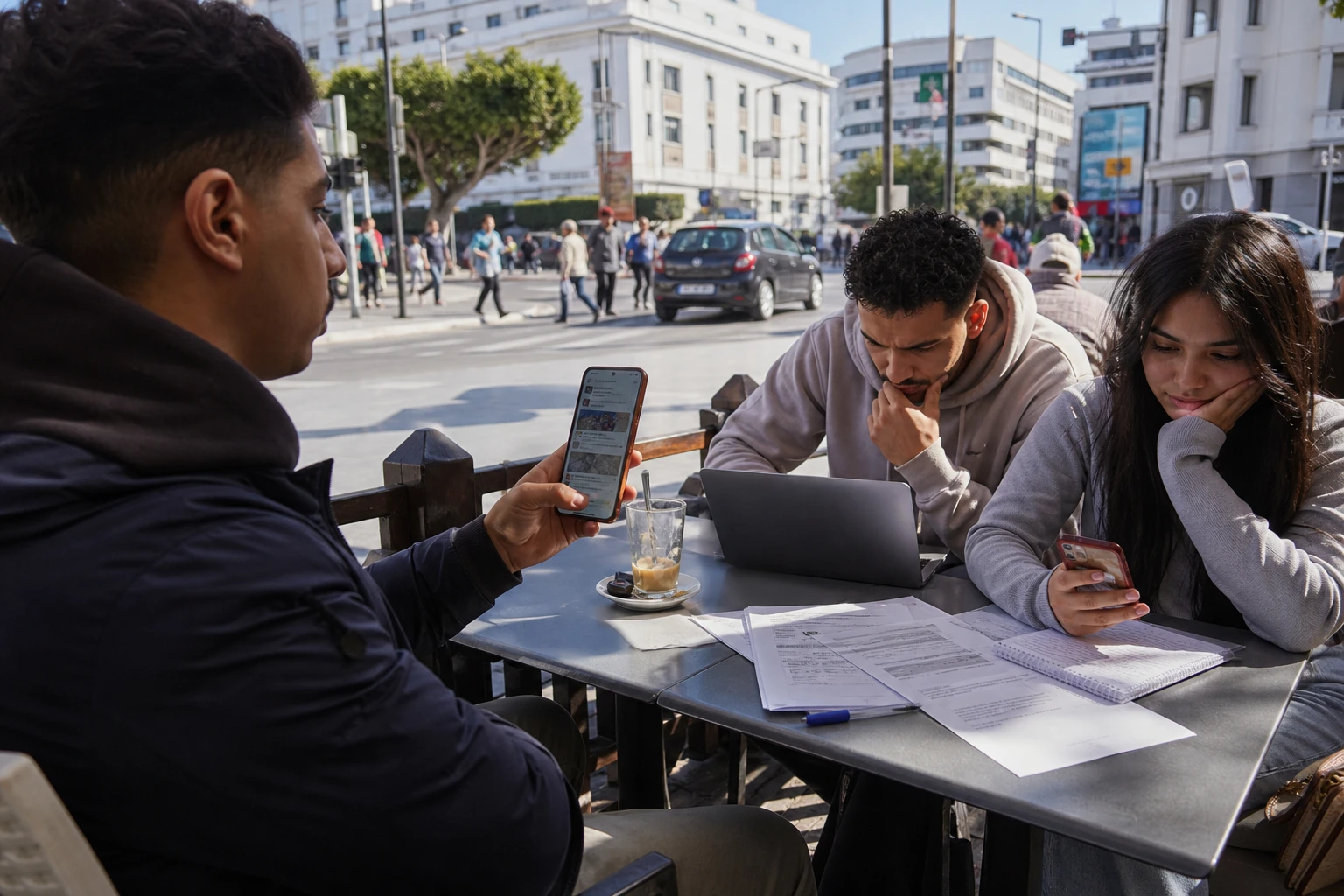
In an election campaign, the battle is no longer fought only on posters, at rallies or on television. It is also fought in news feeds, messaging apps and the content platforms choose to make visible. In Morocco, this digital reality is now entering the electoral arena, as parties sharpen their online mobilisation tools.
The country is not approaching this issue from scratch. In Rabat, the National Commission for the Control of the Protection of Personal Data, or CNDP, draws on Law 09-08 to remind political parties that voters’ data is neither free to use nor without limits. Morocco’s Constitution also protects privacy, giving the issue clear institutional significance.
Stricter rules for political parties
On 18 March 2025, the CNDP launched hearings with institutions, experts and political parties to prepare a framework for artificial intelligence applied to personal data. The authority says it aims to regulate automated processing, particularly when it relies on sensitive data or produces automated decisions. This approach shows that Morocco does not treat AI as a mere technical tool, but as a matter of rights and governance.
In detail, the rules reiterated to parties are specific. They must notify the authorities of their data processing, respect its purpose, limit how long data is retained and obtain explicit consent when using data relating to political opinions. The CNDP also requires content produced with the help of AI to be identified as such. In late August 2026, the authority also published a ten-point reminder for electoral operations and consultations, confirming that data protection remains a priority area for scrutiny.
This vigilance addresses a very practical concern. In a modern campaign, a party can collect phone numbers, segment supporters, test messages and target specific groups. For voters, this can improve the distribution of useful information. But it can also open the door to excessive use, intrusive approaches or the exploitation of political data without genuine transparency. The CNDP is therefore seeking to draw a clear line between political communication and the harvesting of data.
Campaigns do not depend on parties alone
The heart of the issue, however, is broader. Parties can comply with data rules and produce content subject to safeguards. That does not guarantee a balanced campaign. The visibility of messages then depends on platforms’ recommendation systems, which decide what rises to the top of news feeds and what disappears. This is where the digital dimension becomes strategic.
A study published in May 2026 by CcHUB and the African Internet Rights Alliance placed this question at the centre of the African debate. The report, “The Unseen Electorate”, draws on ten African countries, including Morocco, and an experiment conducted in Kenya, Namibia, Nigeria and Uganda. Its findings show that political posts there achieved 2.5 to 3.6 times greater effective visibility than non-political content. The report also found that negative political content was amplified more strongly.
This finding changes how elections are understood. Even if a party complies with personal data law, it may be advantaged or disadvantaged by a platform’s internal logic. The most polarising content often circulates faster than substantive messages. Electoral officials, regulators and observers can therefore no longer limit themselves to checking voter files or consent forms. They must also examine how algorithms distribute attention.
In Morocco, this issue takes on particular significance because the country combines a structured electoral administration with widespread use of social media in public debate. For candidates, digital campaigning has become a space of direct competition. For voters, especially younger people and those most exposed to platforms, the risk is not just disinformation. It is also unequal access to political messages, depending on whether the algorithm promotes or buries them.
A Moroccan and an African concern
The issue extends beyond Morocco alone. The CcHUB and AIRA report recommends incorporating algorithmic risks into election preparation, election observation and platform audits. It also calls for greater transparency around recommendation systems, paid amplification and the moderation of political content in local languages. This analysis echoes a concern now shared by several African researchers: without regulating visibility, data protection alone is not enough.
Morocco is therefore at a crossroads. On one hand, it is strengthening a legal framework for personal data and artificial intelligence, from Rabat. On the other, it must contend with global platforms whose rules for exposing content remain largely beyond the reach of national authorities. This is a matter of digital sovereignty, but also of democratic quality. In a region where political debate increasingly takes place through screens, the question is no longer only who speaks. It is who gets heard.



