
 Algeria
 Egypt
 Libya
 Morocco
 Sudan
 Tunisia
 Benin
 Burkina Faso
 Cabo Verde
 Côte d'Ivoire
 Ghana
 Guinea
 Guinea-Bissau
 Liberia
 Mali
 Mauritania
 Niger
 Nigeria
 Senegal
 Sierra Leone
 The Gambia
 Togo
 Cameroon
 Central African Republic
 Chad
 Equatorial Guinea
 Gabon
 Republic of the Congo
 São Tomé and Príncipe
 Burundi
 Comoros
 Djibouti
 Eritrea
 Ethiopia
 Kenya
 Madagascar
 Malawi
 Mauritius
 Mozambique
 Rwanda
 Seychelles
 Somalia
 South Sudan
 Tanzania
 Uganda
 Angola
 Botswana
 Eswatini
 Lesotho
 Namibia
 South Africa
 Zambia
 Zimbabwe
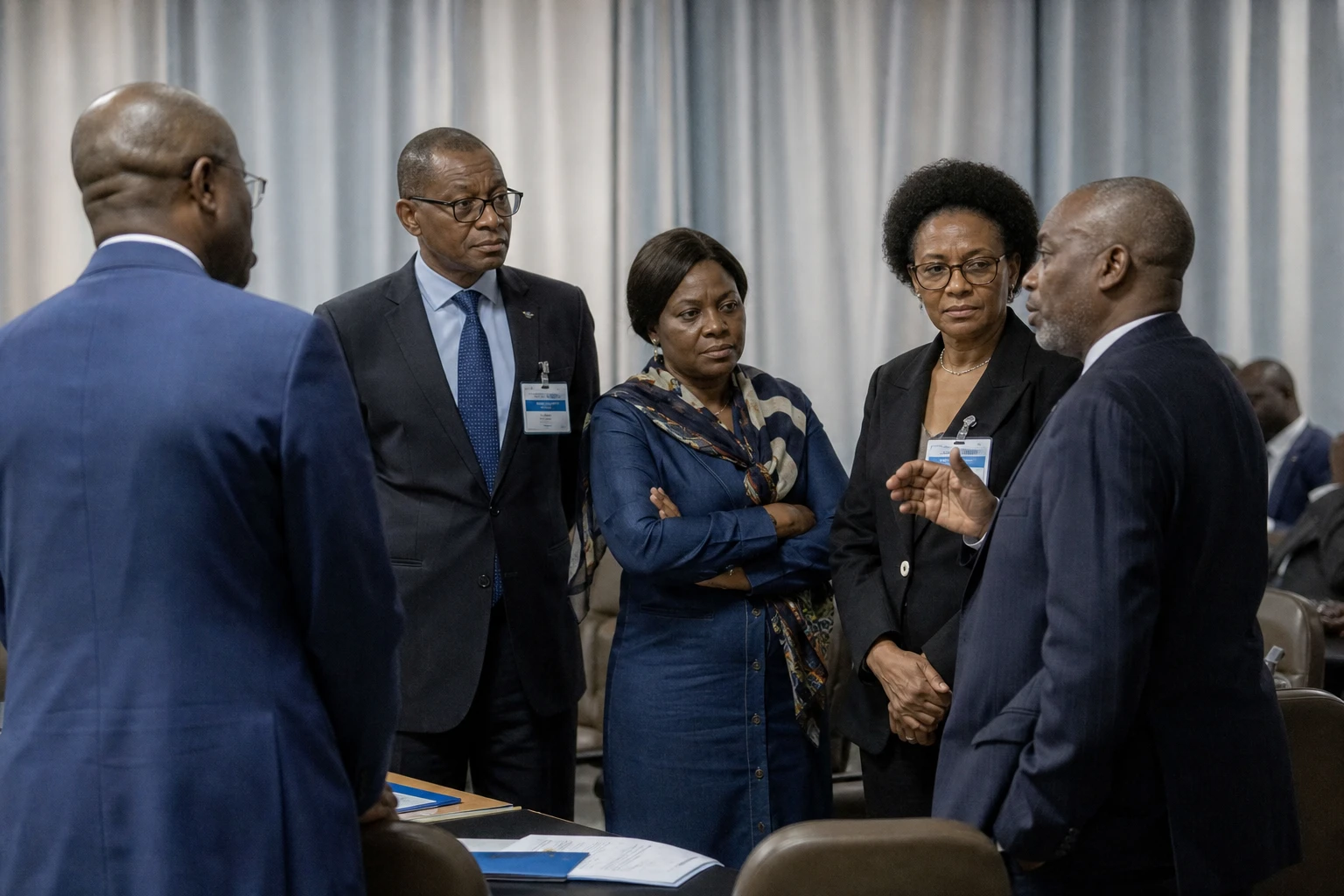
When an epidemic spreads, the question is not only medical
In the Democratic Republic of the Congo, every Ebola outbreak is a reminder of a simple reality: the virus often moves faster than the budgets. This time again, the response is being organised in Kinshasa, in Ituri and at regional level, but the bill remains high. The Congolese authorities, Africa CDC and the WHO have announced repeated reinforcements, surveillance and targeted vaccination, while financial needs continue to exceed national resources.
The issue goes beyond the Congolese case alone. The DRC belongs to several integration blocs, including the East African Community and SADC, where the movement of people and goods makes it impossible to contain any cross-border disease within a single administrative area. In the east of the country, the provinces of Ituri and North Kivu remain connected to sensitive regional corridors, explaining why African actors stress border surveillance, laboratories and coordination between neighbouring states.
What the current response tells us
The Congolese Ministry of Health is documenting the DRC’s 17th Ebola epidemic on a daily basis. In its situation report of 24 August 2026, it reported several thousand confirmed cases and a high number of deaths, while other figures published a few days earlier had already pointed to the epidemic’s rapid spread and growing pressure on healthcare facilities. The WHO, for its part, confirmed that the outbreak detected in May 2026 had spread rapidly and that a major reinforcement of resources was still needed.
On the ground, the response combines several measures: active surveillance, contact tracing, clinical care, infection prevention and control, community outreach and vaccination of people exposed on the front line. On 27 August 2026, vaccination began in Kisangani, using the Ervebo vaccine to protect healthcare workers and high-risk contacts first, according to the Congolese Ministry of Health. The WHO had already said on 15 May that the DRC would receive rapid logistical support, including medical supplies transported from Kinshasa to Bunia.
President Félix-Antoine Tshisekedi Tshilombo has also placed the issue at the top of the political agenda. In Kinshasa, he convened the national response task force several times during 2026, a sign that the disease is not being treated as an isolated technical issue, but as a national risk. At the same time, the Congolese authorities have sought external support, including from the United Kingdom, while African institutions have stepped up expressions of solidarity.
The real sticking point: public health and its funding
The debate is not only about the virus. It concerns the ability of African states to fund, over the long term, health security that works before, during and after a crisis. Africa CDC points out that the 2001 Abuja Declaration set a target of allocating 15% of national budgets to health. Twenty-five years later, that target remains largely out of reach for many countries, leaving them structurally dependent on external aid.
This dependence has a political and operational cost. When funding comes from outside, part of the response timetable depends on decisions made far from Kinshasa. When vaccine stocks, mobile laboratories or emergency teams are lacking, the response is weakened, especially in hard-to-reach areas. Yet the DRC has already built up rare experience with Ebola, since the virus was identified on its soil in 1976 in Yambuku, in what is now Équateur province. The issue, then, is not a lack of expertise, but the difficulty of funding it at the required level.
In this episode, Africa CDC has played a more prominent role than before. The continental institution convened an emergency coordination meeting on 15 May 2026, then called for a regional response based on data, surveillance and support for affected countries. It also reiterated that broad travel restrictions are not a sustainable solution to an epidemic circulating in areas with high levels of mobility. This approach matters for the DRC, but also for its neighbours, because an outbreak that is not contained in the country’s east can quickly become a regional problem.
A continental lesson, beyond Kinshasa
The significance of this crisis extends beyond the Congolese case. It says something about Africa in 2026: a continent better equipped than in 2014, with more specialists, laboratories and coordination tools, but still too exposed to the volatility of donors. East African health ministers, meeting in Dar es Salaam, also linked health security to financial sovereignty, calling for greater domestic investment, better supply chains and coordinated action against epidemics.
In the short term, three things need to be monitored: the evolution of cases in Ituri and neighbouring provinces, the teams’ ability to sustain targeted vaccination, and the level of funding actually mobilised to maintain the response over time. If African efforts are consolidated, Ebola will remain a health emergency. If it remains dependent for too long on uncertain external support, it will also continue to be a political test for Kinshasa, its neighbours and the very idea of African health autonomy.
For official updates, consult the Congolese Ministry of Health’s surveillance dashboard and the WHO’s situation page on the Ebola response in the DRC.



