Algeria
 Egypt
 Libya
 Morocco
 Sudan
 Tunisia
 Benin
 Burkina Faso
 Cabo Verde
 Côte d'Ivoire
 Ghana
 Guinea
 Guinea-Bissau
 Liberia
 Mali
 Niger
 Nigeria
 Senegal
 Sierra Leone
 The Gambia
 Togo
 Cameroon
 Central African Republic
 Chad
 DR Congo
 Equatorial Guinea
 Gabon
 Republic of the Congo
 São Tomé and Príncipe
 Burundi
 Comoros
 Djibouti
 Eritrea
 Ethiopia
 Kenya
 Madagascar
 Malawi
 Mauritius
 Mozambique
 Rwanda
 Seychelles
 Somalia
 South Sudan
 Tanzania
 Uganda
 Angola
 Botswana
 Eswatini
 Lesotho
 Namibia
 South Africa
 Zambia
 Zimbabwe

A judicial response to unrest becoming visible in neighbourhoods
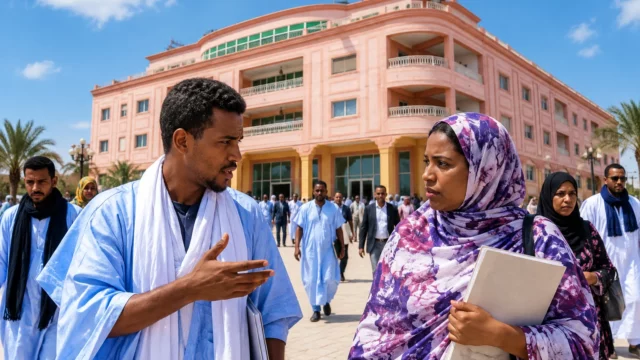
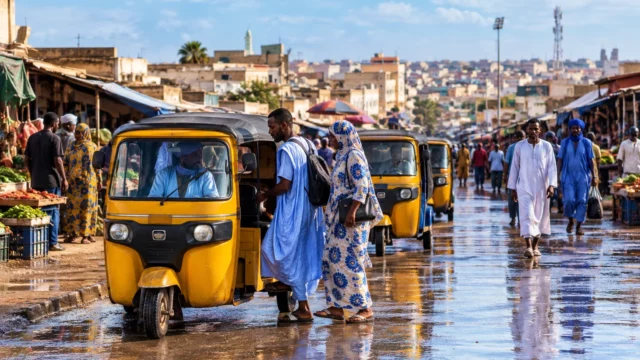
In Nouakchott, drugs are no longer just a police matter. They are making their way into streets, schools, families and neighbourhood conversations. In several outlying neighbourhoods, residents describe daily tensions involving small-scale dealing, violence and a sense of abandonment that weighs particularly heavily on young people. This atmosphere partly explains the Mauritanian government’s decision to tighten the legal framework on narcotic drugs and psychotropic substances.
Mauritania does not operate in isolation. The country lies at the crossroads of several areas of movement: the Sahel, the Atlantic coast and the Maghreb. It is a member of the Arab Maghreb Union and is linked to ECOWAS by an association agreement, although it left the organisation in 2000. This crossroads position makes trafficking a particularly sensitive issue, in a West African environment where the UN has for several years warned of the growth of cocaine routes and other forms of transnational trafficking.
What the new bill contains
On Thursday 27 August 2026, the Council of Ministers approved a bill presented by the Minister of Justice. The text broadens the range of offences to include the production, manufacture, processing, possession, cultivation and trafficking of narcotic drugs. It also targets chemical precursors and equipment used for illicit production. The measures therefore no longer focus solely on users or street dealers. They target the entire chain.
The government also wants its public response to combine two approaches: enforcement and treatment. The bill provides for a therapeutic approach, allowing users to seek treatment voluntarily or, in certain cases, to be referred by court order to specialist centres. This development builds on the 2026–2030 multisectoral integrated national strategy for mental health and tackling addiction, approved in July 2026 with technical support from the World Health Organization.
The timing is significant. Since the start of the year, the Mauritanian authorities have sent increasingly firm signals. In January 2026, a workshop to validate the bill had already been held in Nouakchott, showing that the text was prepared in advance rather than improvised. In recent months, several awareness-raising and training sessions have targeted young people, associations and schools. The state has therefore already embarked on a broader policy drive than the Council of Ministers meeting alone.
A public health issue as much as a security one
In neighbourhoods of the Mauritanian capital, drug use is often described as a social phenomenon before it is a criminal justice issue. Young people are the most exposed. The causes are varied: lack of information, peer pressure, isolation, unemployment, a shortage of local activities and fragile family support. This is the assessment put forward by community organisations and public officials working on the issue. The problem is therefore not limited to the presence of substances. It also reflects the quality of social ties in working-class neighbourhoods.
The government is also advancing concrete healthcare responses. A substance addiction treatment unit has opened in El Mina, in southern Nouakchott, with a specialist team. The authorities plan to turn it into an integrated rehabilitation centre in Tevragh Zeina, offering inpatient care, 24-hour emergency services, outpatient consultations and a specialist laboratory. This approach is important: it recognises that addiction also requires treatment, prevention and reintegration.
On the ground, enforcement alone will not be enough. Seizures announced in recent weeks show that networks exist, but they do not reveal the true scale of the phenomenon or its precise geography. In practice, transit areas, urban outskirts and neighbourhoods with large youth populations are often the most exposed. Nouakchott’s challenge is therefore to bring together police, the justice system, healthcare, education and social services. Without that, tougher penalties risk displacing drug use rather than reducing it.
The message Mauritania wants to send
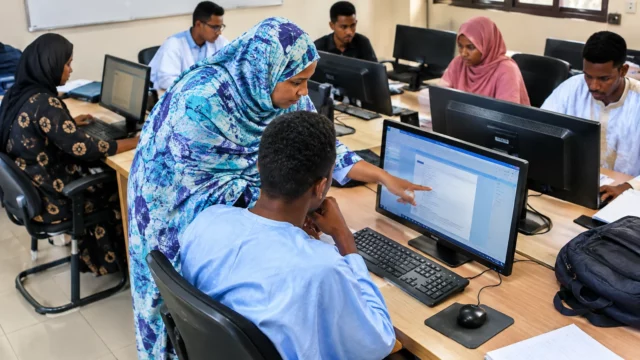
The bill approved by the Council of Ministers sends a clear political message: the state wants to regain control of an issue seen as a threat to public order, young people’s health and family stability. This approach is part of a broader drive for community engagement. In May and July 2026, awareness campaigns were launched in Nouakchott and other cities, with thousands of young people trained and hundreds of volunteers deployed in schools. The Mauritanian authorities are thus seeking to combine institutional visibility with local action.
This approach also says something about the place of young people in public debate. In Nouakchott, as in other African capitals, tackling drugs is now linked to the question of human capital. It affects schools, mental health, neighbourhood security and informal employment. The issue concerns families as much as institutions, and prevention as much as punishment. This is the view now championed by health authorities and frontline organisations, which argue for a comprehensive rather than fragmented response.
Across Africa, Mauritania’s experience reflects a broader trend. Trafficking routes no longer follow administrative borders. They rely on Sahelian corridors, Atlantic ports and transit zones where control capacities remain uneven. Located between the Maghreb and West Africa, Mauritania is directly exposed to these dynamics. The next test will be political and judicial: parliamentary adoption of the bill, followed by its actual implementation on the ground, beyond announcements. That is where Nouakchott’s ability to turn tougher laws into lasting protection will be measured.