Algeria
 Egypt
 Libya
 Morocco
 Sudan
 Tunisia
 Benin
 Burkina Faso
 Cabo Verde
 Côte d'Ivoire
 Ghana
 Guinea
 Guinea-Bissau
 Liberia
 Mali
 Mauritania
 Niger
 Nigeria
 Senegal
 Sierra Leone
 The Gambia
 Togo
 Cameroon
 Central African Republic
 Chad
 Equatorial Guinea
 Gabon
 Republic of the Congo
 São Tomé and Príncipe
 Burundi
 Comoros
 Djibouti
 Eritrea
 Ethiopia
 Kenya
 Madagascar
 Malawi
 Mauritius
 Mozambique
 Rwanda
 Seychelles
 Somalia
 South Sudan
 Tanzania
 Uganda
 Angola
 Botswana
 Eswatini
 Lesotho
 Namibia
 South Africa
 Zambia
 Zimbabwe
Artisanal gold finally gets a banking address
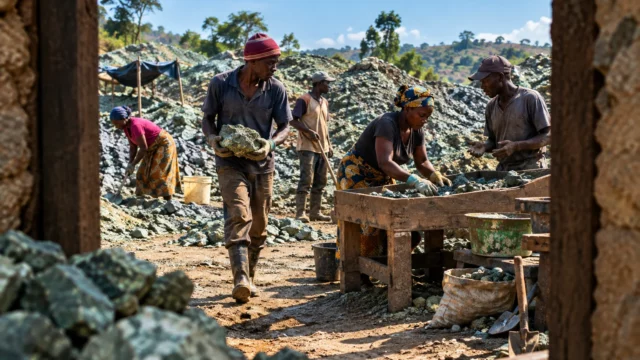
In artisanal gold mining, the real problem is not just production. It is also payment. When money does not circulate smoothly, sellers turn to fast-moving, often informal channels, and the state loses track of a strategic resource. In the Democratic Republic of the Congo, this bottleneck weighs heavily on a sector that supports thousands of families and remains an issue of economic sovereignty.
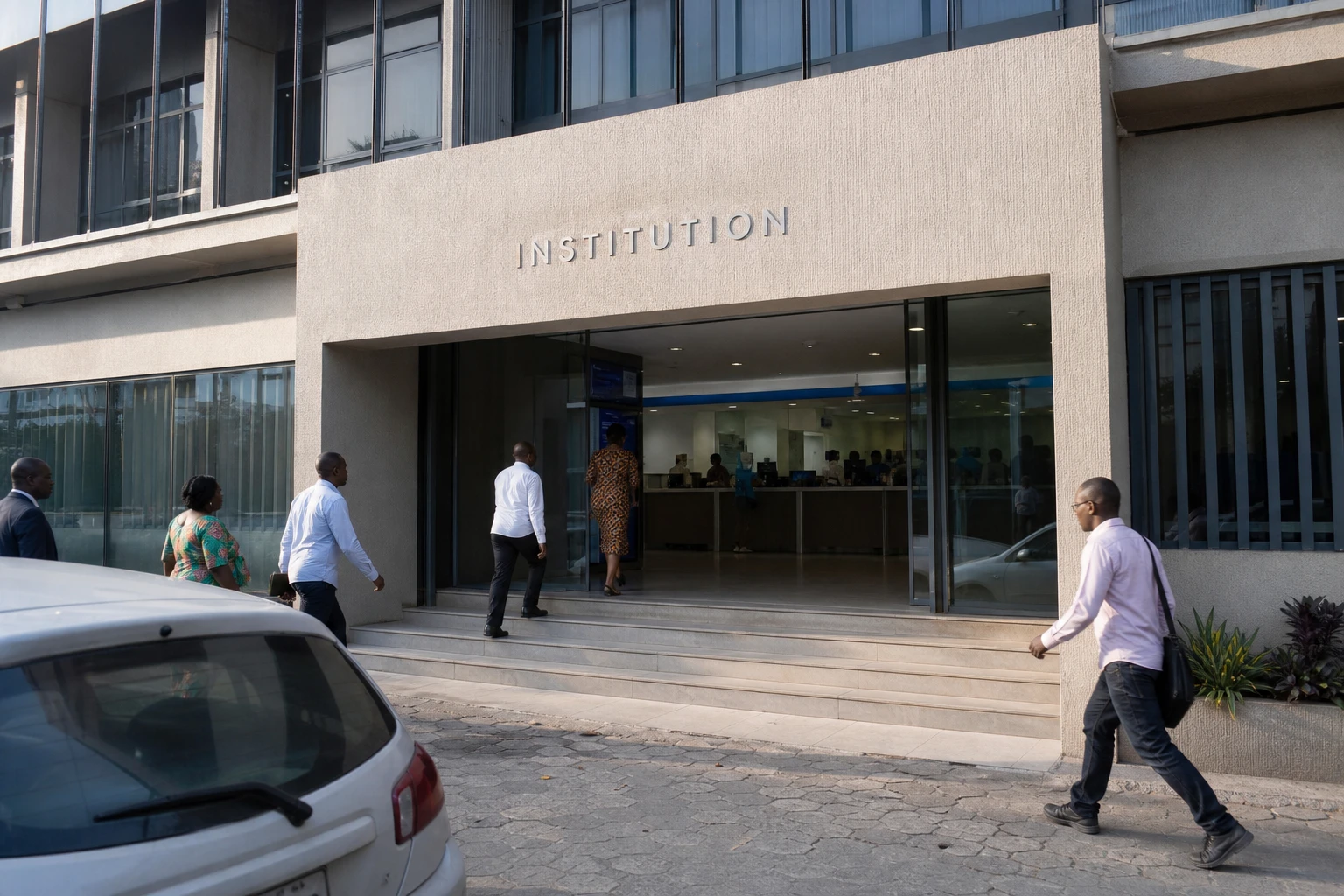
In Kinshasa, DRC Gold Trading SA is seeking to address this weakness. On 24 August 2026, the state-owned company announced a partnership with the Caisse générale d’épargne du Congo, CADECO, to set up satellite branches at its facilities and make it easier to pay artisanal gold traders. The idea is simple: reduce delays, limit cash handling and encourage operators to open bank accounts.
Kinshasa turns to banking to regain control
This move is part of a broader course of action. Since 2022, the DRC has made the formalisation of artisanal gold mining a pillar of public policy, with DRC Gold Trading acting as the state’s commercial arm in the gold sector. The company says it wants to channel production into official channels, combat fraud and improve the traceability of flows.
CADECO is no stranger to this terrain. The state-owned bank says it is present in every province of the DRC, with 97 branches, and is supervised by the Central Bank of the Congo. For DRC Gold Trading, this network could bring banking closer to trading areas and reassure operators accustomed to immediate payments.
This approach addresses a well-documented problem: a huge share of Congolese gold still escapes official channels. In July 2026, the International Conference on the Great Lakes Region, as reported by the Congolese press, cited figures of up to 98% of gold being extracted outside official channels. In South Kivu, experts had already cited, in 2023, a monthly outflow of about 1.5 tonnes outside the legal export system. These figures underline the urgency of more suitable payment solutions.
What the agreement with CADECO changes
On paper, the scheme addresses three practical needs. First, to secure payments. Second, to make transactions faster. Finally, to leave a banking record, useful for taxes, checks and volume audits. In a sector where cash liquidity has long encouraged price discrepancies and parallel sales, this is central.
The closer ties between the state-owned bank and traders could also expand CADECO’s customer base. In February 2026, the public group reported growth in deposits collected and the number of active accounts, without publishing all the figures. Setting up branches at gold-buying points could strengthen this trend, particularly in producing provinces where commercial flows often remain poorly banked.
But success will depend on the practical arrangements. The statement does not specify the number of branches, their locations, payment limits, fees or the instruments to be used. In a highly mobile sector, the speed of execution will matter as much as the announcement itself. Without clear procedures, traders will continue to choose between the official channel and informal buyers, who may offer better prices or faster payments.
This matters for mining provinces, but also for Kinshasa. According to DRC Gold Trading’s 2025-2030 strategic plan, the capital wants to become a gold-trading hub in Africa. The company has set a target of capturing 50 tonnes of gold a year by 2030. It had also cited a target for 2026 of 18 tonnes and $2bn to be repatriated. These ambitions can only be met if the payment link works on the ground.
A mining sector, but also a test for the state
The issue goes beyond trade alone. In February 2026, the Central Bank of the Congo and DRC Gold Trading signed a partnership to revive monetary gold, with the state-owned company as the exclusive supplier intended to gradually replenish national reserves. The mechanism gives traceability new value. It also requires the state to build a reliable supply chain, from artisanal mining sites to institutional vaults.
In other words, the challenge is not simply to sell more gold. It is to bring more wealth into a transparent, controllable and taxable system. For artisanal miners, this could mean safer payments. For traders, more predictable procedures. For the state, more revenue and less cross-border leakage. But for the model to hold, it will need a steady supply, credible prices and a minimum level of security in production areas.
The regional significance is clear. In the Great Lakes region, artisanal gold remains one of the minerals most exposed to smuggling and fragile peace networks. The DRC, which this year chairs some diplomatic frameworks related to natural resources, is seeking to show that a mineral often associated with outflows can become a driver of formalisation. The next test will be operational: whether CADECO’s satellite branches actually work on the ground, and whether banking flows finally match the volumes announced.