
 Algeria
 Egypt
 Libya
 Morocco
 Sudan
 Tunisia
 Benin
 Burkina Faso
 Cabo Verde
 Côte d'Ivoire
 Ghana
 Guinea
 Guinea-Bissau
 Liberia
 Mali
 Mauritania
 Niger
 Nigeria
 Senegal
 Sierra Leone
 The Gambia
 Togo
 Cameroon
 Chad
 DR Congo
 Equatorial Guinea
 Gabon
 Republic of the Congo
 São Tomé and Príncipe
 Burundi
 Comoros
 Djibouti
 Eritrea
 Ethiopia
 Kenya
 Madagascar
 Malawi
 Mauritius
 Mozambique
 Rwanda
 Seychelles
 Somalia
 South Sudan
 Tanzania
 Uganda
 Angola
 Botswana
 Eswatini
 Lesotho
 Namibia
 South Africa
 Zambia
 Zimbabwe
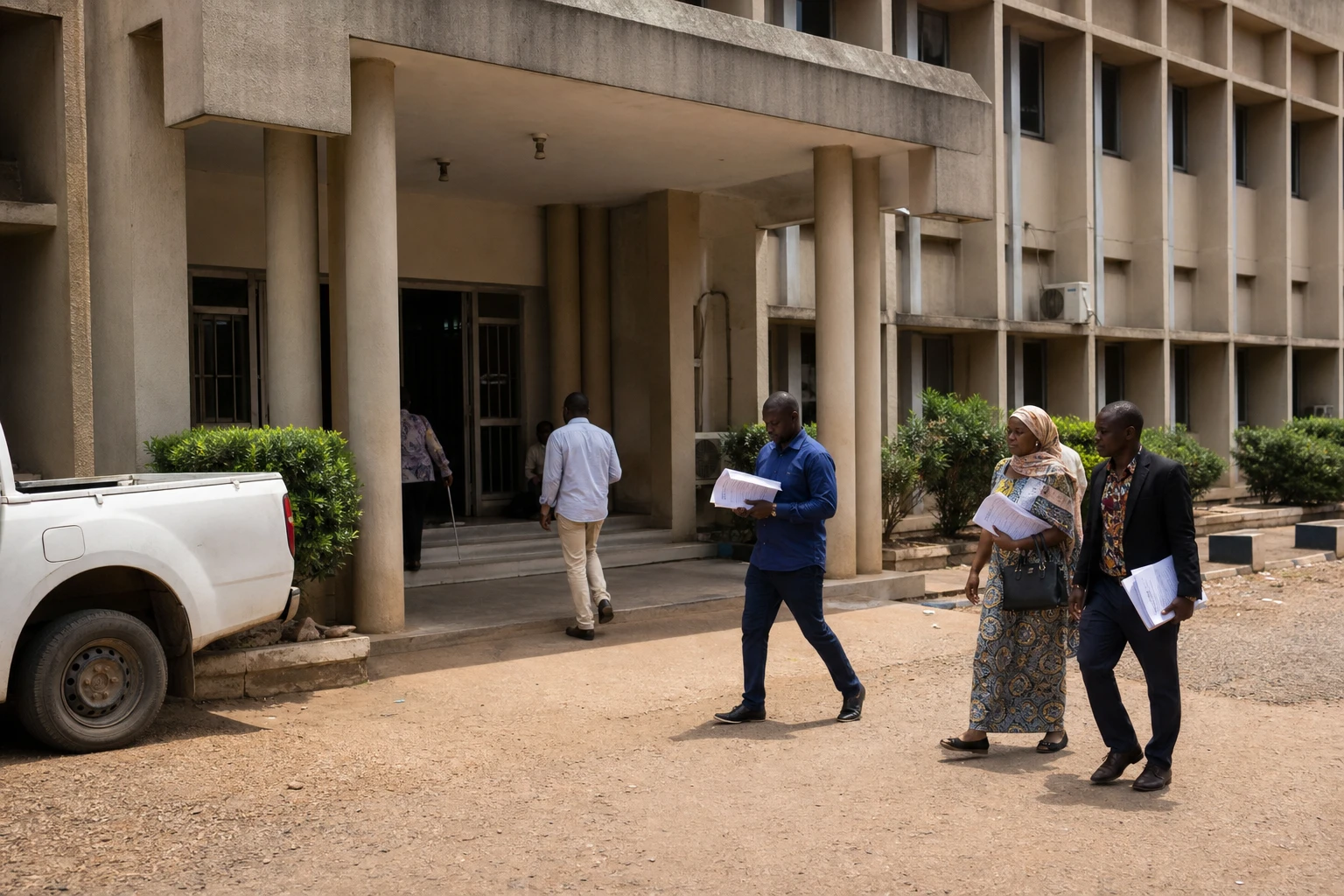
When the road becomes a test of endurance
In the Central African Republic, a road does more than connect two cities. It also determines the price of rice, cement and fuel, and how long people spend away from home. On the Bangui-Bangassou route, this reality is plain to see every rainy season: trucks get stuck, goods are delayed and families foot the bill.
Bangui, the capital, is home to government offices, markets and a large share of imports. Bangassou, in the south-east, relies heavily on this road link for supplies to the city and the communities along the way. In a landlocked country where goods depend on fragile corridors, road quality is as much an economic issue as a social one.
A national route battered by rain and lack of maintenance
The Bangui-Bangassou route, identified as part of National Road 2, has for years been described as one of the country’s most arduous journeys. Accounts gathered on the ground describe a deteriorating road surface, long stretches of mud, deep potholes and damaged structures. In these conditions, some journeys take several weeks instead of a few days, particularly when rain turns low-lying sections into traps for heavy goods vehicles.
This is not an isolated case. Other sections of the Central African road network suffer from the same lack of maintenance, as recent reports on Kabo and the condition of local roads around Bangui have again highlighted. The same pattern recurs each time: infrastructure deteriorates, traffic slows, and logistics costs rise.
A World Bank document on the Emergency Infrastructure and Connectivity Project says that improving the Central African Republic’s road network remains a long-term priority, with an emphasis on climate resilience and the security of the corridor linking Bangui to the Cameroonian border. The institution also notes that maintenance and rehabilitation of road sections remain essential to keeping roads passable.
How road failures affect households and traders
On paper, a damaged road looks like a technical problem. In real life, it becomes an invisible tax. A truck stuck in the mud also holds up a stock of cement, sacks of food, medicines or fuel. The longer the journey takes, the higher the transport cost. And as that cost rises, so do prices in the markets of Bangassou, Alindao and the communities in between.
For transporters, the risk goes beyond mechanical breakdown. Prolonged isolation also exposes them to insecurity, including attacks on secondary roads or extortion at checkpoints, a problem regularly reported across the Central African Republic. For traders, every day lost puts further strain on often limited cash flow. For households, rising food prices further erode the means of survival in towns and villages alike.
The authorities acknowledge this kind of ordeal and regularly announce rehabilitation projects. Public tenders issued by the ministry responsible for infrastructure also show that works have been scheduled on sections linking Bambari to Alindao and Alindao to Kongbo, confirming that the south-east is among the areas earmarked for repairs. But administrative timetables often run up against the rainy season, a lack of maintenance resources and the lengthy nature of the works.
An issue of economic sovereignty as well as transport
National Road 2 is not just a strip of earth. It contributes to the country’s overall logistics balance. When an internal route is blocked, Bangui becomes more dependent on alternative routes, which are themselves vulnerable, or on international roads. This adds to pressure on import costs and domestic distribution in a country whose economy remains highly exposed to supply disruptions.
At regional level, the issue extends beyond the Central African Republic. CEMAC has long worked to improve the flow of traffic along Central African corridors, particularly those linking Bangui, Douala, N’Djamena and, more broadly, the Congo and Ubangi basins. In June 2026, the World Bank approved a $1.12bn programme to modernise the Douala-Bangui corridor, a sign that the Central African route is now seen as a strategic link in regional integration.
This broader momentum sheds useful light on the Bangui-Bangassou route. Although it is an internal road, its deterioration tells the same story as delays on major corridors: without regular maintenance, infrastructure falls apart faster than it can be rebuilt. The Central African Republic’s south-east is then left on the margins of trade flows, while the capital bears the cost of the disruption.
What happens next will depend on the ability of the Central African state, donors and regional actors to turn announcements into lasting works. Projects under way show that an opportunity exists. But as long as routine maintenance remains inadequate, each rainy season can undo progress already made.



