Algeria
 Egypt
 Libya
 Morocco
 Sudan
 Tunisia
 Benin
 Burkina Faso
 Cabo Verde
 Côte d'Ivoire
 Ghana
 Guinea
 Guinea-Bissau
 Liberia
 Mali
 Mauritania
 Niger
 Nigeria
 Senegal
 Sierra Leone
 The Gambia
 Togo
 Cameroon
 Central African Republic
 Chad
 Equatorial Guinea
 Gabon
 Republic of the Congo
 São Tomé and Príncipe
 Burundi
 Comoros
 Djibouti
 Eritrea
 Ethiopia
 Kenya
 Madagascar
 Malawi
 Mauritius
 Mozambique
 Rwanda
 Seychelles
 Somalia
 South Sudan
 Tanzania
 Uganda
 Angola
 Botswana
 Eswatini
 Lesotho
 Namibia
 South Africa
 Zambia
 Zimbabwe
A response shaped as much in neighbourhoods as in laboratories
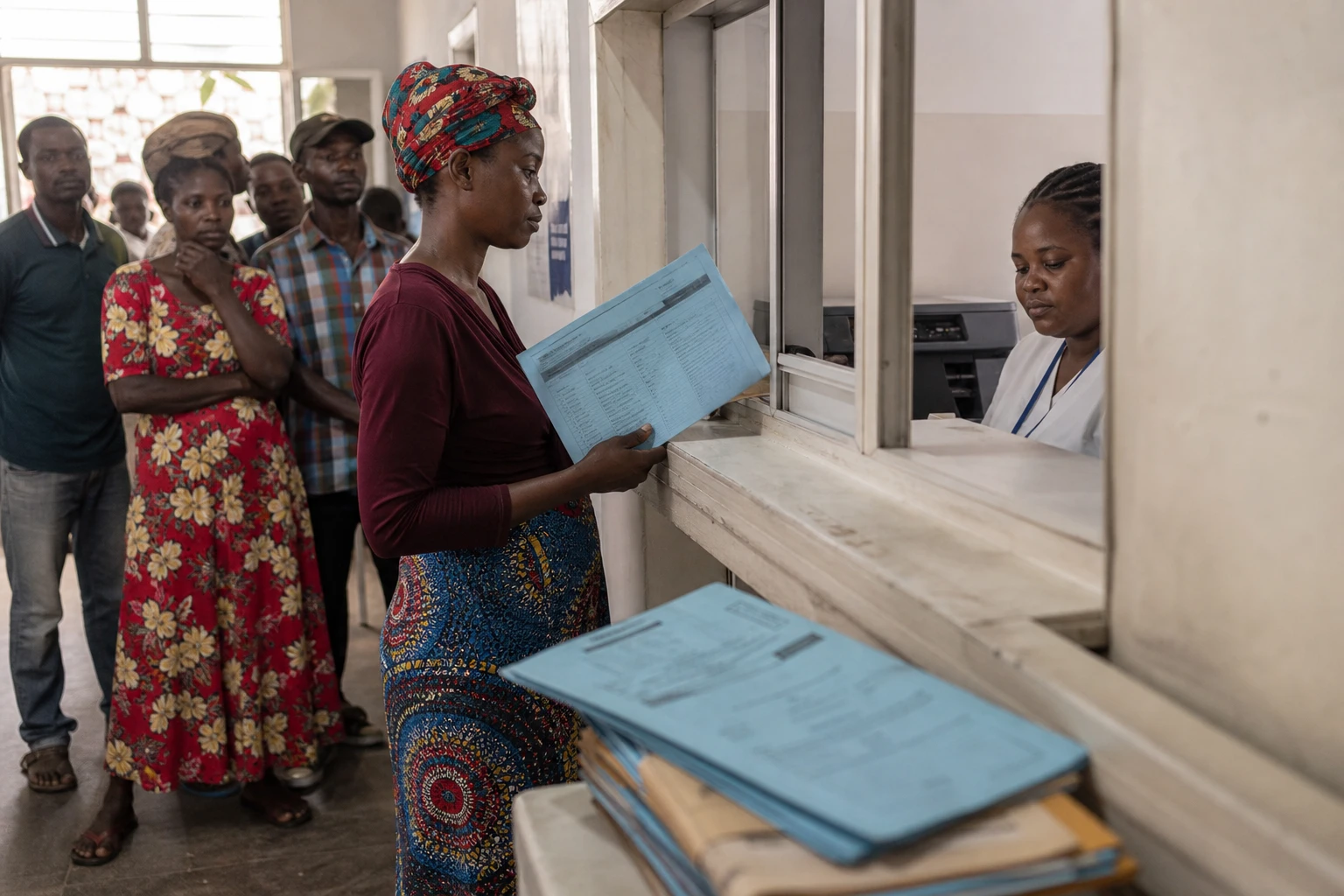
In an Ebola epidemic, the figures matter. But they do not tell the whole story. In the Democratic Republic of the Congo, what also makes the difference is how quickly a suspected case is reported, isolated and confirmed, and whether teams can persuade communities that early treatment saves lives. The WHO is now stressing this point: surveillance, detection and investigation of suspected cases, prevention and community engagement are at the heart of the response.
This update comes as the Bundibugyo Ebola epidemic continues to weigh on DR Congo, where the WHO considers the risk level « very high ». The organisation also classifies several neighbours, including Burundi and the Central African Republic, as high-risk countries. This classification is a reminder of a simple regional reality: in the Great Lakes region, a health crisis does not stop at a border.
Kinshasa faces a regional public health emergency
DR Congo is no stranger to the fight against Ebola. The country has weathered long outbreaks, accumulating lessons on surveillance, targeted vaccination and relations with communities. But the current episode stands out for its speed and its gradual spread to several provinces, which is making the logistical response more difficult. The WHO said the epidemic remained a public health emergency of international concern after a meeting of its emergency committee on 18 August 2026.
For several days, the Congolese Ministry of Health has been publishing situation reports on this 17th epidemic, with an update dated 19 August 2026 available in its epidemiological surveillance section. This transparency is essential because it enables authorities, partners and the public to track cases, deaths, recoveries and affected areas. In an emergency such as Ebola, data are not a technical detail: they guide field teams, laboratories and border crossing points.
What the figures say, and what they demand
The latest official figures published nationally report 5,514 confirmed cases and more than 2,690 deaths, a case fatality rate of 47.9%. A more recent update, published by the ministry on 24 August 2026, cites 5,514 confirmed cases, 2,642 deaths and 1,200 recoveries. The discrepancy between the tallies shows how quickly figures can change during an epidemic; but one thing remains constant: the toll is extremely heavy.
Beyond the cumulative figures, the operational priority is clear. The WHO is calling for stronger surveillance, better contact tracing, infection prevention in healthcare facilities and local communication. It is now also adding measures concerning social activity, mass gatherings and domestic mobility. In other words, the response does not depend on hospitals alone: it also depends on schools, markets, interprovincial journeys, families and safe burials.
This approach is consistent with Africa CDC’s assessment. Since May 2026, it has been warning of the risk of regional spread from Ituri and stressing the cross-border nature of the threat. The continental body has even classified the epidemic as a continental public health emergency, citing in particular population mobility, insecurity in some affected areas and the proximity of other Great Lakes countries.
What DR Congo must contain, and what Central Africa is watching
For the Congolese authorities, the immediate challenge is twofold. They must contain the epidemic where it is already spreading while preventing it from reaching new transport routes. This requires staff, fuel, rapid alert systems, functioning laboratories and a sustained presence in health zones. It also requires trust. Without community participation, cases remain hidden, contacts are lost and deaths occur outside the healthcare system.
The issue therefore extends beyond DR Congo. Burundi, the Central African Republic, Rwanda, South Sudan and other countries in the region are closely monitoring developments, with border surveillance and health preparedness measures in place. In an area where trade, family travel and mining activities create constant movement, an Ebola outbreak quickly becomes a test of regional coordination.
The continent, for its part, is taking away one main lesson: African health crises are managed more effectively when the response is African-led, coordinated and swift. The WHO, Africa CDC and the Congolese authorities now share the same priority: act early and close to communities, before new clusters fuel wider spread. The next points to watch will be national situation reports, decisions by the WHO emergency committee and neighbouring countries’ ability to maintain sustained surveillance without unnecessarily restricting movement.