Algeria
 Egypt
 Libya
 Morocco
 Sudan
 Tunisia
 Benin
 Burkina Faso
 Cabo Verde
 Côte d'Ivoire
 Ghana
 Guinea
 Guinea-Bissau
 Liberia
 Mali
 Mauritania
 Niger
 Nigeria
 Senegal
 Sierra Leone
 The Gambia
 Togo
 Cameroon
 Central African Republic
 Chad
 Equatorial Guinea
 Gabon
 Republic of the Congo
 São Tomé and Príncipe
 Burundi
 Comoros
 Djibouti
 Eritrea
 Ethiopia
 Kenya
 Madagascar
 Malawi
 Mauritius
 Mozambique
 Rwanda
 Seychelles
 Somalia
 South Sudan
 Tanzania
 Uganda
 Angola
 Botswana
 Eswatini
 Lesotho
 Namibia
 South Africa
 Zambia
 Zimbabwe
When a health alert crosses borders
In the Democratic Republic of the Congo, an epidemic is never just a number. It affects families, slows routine healthcare and weakens territories already under pressure, especially when access to health centres depends on difficult roads and an uneven public-sector presence. In this context, Pope Leo XIV’s call for an international response is a reminder of a simple reality: with Ebola, the speed of transmission also depends on communities’ trust.
The health crisis in the DRC is part of a broader history. The country is facing its 17th Ebola outbreak since 1976, according to the World Health Organization’s Regional Office for Africa, with the epicentre in Ituri, in the north-east. The outbreak was declared a public health emergency of international concern on 17 May 2026, requiring coordination well beyond the national authorities alone.
What the figures actually show
On 23 August 2026, during the Angelus at the Vatican, Leo XIV said he often prayed for the DRC, « especially in light of the spread of the Ebola epidemic », and encouraged a response from the international community that also involved local communities in prevention efforts. The same text mentions his solidarity with the Central African Republic following the collapse of a mine in Zamboyé.
The latest consolidated figures available show the scale of the crisis. As of 16 August 2026, the DRC had recorded 5,021 confirmed cases and 2,378 confirmed deaths, according to the WHO’s Weekly Epidemiological Record. The organisation notes that this total of confirmed cases already exceeds the roughly 4,800 cases recorded across all 16 previous outbreaks documented in the country, although historical definitions were not entirely consistent.
The WHO and its African regional office provide an even more detailed picture: the outbreak has spread across six provinces, with Ituri at the centre of transmission, as well as North Kivu, South Kivu, Haut-Uélé, Tshopo and Bas-Uélé. On 4 August, Africa CDC and the WHO had already reported 3,973 confirmed cases and 1,801 deaths, illustrating the rapid increase in less than two weeks.
Why local prevention is crucial
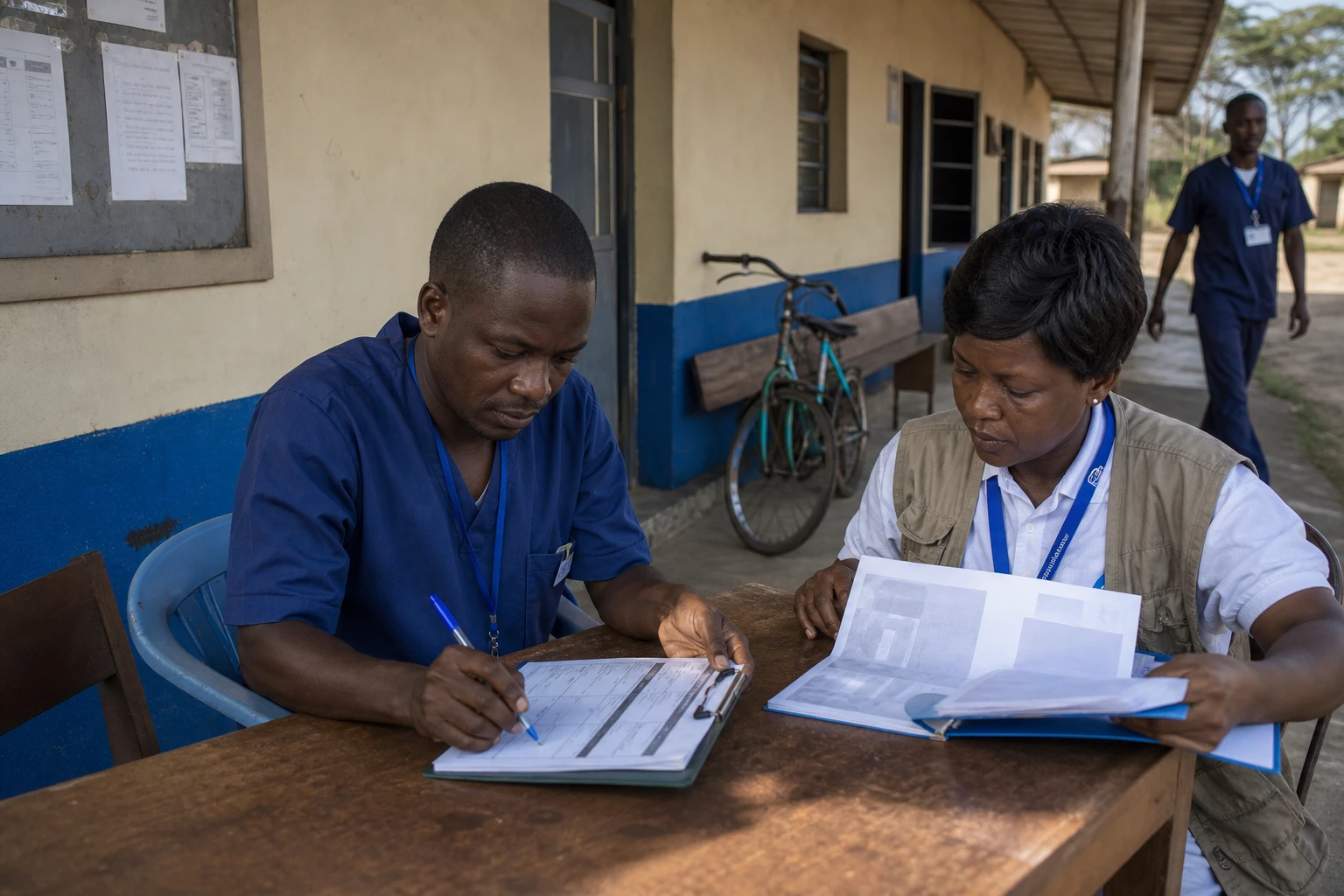
The heart of the pope’s message now echoes the assessment of health agencies: without informed communities, the response loses momentum. The WHO and Africa CDC are calling for stronger early detection, contact tracing, access to care and community-level communication. They also stress the role of community and religious leaders, women and young people in overcoming mistrust and speeding up alerts.
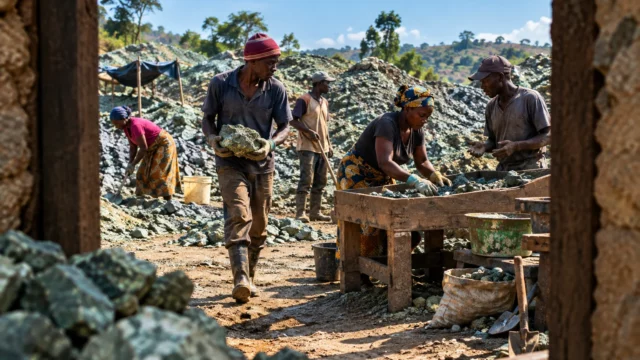
This approach is not merely symbolic. In eastern DRC, population movements, insecurity and informal mining activities complicate case tracing and safe burials. The WHO also notes that transmission remains particularly concentrated in Ituri, where the areas of Bunia, Rwampara and Mongbwalu are among the worst affected. In a province already marked by population mobility, every delay in detection extends the chain of transmission.
The problem is therefore not only medical. It is also organisational. The joint report published on 6 August puts contact tracing at 75%, well below the operational target of 95%, and occupancy at the North Kivu treatment centre at 139%. These two indicators alone show how quickly an outbreak becomes a test of capacity for the state, health workers and partners.
What this means for Kinshasa, the region and the continent
For Kinshasa, the challenge is twofold. It must contain the outbreak in the east while maintaining other health services. The WHO says the national authorities have activated emergency mechanisms and that the response relies on government, provincial and international coordination. In a country as vast as the DRC, the response can only succeed if provinces have rapid access to resources, accessible laboratories and suitable logistics.
For neighbouring countries, the alert remains serious. The WHO and Africa CDC stress the need for sustained cross-border surveillance, as the affected area lies in a busy transit zone bordering Uganda and other countries in the region. Uganda’s experience, where the outbreak was contained before the end of local transmission was declared on 28 July 2026, shows that a rapid response can break chains of transmission. But this result cannot be replicated without close monitoring and social trust.
Across Africa, the issue extends beyond the DRC. The Brazzaville meeting on regional public health and calls from the WHO Regional Office for Africa underline that health emergencies always raise the same question: how can preparedness be funded sustainably, rather than scrambling to catch up with the next outbreak? The answer lies in health systems, surveillance, research into countermeasures and locally rooted prevention. For the DRC, as for the rest of the continent, the immediate challenge is clear: to sustain the response over time, so it does not run out of steam before transmission ends.