Algeria
 Egypt
 Libya
 Morocco
 Sudan
 Tunisia
 Benin
 Burkina Faso
 Cabo Verde
 Côte d'Ivoire
 Ghana
 Guinea
 Guinea-Bissau
 Liberia
 Mauritania
 Niger
 Nigeria
 Senegal
 Sierra Leone
 The Gambia
 Togo
 Cameroon
 Central African Republic
 Chad
 DR Congo
 Equatorial Guinea
 Gabon
 Republic of the Congo
 São Tomé and Príncipe
 Burundi
 Comoros
 Djibouti
 Eritrea
 Ethiopia
 Kenya
 Madagascar
 Malawi
 Mauritius
 Mozambique
 Rwanda
 Seychelles
 Somalia
 South Sudan
 Tanzania
 Uganda
 Angola
 Botswana
 Eswatini
 Lesotho
 Namibia
 South Africa
 Zambia
 Zimbabwe
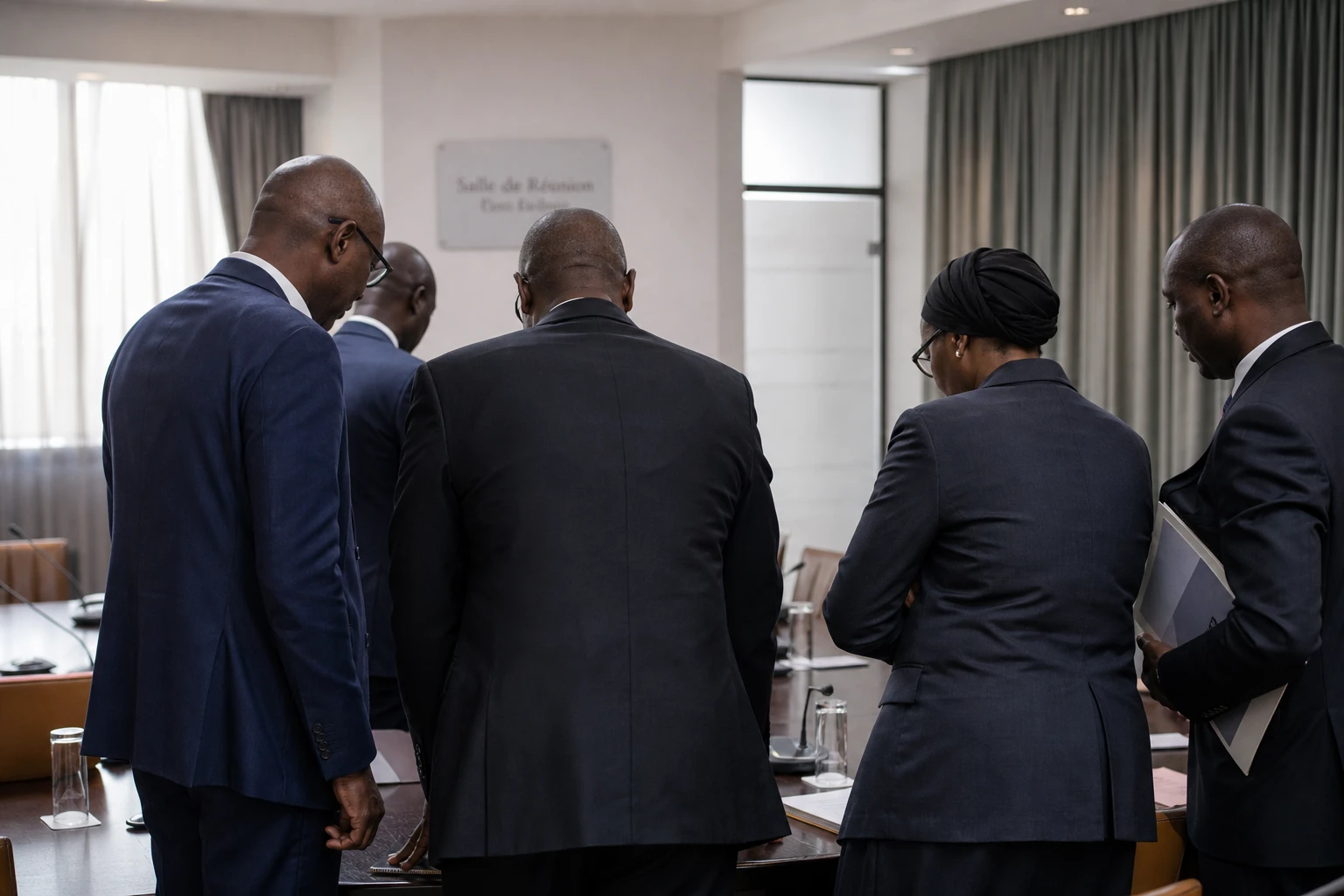
In Bamako, gold is no longer just an underground resource: it has become a test of fiscal sovereignty.
In Mali, the debate is no longer only about how much gold is extracted. It is about how much the state actually manages to retain. In a country where gold remains the leading export earner, the question is simple: who captures the value — the mine, the company or the public purse?
This question forms part of a broader sequence marked by the revision of the 2023 Mining Code, growing demands for public oversight and a standoff with several foreign operators. Since leaving ECOWAS, Mali has also joined a more fragmented regional environment in which each West African state is seeking to retain more of its extractive revenues. In this context, Malian gold has become a political signal as much as an economic asset.
Record revenues, but part of the boost comes from elsewhere
The figures reported for 2025 mark a clear turning point. Gold companies are said to have paid 888.5 billion CFA francs into Mali’s public purse, compared with 835.1 billion in 2024, an increase of 6.4%. The previous year had already been exceptional, with mining payments jumping by 52.5%. In two years, revenues from the gold sector have therefore risen by more than 60%.
But that result does not tell the whole story. Higher receipts are also due to a surge in global gold prices. In other words, Bamako benefited from a favourable market at the very moment production was falling. The mining ministry reported that industrial output dropped to 42.2 tonnes in 2025, from 54.8 tonnes in 2024 and 66.5 tonnes in 2023. The decline was 22.9% year on year.
The contrast is significant. A state can collect more without producing more if the sale price rises and tax reassessments multiply. That explains, at least in part, Mali’s performance in 2025. The government also says it recovered 761 billion CFA francs in arrears following an audit of the sector launched in 2023. According to the authorities, the sum reflects the scale of amounts that had previously been underpaid or disputed. It should, however, be treated with caution, as it may overlap with payments already recorded elsewhere.
The new Mining Code has shifted the balance of power
Adopted in 2023, the new mining framework has reshaped the state’s role in projects. Mali retains a free 10% stake in mining companies. It can also buy up to an additional 20%. On top of this, a potential 5% stake is reserved for Malian investors, which could bring the national shareholding in new projects to 35%. The local content law, meanwhile, is intended to reserve a larger share of contracts and jobs for domestic companies.
The reform also raised some levies and cut several tax benefits. Above all, it sent a clear signal: old agreements are no longer enough to lock in the rules for 20 years. For the Malian state, the stakes are fiscal as well as political. It wants to show that national resources can fund the budget, roads, schools and security without relying solely on foreign aid or market cycles.
The most visible dispute pitted Bamako against Barrick, the operator of the Loulo-Gounkoto complex. In January 2025, Reuters reported that a tax and regulatory disagreement had led to acute tensions, followed by retaliatory measures by the state. The company eventually accepted an agreement in November 2025 that was presented as ending a two-year conflict. The Associated Press described the agreement as a settlement of a tax dispute, after months of confrontation. Reuters later reported that a $430 million arrangement had been reached, confirming the scale of the stakes.
In this case, Mali wanted to show that a major mining group was not beyond reach. This approach comes at a cost. It may reassure some members of the public, who are demanding better redistribution, but it also worries investors who fear contractual instability. This is the heart of Mali’s dilemma: capturing more value without undermining production.
Exports, artisanal mining and refining: the next battle is beyond the official figures
The National Institute of Statistics recorded a sharp increase in the value of official gold exports in 2025, from 1,610 billion to 2,750 billion CFA francs. According to data cited by Reuters, South Africa took 60.4% of these declared flows, ahead of the United Arab Emirates and Australia. Here again, the price of gold explains much of the change. But the increase also points to the metal being more fully reflected in Mali’s external accounts.
The real blind spot, however, remains artisanal gold. In 2026, the authorities established the Malian Precious Substances Office to centralise and monitor commercial flows. The sector is said to support nearly two million people at 350 to 400 sites, but a large share of production is still thought to leave the country undeclared. SWISSAID, cited by Reuters and other outlets, estimated in 2024 that undeclared exports could amount to between 30 and 57 tonnes a year.
At Sénou, in the Bamako district, the gold refinery project points in the same direction. The state is to hold 62%, against 38% for the Russian group Yadran. The facility is announced with a capacity of 200 tonnes a year. It is intended to enable more value to be processed in Mali, rather than sending raw material to foreign refining centres.
For the public, the stakes are tangible. If gold genuinely supports the budget, it can fund public services and ease some social tensions. If revenues continue to be driven by a handful of exceptional tax disputes and rising prices, the effect will be more fragile. For the mining industry, the message is clearer: the era of concessions that were tacitly untouchable is over. For Mali, and beyond it for several resource-rich African states, the question now is this: how can extractive wealth be turned into a sustainable productive base without losing investment, trust or public control?