Algeria
 Egypt
 Libya
 Morocco
 Sudan
 Tunisia
 Benin
 Burkina Faso
 Cabo Verde
 Côte d'Ivoire
 Ghana
 Guinea
 Guinea-Bissau
 Liberia
 Mali
 Mauritania
 Niger
 Nigeria
 Sierra Leone
 The Gambia
 Togo
 Cameroon
 Central African Republic
 Chad
 DR Congo
 Equatorial Guinea
 Gabon
 Republic of the Congo
 São Tomé and Príncipe
 Burundi
 Comoros
 Djibouti
 Eritrea
 Ethiopia
 Kenya
 Madagascar
 Malawi
 Mauritius
 Mozambique
 Rwanda
 Seychelles
 Somalia
 South Sudan
 Tanzania
 Uganda
 Angola
 Botswana
 Eswatini
 Lesotho
 Namibia
 South Africa
 Zambia
 Zimbabwe
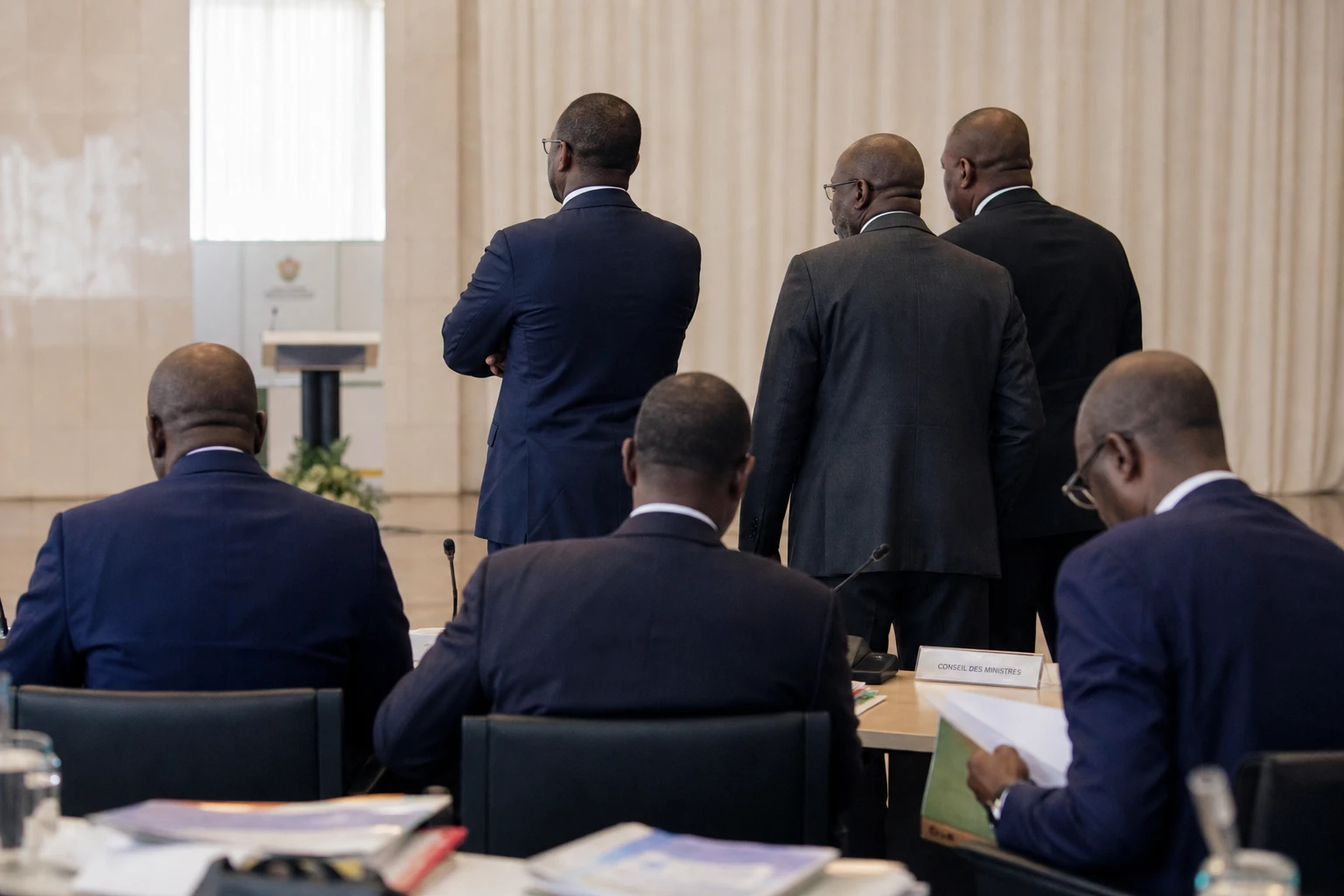
Transparency tightens in Dakar, but the political battle remains open
In Senegal, the question is no longer simply who declares their assets. It is now about when they do so, what becomes public and how effective the oversight really is. In a country where demands for accountability have grown since the 2024 change of government, the reform affects the highest levels of the state and trust between those who govern and citizens.
The debate has not come out of nowhere. It is part of a longer trajectory, beginning with the Budget Transparency Code adopted within the WAEMU, then transposed into Senegalese law in 2012. This regional framework already provides for holders of public authority to declare their assets at the beginning and end of their term or time in office. Senegal’s 2025 reform expanded and clarified the system, ahead of legislative adjustments discussed this summer.
What MPs voted for and what the law changes
On Monday 17 August 2026, the National Assembly adopted a bill amending Article 37 of the Constitution. The text establishes the obligation for the president of the republic to declare and make public their assets at the beginning and end of their term. On this specific point, it replaces the system that had until now applied mainly to the president of the National Assembly and the prime minister.
The reform follows an already busy period. In August 2025, MPs adopted a law on asset declarations, with 15 amendments; the framework was then supplemented by Law No. 2025-13 of 3 September 2025 and its implementing decree of 18 November 2025. The OFNAC, which is responsible for receiving and checking declarations, subsequently opened new forms and set 31 July 2026 as the deadline for bringing declarations into compliance.
According to the OFNAC, the provisional list of people required to declare their assets is to be published periodically, as the law now requires. The institution also said on 11 August 2026 that 1,695 of the 3,023 people expected to do so had declared their assets. The figure illustrates the scale of the challenge: the law is advancing, but implementation remains incomplete.
Why the issue goes beyond a simple administrative formality
On paper, the reform expands transparency. In practice, it affects two sensitive balances. First, it tightens the obligation on the presidency, which in Senegal holds a large share of political authority. Second, it reshapes relations between the executive, Parliament and oversight bodies. This is an institutional signal, but also a political test at a time when the parliamentary majority and government are presenting themselves as committed to ethical standards, while pursuing other sensitive revisions on special funds and the budget process.
The heart of the debate lies here: does making asset declarations public better protect the public interest, or does it risk remaining a showcase promise if oversight lacks resources, speed and independence? This is not a theoretical question. Senegalese law provides for prison sentences for certain offences related to asset declarations, ranging from six months to four years, according to cases cited by the OFNAC and the public press. But an effective penalty first requires that those obliged to declare be identified, deadlines be met and checks carried out.
For political leaders, the stakes are immediate. The president of the republic, the prime minister and the president of the National Assembly are at the centre of a more visible system. For citizens, the expected benefit is straightforward: to know whether public responsibilities are being exercised without suspicious enrichment. For public administrations, local authorities and the parastatal sector, the obligation is broader, as the reform consolidates a principle already enshrined in Senegalese law since 2012 and then 2014: the assets of holders of public authority are not purely private when they are carrying out a public-interest mission.
A Senegalese reform with implications for all of West Africa
At regional level, Senegal is sending a message that reaches beyond Dakar. Within the WAEMU, budget transparency and the integrity of public officials are shared standards. In West Africa, where several states are strengthening their anti-corruption frameworks, Senegal’s reform will be watched as a practical test: not only of its stated intent, but of the ability to publish, oversee and impose sanctions.
This development also has continental significance. It is a reminder that good governance is not just about imported rhetoric or external indicators. It is built through concrete rules, adapted to local institutions, and national bodies capable of putting them into practice. In Senegal, the OFNAC has already begun publishing lists of those who have declared their assets and those who have failed to do so, while the Ministry of Justice has reminded latecomers of their legal obligations. What happens next will show whether the new framework genuinely improves accountability, or merely adds another layer of rules to an already dense system.
The next point to watch is clear: effective implementation of the new system, publication of the expected declarations and the response of the institutions concerned. This is where the reform will prove its worth. Passing a rule is not enough. When it comes to transparency, implementation is what counts.