Algeria
 Egypt
 Libya
 Morocco
 Sudan
 Tunisia
 Benin
 Burkina Faso
 Cabo Verde
 Côte d'Ivoire
 Ghana
 Guinea
 Guinea-Bissau
 Liberia
 Mali
 Mauritania
 Niger
 Nigeria
 Senegal
 Sierra Leone
 The Gambia
 Togo
 Cameroon
 Central African Republic
 Chad
 Equatorial Guinea
 Gabon
 Republic of the Congo
 São Tomé and Príncipe
 Burundi
 Comoros
 Djibouti
 Eritrea
 Ethiopia
 Kenya
 Madagascar
 Malawi
 Mauritius
 Mozambique
 Rwanda
 Seychelles
 Somalia
 South Sudan
 Tanzania
 Uganda
 Angola
 Botswana
 Eswatini
 Lesotho
 Namibia
 South Africa
 Zambia
 Zimbabwe
In Kinshasa, the issue is not just mining, but energy
The Democratic Republic of the Congo has one of the continent’s most coveted subsoils. Yet the real battle is no longer being fought only in the mines of Lualaba and Haut-Katanga. It is also being fought across cables, dams and transmission lines. Without a reliable power supply, the local processing of copper and cobalt remains more an objective than a reality.
This debate speaks directly to economic sovereignty. The country already exports a great deal of value, but still captures too little industrial margin. That is precisely what Kinshasa is seeking to address with temporary restrictions on certain cobalt exports, followed by a quota system intended to regain control over supply.
Stricter rules to retain more value locally
On 22 February 2025, the Authority for the Regulation and Control of Strategic Mineral Substances Markets, ARECOMS, announced a temporary suspension of cobalt exports. The stated aim was clear: to restore order to a market deemed unbalanced and protect the national economic interest. The ACP later reported that the measure covered all cobalt from industrial and artisanal mining for four months.
In March 2025, circular notices also banned the export of certain marketable mining products, including cobalt hydroxides and carbonates as well as some mixed copper-cobalt concentrates, for a renewable four-month period. At the same time, the authorities indicated that a quota system could replace an outright ban. In September 2025, this shift was indeed confirmed with the introduction of export quotas.
This tightening did not stem from a mere political reflex. It responds to market realities. The DRC carries considerable weight in the global cobalt market, and the state wants to prevent such a strategic resource from being sold too quickly, too cheaply and without local processing. The reasoning is a familiar one: export less in raw form, refine more locally and retain a larger share of the wealth in the Congolese economy.
The real bottleneck is electricity, not geology
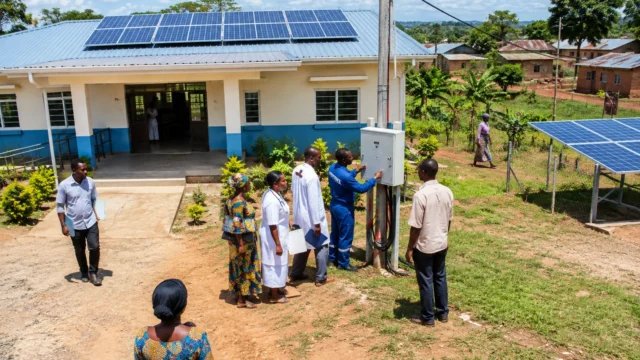
The problem is that industrial processing consumes huge amounts of energy. The DRC, meanwhile, has long suffered from an electricity deficit. The World Bank notes that the country is among those where access to electricity remains one of the lowest, with conditions particularly difficult in rural areas. The International Energy Agency also points out that national access remained very limited and that the needs associated with productive electrification are immense.
The government has made this a priority. In June 2025, the World Bank approved initial funding for the Inga 3 development programme, presented as a step towards increasing access to electricity to 62% by 2030, under the national energy compact. In Kinshasa, the authorities know that mining sovereignty cannot be decreed by ministerial order alone. It also depends on energy supply, network reliability and the capacity of SNEL, the state-owned electricity company, to support industry.
DRC Mining Week 2025 also brought the issue back to the centre of the debate. The Congolese Ministry of Mines summed up the challenge in a simple idea: without energy security, the 2025-2030 industrial vision remains fragile. This is the main point of friction between political will and the country’s actual capacity to move from an extraction-based economy to one based on processing.
For businesses, households and the region, the effects will differ
For mining companies, the new rules change the calculations. They require companies to hold more stock, negotiate harder and factor in greater regulatory risk. Reuters reported immediate effects on deliveries in spring 2025, with some players declaring force majeure. For the state, by contrast, the message is as political as it is economic: the DRC no longer wants to remain a mere supplier of raw materials to foreign value chains.
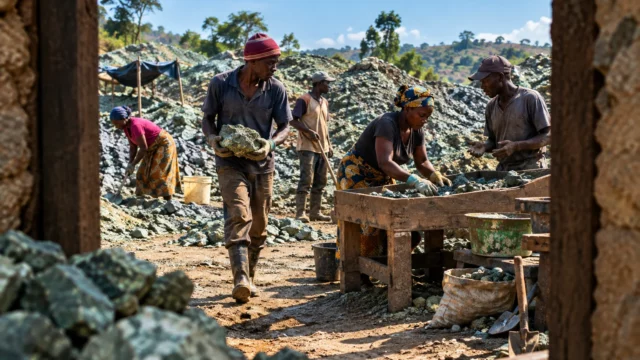
For the population, the stakes are even more tangible. In mining areas, the issue is not just national production, but local jobs, roads, services and pressure on water and electricity. Without visible benefits, the idea of local value addition remains abstract. Public revenues may rise, but if they do not translate into infrastructure and services, the sense of a gap between the wealth beneath the ground and everyday life persists.
The comparison with Zambia sheds light on this point. Lusaka is also relying on copper to revive growth, attract investment and achieve lasting financial stability. But even there, the debate is about the real redistribution of benefits, local content and access to electricity, two issues that determine how much value communities capture. The copper-cobalt region of Central and Southern Africa is therefore grappling with the same fundamental question: who really benefits when global prices rise?
A regional test for Central Africa
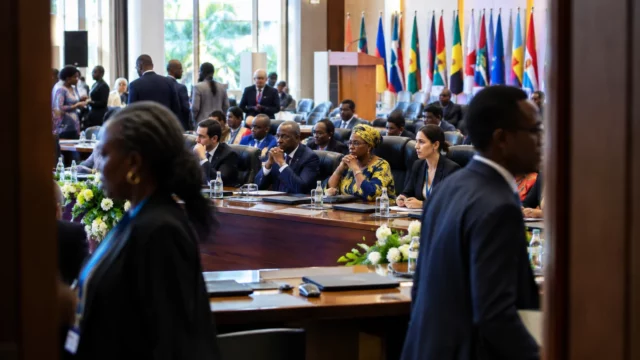
The Congolese decision reaches beyond its borders. It matters to global critical minerals markets, as well as to neighbouring countries seeking to move up the mining value chain. Across Africa, several states are seeking to stop exporting only raw minerals. The DRC is thus an open-air laboratory: can exports be controlled more effectively without deterring investment, and can industrialisation happen without reliable energy?
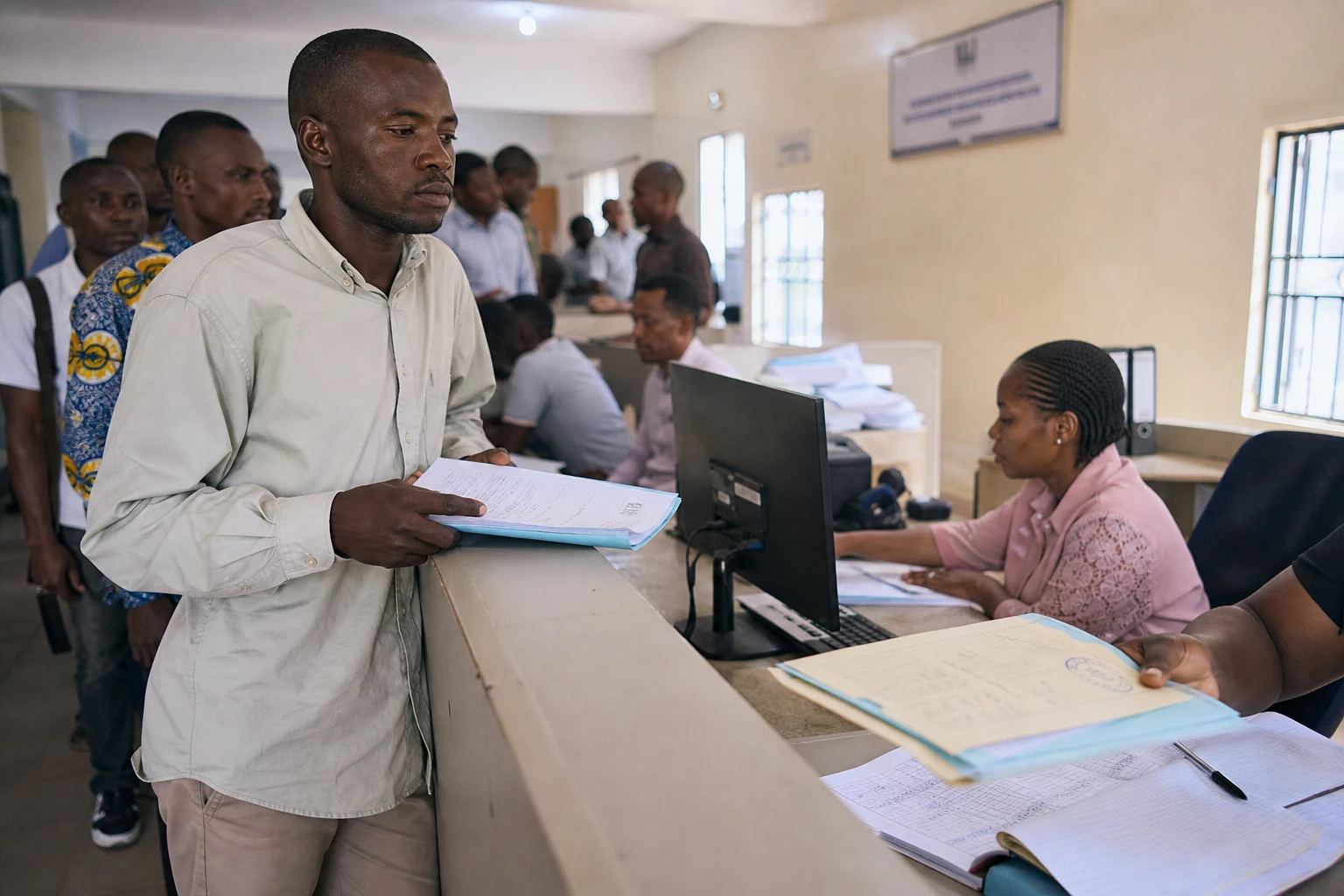
The answer will depend on three variables. First, the duration and consistency of the quota system. Second, the pace of energy and industrial investment. Finally, the Congolese state’s ability to enforce its rules clearly, rather than allowing bans, exemptions and regulatory uncertainty to coexist. In a region where copper, cobalt and transport infrastructure are reshaping the balance of power, the DRC is doing more than testing a mining policy measure. It is testing its ability to turn resource rents into lasting economic power.