Algeria
 Egypt
 Libya
 Morocco
 Sudan
 Tunisia
 Benin
 Burkina Faso
 Cabo Verde
 Côte d'Ivoire
 Ghana
 Guinea
 Guinea-Bissau
 Liberia
 Mali
 Mauritania
 Niger
 Nigeria
 Senegal
 Sierra Leone
 The Gambia
 Togo
 Cameroon
 Central African Republic
 Chad
 Equatorial Guinea
 Gabon
 Republic of the Congo
 São Tomé and Príncipe
 Burundi
 Comoros
 Djibouti
 Eritrea
 Ethiopia
 Kenya
 Madagascar
 Malawi
 Mauritius
 Mozambique
 Rwanda
 Seychelles
 Somalia
 South Sudan
 Tanzania
 Uganda
 Angola
 Botswana
 Eswatini
 Lesotho
 Namibia
 South Africa
 Zambia
 Zimbabwe
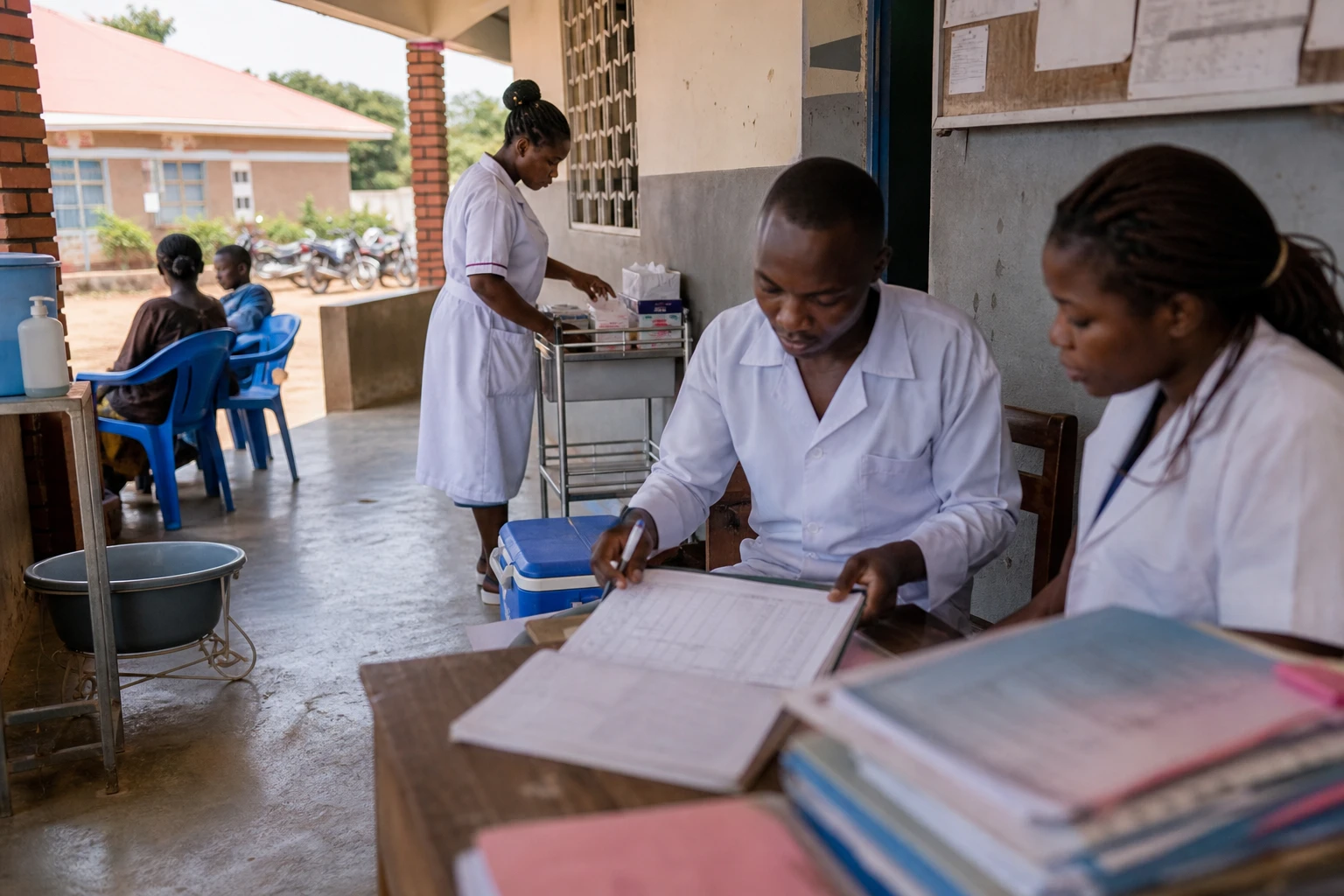
An outbreak taking root in eastern DR Congo
In eastern Democratic Republic of the Congo, the health emergency often unfolds far from major roads, but never far from everyday life. When an outbreak spreads in a conflict zone, amid deteriorating roads and displaced villages, the disease never advances alone: it also encounters delays in care, mistrust and exhausted teams. This is precisely the backdrop to this Ebola outbreak, which has become one of the hardest to contain in the country.
The country is not starting from scratch. The Democratic Republic of the Congo has already faced several Ebola outbreaks, including the major 2018-2020 outbreak in North Kivu and Ituri, which required a massive response combining surveillance, vaccination and contact tracing. That public health experience remains, but it cannot make up for insecurity or barriers to healthcare access in the affected provinces.
The figures, provinces and speed of spread
Data from the Congolese health ministry, cited in international news reports, put the toll at 5,021 cases and 2,378 deaths as of 18 August 2019, indicating an extremely high fatality rate. The outbreak was not confined to a single hotspot. Six provinces were affected at that stage, with the epicentre in Ituri and North Kivu, two areas where population displacement makes it harder to find patients and monitor contacts.
The World Health Organisation described an exceptional pattern of transmission. As of 11 August 2019, it reported 2,831 cases and 1,892 deaths in the outbreak, then observed a rapid acceleration in infections and deaths over the following weeks. The organisation also said the outbreak was spreading beyond the initial hotspots, with cases linked to travel to other health zones and the movement of families, traders and healthcare workers.
The strain involved, Bundibugyo, further changed the picture. This rare form of the Ebola virus was described at the time as particularly concerning because no vaccine or approved treatment was available for it then. This did not mean there was no response, but it narrowed the options for treatment and heightened the importance of early detection, rapid isolation and symptomatic care.
Why the response is hampered on the ground
On paper, the strategy is well established: identify cases, isolate patients, vaccinate contacts when a vaccine is available, inform communities, ensure safe burials and protect healthcare workers. On the ground, the reality is harsher. In eastern DR Congo, armed insecurity, attacks on health teams and difficult travel on poor roads slow every stage. The response therefore depends not only on medicine, but also on the ability to reach areas that are sometimes isolated or tense.
Healthcare workers also pay a high price. In the Ebola response, local teams often work under pressure, with long shifts, irregular or unpaid wages, according to several accounts reported at the time, and a real risk of violence. An ambulance set alight in Ituri during an attack targeting a health team illustrated the level of danger faced by healthcare staff. Such an incident is more than a mere news-in-brief item: it weakens the entire chain of care and encourages patients to flee, meaning they arrive later and in a more serious condition at treatment centres.
The impact also extends beyond Ebola itself. When health centres focus almost exclusively on the response, routine care falls behind: childhood vaccination, pregnancy monitoring, and treatment for malaria, childbirth complications and chronic diseases. In a province where the economy remains largely informal, every service disruption has an immediate cost for households. Families lose time and money, and sometimes their trust in the health system.
A Congolese challenge, but also a regional one
This outbreak extends beyond the Democratic Republic of the Congo. The east of the country is connected to the Great Lakes region by constant flows of people and trade. When an outbreak spreads in Goma, Bunia or border areas, the issue is inherently regional, posing risks to Uganda, Rwanda, Burundi and, more broadly, Central and East Africa. The WHO had stressed the risk of cross-border spread, noting that imported cases can appear far from the initial hotspot.
The precedent of the major 2018-2020 outbreak remains central to understanding current concerns. That period showed that the country can mobilise powerful tools, but also that the response remains vulnerable once insecurity, community fatigue and funding delays take hold. In 2019, the WHO had already warned that the outbreak was following a trajectory that was difficult to bring under control, to the point that it was discussed at the highest level under the International Health Regulations, the global framework for organising responses to public health emergencies.
For Central Africa, the stakes are clear: public health is protected not only in laboratories and hospitals in Kinshasa, the capital of the Democratic Republic of the Congo. It is also at stake on roads, in border markets, along humanitarian corridors and in the trust between communities and the state. As long as these fault lines remain open, Ebola will stay one step ahead.