
 Algeria
 Egypt
 Libya
 Morocco
 Sudan
 Tunisia
 Benin
 Burkina Faso
 Cabo Verde
 Côte d'Ivoire
 Ghana
 Guinea
 Guinea-Bissau
 Liberia
 Mali
 Mauritania
 Niger
 Nigeria
 Senegal
 Sierra Leone
 The Gambia
 Togo
 Cameroon
 Central African Republic
 Chad
 Equatorial Guinea
 Gabon
 Republic of the Congo
 São Tomé and Príncipe
 Burundi
 Comoros
 Djibouti
 Eritrea
 Ethiopia
 Kenya
 Madagascar
 Malawi
 Mauritius
 Mozambique
 Rwanda
 Seychelles
 Somalia
 South Sudan
 Tanzania
 Uganda
 Angola
 Botswana
 Eswatini
 Lesotho
 Namibia
 South Africa
 Zambia
 Zimbabwe
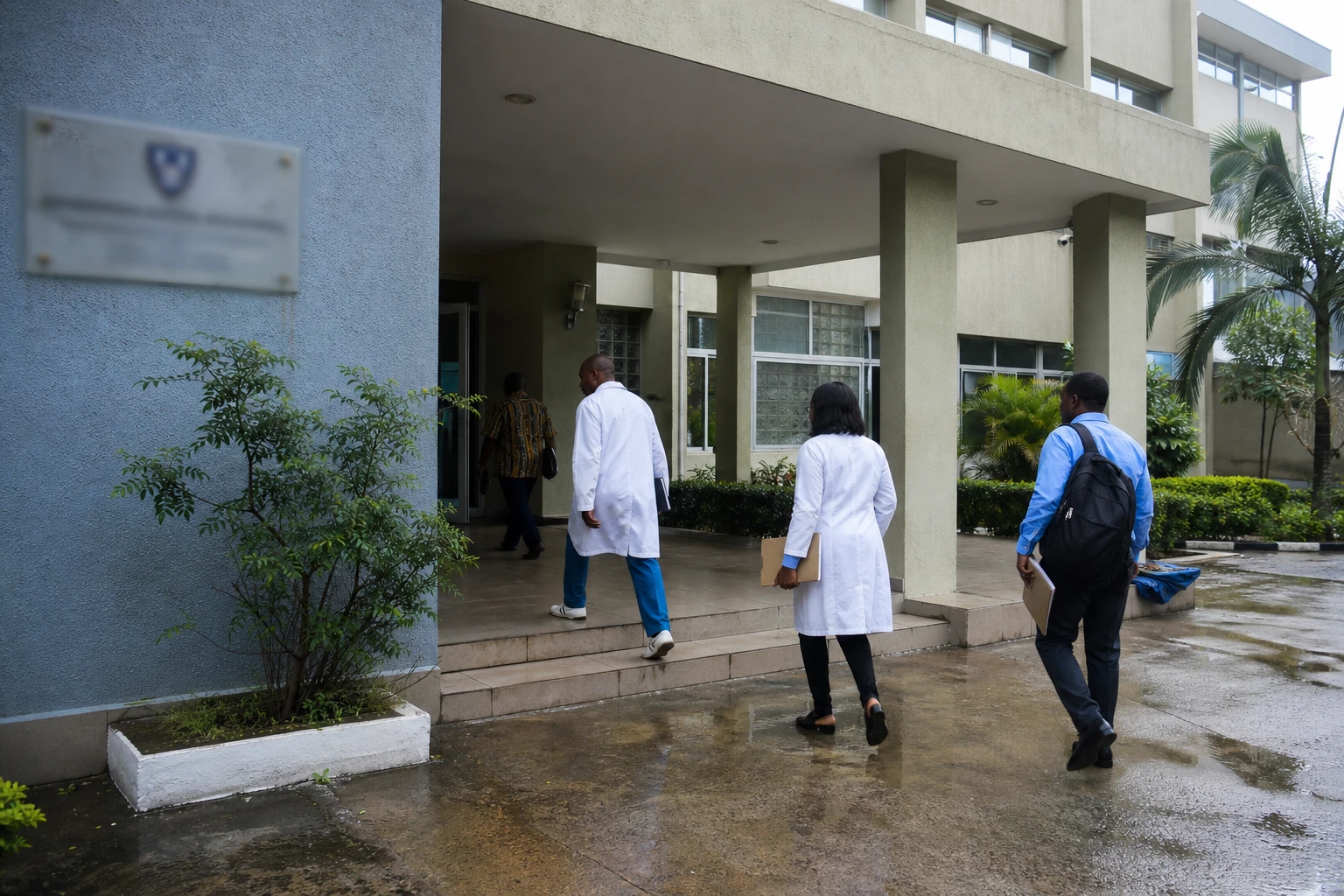
An outbreak that highlights the fragility of eastern Congo’s health corridors
In the Democratic Republic of the Congo, an Ebola epidemic is never just a medical alert. It also says something about the roads, markets, population movements and health services that are holding up — or not — in the eastern provinces. This time, the virus has outpaced the response, even as the Congolese authorities and their partners were already trying to contain several health emergencies in an area marked by insecurity, displacement and pressure on hospitals.
The DRC outbreak is all the more significant because it is the country’s 17th Ebola episode since the virus was discovered there in 1976, according to the World Health Organization. The current outbreak began in Ituri, in the north-east, but has since spread to other provinces and several health zones. For Kinshasa, the challenge is not just to extinguish a local outbreak. It must prevent the disease from taking hold across a vast area with constant exchanges with Uganda, Rwanda and, further afield, the rest of the Great Lakes region.
What the figures say — and what they really tell us
As of 30 July 2026, the WHO reported 3,605 confirmed cases and 1,587 deaths in the Democratic Republic of the Congo, a crude case fatality rate of 44%. The organisation also said the epidemic remained active in 33 health zones across five provinces: Ituri, North Kivu, South Kivu, Haut-Uélé and Tshopo. It added that Ituri accounted for most of the cases and deaths. These figures paint a picture of an outbreak still far from being brought under control, with its geographical spread making it more than a simple, localised resurgence.
The Congolese Ministry of Public Health, Hygiene and Social Welfare confirmed on its surveillance page, updated on 7 August 2026, that the Ebola Bundibugyo epidemic had remained active since 15 May 2026. Naming the strain precisely matters: Bundibugyo is not the Zaire strain, better known to the general public, and it does not have the same validated therapeutic tools. The WHO notes that, to date, there is no approved vaccine or specific treatment for this strain.
The response must therefore rely on other measures: rapid testing, case isolation, contact tracing, infection prevention in health facilities, support for burials and local public information. These measures may seem technical. In reality, they are political in the most concrete sense, because they determine whether public trust holds or begins to fracture. The WHO and the Congolese government have stressed this point since their joint statement on 31 May: communities must be at the centre of the response, or the virus will gain ground.
In Kinshasa, public health runs up against eastern Congo
The Ebola situation in the DRC cannot be separated from the context in the east. Ituri, North Kivu and South Kivu face the combined pressures of armed violence, forced displacement and commercial mobility. In this landscape, health surveillance becomes more difficult. Teams must find people on the move, sometimes without documents, between villages, urban centres, displacement sites and cross-border routes. The disease then spreads faster than the means available to track it.
The Congolese capital, Kinshasa, nonetheless remains a strategic link. It is home to the country’s main laboratories, administrative decision-making and part of the response infrastructure. The country has already shown that it can break a chain of transmission, but it also knows that success rarely depends on a single command centre. It relies on information moving quickly from rural areas to national institutions, and resources then flowing back to the front line. Without this circuit, suspected cases become confirmed cases too late.
The economic burden of the epidemic is also real. In mining areas, around markets and along trade routes, every health alert can slow flows, drive up costs and further undermine households already dependent on informal activities. The impact is not the same for a trader in Bunia, a health worker in Mongbwalu or a transport operator travelling between provinces. Yet they all face the same consequences: more checks, slower journeys and fear weighing on attendance at health centres.
The WHO also reported that an exported case had been detected in France in a health worker who had returned from the DRC, while Uganda closed its own outbreak at the end of July after 42 days without a new locally confirmed case. This contrast says much about the real risk: as soon as an outbreak escapes contact tracing, it is no longer just Congolese. It becomes regional, then international.
A Congolese crisis, but already an African one
At continental level, the epidemic has already crossed several institutional thresholds. Africa CDC, the African Union’s health agency, classified the outbreak as a Public Health Emergency of Continental Security on 18 May 2026. The WHO, for its part, declared a public health emergency of international concern on 17 May. These two decisions are not symbolic. They pave the way for broader coordination, the mobilisation of funding and preparedness measures in neighbouring countries.
The pan-African implications are clear. The DRC lies at the heart of an area where administrative borders stop neither trade nor emergencies. The lessons from this outbreak therefore also concern the health systems of Central Africa and the Great Lakes region: the availability of tests, laboratory capacity, community surveillance, protection for health workers and access to basic care. The stakes go beyond Ebola alone. They concern the continent’s health resilience in the face of epidemics emerging in areas with high mobility and limited medical coverage.
The next point to watch is immediate: the WHO said a new risk assessment was due to be presented before the emergency committee meeting on 18 August. In other words, the battle is not being fought only in treatment centres in Ituri. It is also being fought in the ability of Congolese, African and UN institutions to maintain a clear, rapid and funded response before the virus spreads further geographically.



