Egypt
 Libya
 Morocco
 Sudan
 Tunisia
 Benin
 Burkina Faso
 Cabo Verde
 Côte d'Ivoire
 Ghana
 Guinea
 Guinea-Bissau
 Liberia
 Mali
 Mauritania
 Niger
 Nigeria
 Senegal
 Sierra Leone
 The Gambia
 Togo
 Cameroon
 Central African Republic
 Chad
 DR Congo
 Equatorial Guinea
 Gabon
 Republic of the Congo
 São Tomé and Príncipe
 Burundi
 Comoros
 Djibouti
 Eritrea
 Ethiopia
 Kenya
 Madagascar
 Malawi
 Mauritius
 Mozambique
 Rwanda
 Seychelles
 Somalia
 South Sudan
 Tanzania
 Uganda
 Angola
 Botswana
 Eswatini
 Lesotho
 Namibia
 South Africa
 Zambia
 Zimbabwe
An Algerian memory that crosses borders
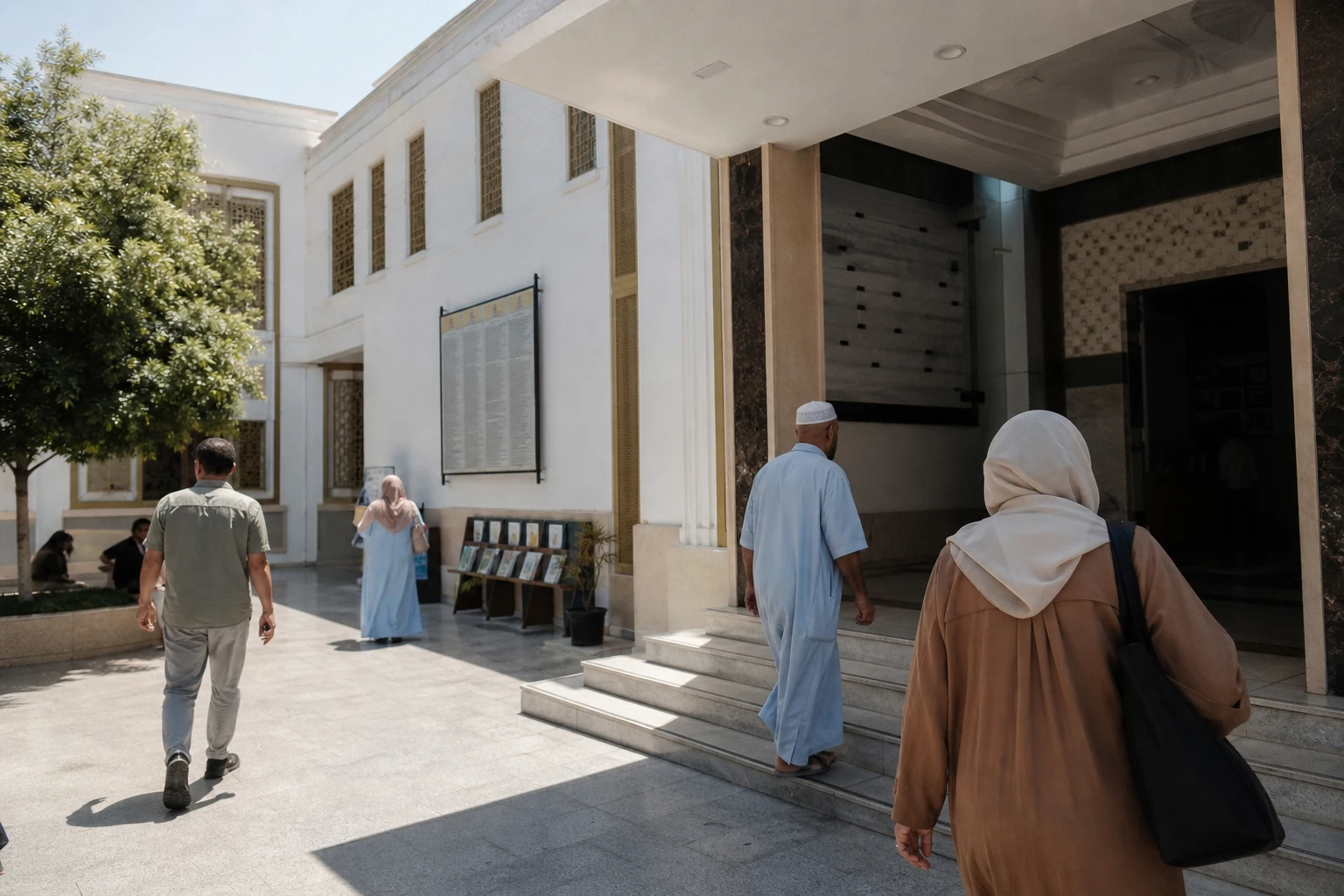
In Lourdes, a tribute to religious figures killed in Algeria thirty years ago recalls a reality often misunderstood: the memory of the 1990s does not stop at the country’s borders. It still crosses the Mediterranean, touches families and churches, and says something about contemporary Algeria, how it views its past and preserves social ties.
In this story, Algeria is not a distant backdrop. It is the setting for a tragedy born of a civil war that deeply marked the state, society and relations with France. The seven monks of Tibhirine were abducted on the night of 26–27 March 1996 in Tibhirine, south of Algiers, and killed a few weeks later, amid armed violence attributed at the time to the Armed Islamic Group, or GIA.
What was recalled in Lourdes
The tribute took place in the underground Basilica of St Pius X at the Lourdes sanctuary, during the Assumption pilgrimage. Cardinal Jean-Paul Vesco, Archbishop of Algiers, led the prayer before several thousand worshippers, in remembrance of the seven Trappist monks and the 12 other Catholic religious figures killed in Algeria between 1994 and 1996. The Lourdes sanctuary is a major Catholic gathering place, and the underground Basilica of St Pius X can accommodate very large congregations.
The prelate emphasised peace, fraternity and encounter. His remarks reflect a long-standing approach of the Church in Algeria: not to reduce the martyrs to a tragedy, but to see them as witnesses to living together in a predominantly Muslim country. The Tibhirine monks’ website notes that their memory continues to inspire commemorations in Algeria, France and elsewhere.
This memory is not only religious. It remains historical and political, too. In 2018, the beatification of the 19 martyrs of Algeria, including the seven monks of Tibhirine and Bishop Pierre Claverie, took place in Oran, on Algerian soil. The Vatican described the celebration as a gesture of fraternity and reconciliation.
The weight of Algerian history
To understand this return to Tibhirine, it is necessary to look back at Algeria’s civil war in the 1990s, often called the “Black Decade”. After the electoral process was halted in 1992, the country descended into a spiral of violence between Islamist armed groups, security forces and civilians caught in the crossfire. The monks of Tibhirine lived at the heart of this tense region, in the Blida Atlas, about 50 kilometres south of Algiers.
Their presence in the village was unremarkable. It consisted of work, prayer and everyday ties with local residents. It is precisely this shared daily life that gives the memory its symbolic force. In an Algeria where the memory of the 1990s remains sensitive, Tibhirine represents not so much a religious exception as a human relationship forged through hardship.
This interpretation also reflects the way the Church in Algeria speaks about its recent history. Pope Francis’s message during the 2018 beatification emphasised lives given “for love of God, the country and all its inhabitants”. In other words, this is not the story of an isolated community, but of men and women who were part of an Algerian society they served and loved.
What the tribute says about Algiers and French memory
The gesture in Lourdes also resonates in French-Algerian relations. The monks were French, but their story unfolded in Algeria. For three decades, this tragedy has weighed on the shared memory of the two countries, far beyond Catholic circles. It is a reminder that France’s and Algeria’s histories remain intertwined, particularly when it comes to political violence, the circulation of narratives and recognition of the dead.
For Algeria, the issue is different. The country does not need its history to be reinterpreted from abroad in order to exist. But commemorations overseas show that the memory of the 1990s continues to prompt questions about how societies deal with long-lasting wounds. In Algiers, this issue still intersects with debates on reconciliation, the place of religious minorities and the preservation of patient coexistence in a predominantly Muslim society.
Cardinal Vesco, who is based in Algiers, embodies this movement between the two shores. His role, both ecclesial and symbolic, shows that some of the memory of Algeria’s martyrs is now being shaped in a language of local fidelity. This matters, because the most enduring commemorations are often those that avoid folklore and speak first to the living.
A memory set to endure across the region
Finally, the significance of this tribute goes beyond the French-Algerian context. In North Africa, major political, religious and historical divisions continue to influence relations between states, societies and communities. Tibhirine is a reminder that a security crisis can leave a lasting spiritual, diplomatic and social legacy, long after the fighting has ended.
In Algeria, the memory of the 1990s therefore remains a social issue as much as a religious one. Across the continent, it echoes other countries where political violence has left its mark on families, villages and institutions. The remembrance in Lourdes, thirty years after the events, underlines that no lasting peace can be built without a clear memory, recognition of the victims and a common language for speaking about the past.