
 Algeria
 Egypt
 Libya
 Morocco
 Sudan
 Tunisia
 Benin
 Burkina Faso
 Cabo Verde
 Côte d'Ivoire
 Ghana
 Guinea
 Guinea-Bissau
 Liberia
 Mali
 Mauritania
 Niger
 Nigeria
 Senegal
 Sierra Leone
 The Gambia
 Togo
 Cameroon
 Central African Republic
 Chad
 Equatorial Guinea
 Gabon
 Republic of the Congo
 São Tomé and Príncipe
 Burundi
 Comoros
 Djibouti
 Eritrea
 Ethiopia
 Kenya
 Madagascar
 Malawi
 Mauritius
 Mozambique
 Rwanda
 Seychelles
 Somalia
 South Sudan
 Tanzania
 Uganda
 Angola
 Botswana
 Eswatini
 Lesotho
 Namibia
 South Africa
 Zambia
 Zimbabwe
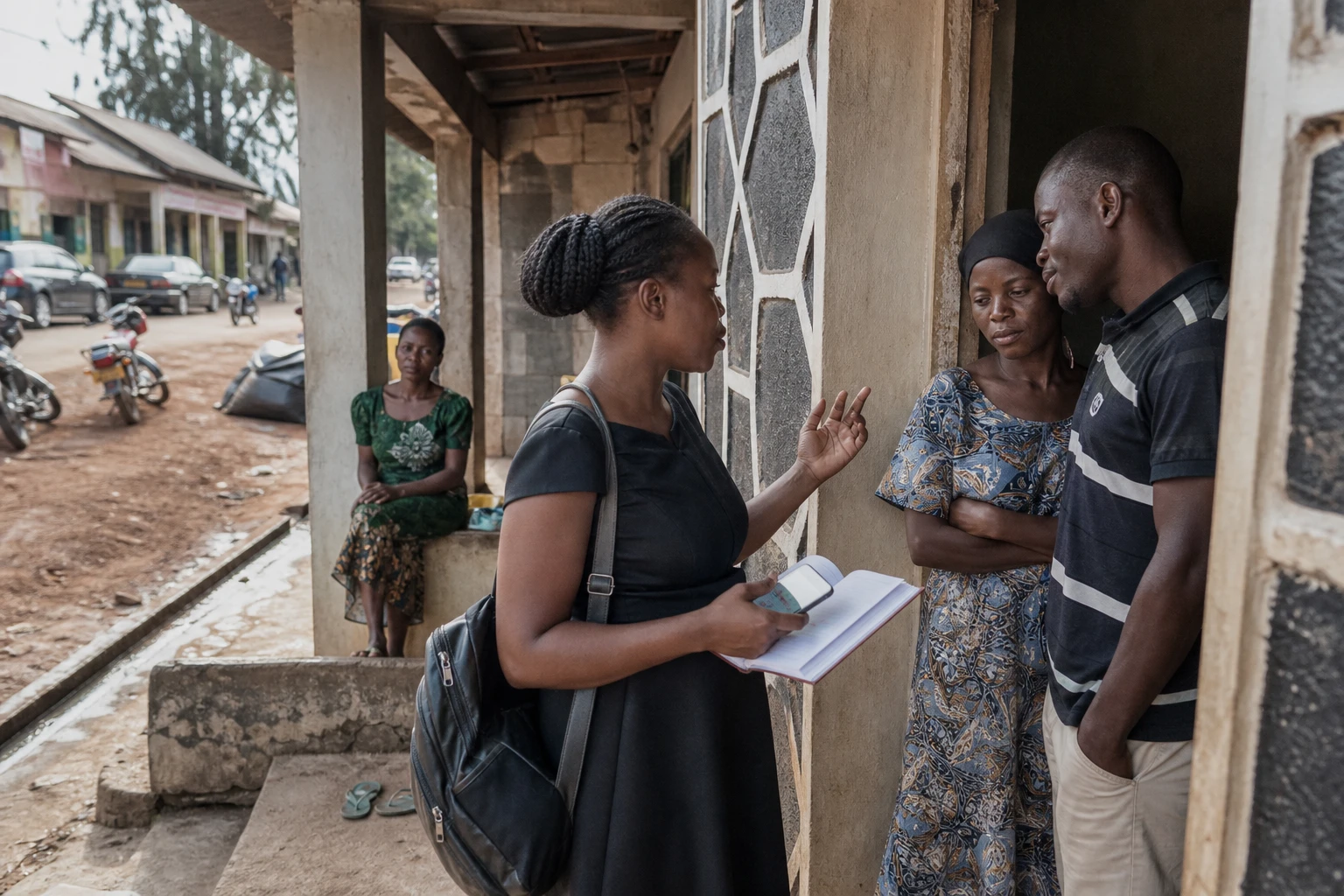
A response that depends first on the field
In the east of the Democratic Republic of the Congo, the fight against Ebola is not being waged only in treatment centres. It is also decided in the streets of Bunia, the villages of Ituri, on roads cut off by insecurity and in households where every alert must be checked quickly. When surveillance falters, the virus gains precious time.
This is what is at stake in the Bundibugyo virus disease outbreak, declared on 15 May 2026 by the Congolese authorities, with support from the World Health Organization. The outbreak is being closely monitored in Kinshasa, but it is unfolding first in the country’s north-east, an area where health teams are already under pressure. Ituri, North Kivu and South Kivu have long borne the burden of population displacement, armed violence and limited access to healthcare.
This geography explains some of the current weaknesses. The response requires mobile teams, logistical resources, rapid tests, daily monitoring of contacts for 21 days, and strong community trust. The WHO has stressed that no vaccine or approved treatment for the Bundibugyo virus exists to date, making prevention even more critical.
Teams under strain, costly delays
On the ground, community health workers play a central role. They identify alerts, trace contacts, refer suspected cases and explain to families what Ebola is, how it spreads and why early isolation remains essential. Their work is discreet, but it is the backbone of any effective response.
The problem is simple and well known. When teams are not paid on time, when motorcycles are scarce, when protective equipment is inadequate or when travel becomes too risky, the surveillance chain slows down. In Ituri province, Radio Okapi reported in July delays in paying allowances to workers mobilised against Ebola, prompting a strike at the Rwampara treatment centre in Bunia. The Congolese health ministry later promised a more direct payment system to limit intermediaries and secure wages.
This financial warning is not a minor matter. It says something about the Congolese response: its effectiveness depends as much on the biology of the virus as on the state’s ability to get resources to peripheral health posts. In Nizi, Mongbwalu and Boga, every day gained in identifying contacts can prevent a chain of transmission. Every delay, by contrast, leaves the way open for the virus to spread.
Figures published by the WHO show the scale of the pressure. As of 6 June 2026, the Democratic Republic of the Congo had reported 515 confirmed cases and 91 confirmed deaths, in an outbreak that was then spreading across several health zones. A few weeks later, on 11 July, WHO Africa was already reporting 1,926 confirmed cases and 702 cumulative deaths in the country, evidence of the outbreak’s rapid progression. In July, the organisation also said that more than 1,000 lives had been lost in the DRC alone since the start of this outbreak. These differences also illustrate how quickly data can change during an active health crisis.
The Bundibugyo strain further complicates the situation. It is rarer than the Zaire strain, which is better known to the general public, but it remains dangerous. The absence of an approved vaccine means the response must rely on contact tracing, early care, infection prevention in healthcare facilities and local outreach. In eastern Congo, this approach runs up against a broader reality: health centres often operate with few resources, sometimes in areas where roads, electricity and even security are lacking.
A health crisis that extends beyond Congo’s borders
The outbreak does not affect the DRC alone. It is unfolding in a cross-border area where patients, traders, families and health workers move around. The WHO has reported closer coordination with Uganda and, more broadly, heightened vigilance in neighbouring countries. Cases linked to transmission from the DRC have also been detected in Kampala, prompting regional health authorities to step up surveillance at entry points and align preparedness measures.
This regional dimension matters for all of Central Africa and the East African Community, of which the DRC is a member. When an outbreak hits a border area, the response cannot remain purely national. Markets, tracks, lakes and trade corridors connect people far faster than administrative systems do. An outbreak that is poorly contained in eastern Congo can quickly become a regional, then a continental, concern.
The crisis also highlights a lesson the country already knows. The DRC has gained valuable experience in fighting Ebola, particularly during major past outbreaks. It has trained teams, a National Institute of Biomedical Research in Kinshasa, an active health ministry and a network of humanitarian and community organisations capable of responding quickly. But this expertise is not enough without stable funding, a reliable supply chain and strong local roots.
The real challenge now is to sustain the effort. The outbreak is first affecting residents of the most exposed health zones, but it is also testing the credibility of public action. If health workers are not protected, families do not receive clear explanations and alerts pile up without follow-up, the response loses its strength. Conversely, when a community agrees to report cases quickly, samples are analysed on time and field teams are supported, the transmission curve can be slowed.
In the DRC, Ebola is therefore a reminder of a fundamental reality: public health is not an abstract system. It is made up of salaries, fuel, motorcycles, tests, trust and presence. This chain, from the decision-making centre to the last accessible village, determines whether the virus advances or retreats.



