Algeria
 Egypt
 Libya
 Morocco
 Sudan
 Tunisia
 Benin
 Burkina Faso
 Cabo Verde
 Côte d'Ivoire
 Ghana
 Guinea
 Guinea-Bissau
 Liberia
 Mali
 Mauritania
 Niger
 Nigeria
 Senegal
 Sierra Leone
 The Gambia
 Togo
 Cameroon
 Central African Republic
 Chad
 Equatorial Guinea
 Gabon
 Republic of the Congo
 São Tomé and Príncipe
 Burundi
 Comoros
 Djibouti
 Eritrea
 Ethiopia
 Kenya
 Madagascar
 Malawi
 Mauritius
 Mozambique
 Rwanda
 Seychelles
 Somalia
 South Sudan
 Tanzania
 Uganda
 Angola
 Botswana
 Eswatini
 Lesotho
 Namibia
 South Africa
 Zambia
 Zimbabwe
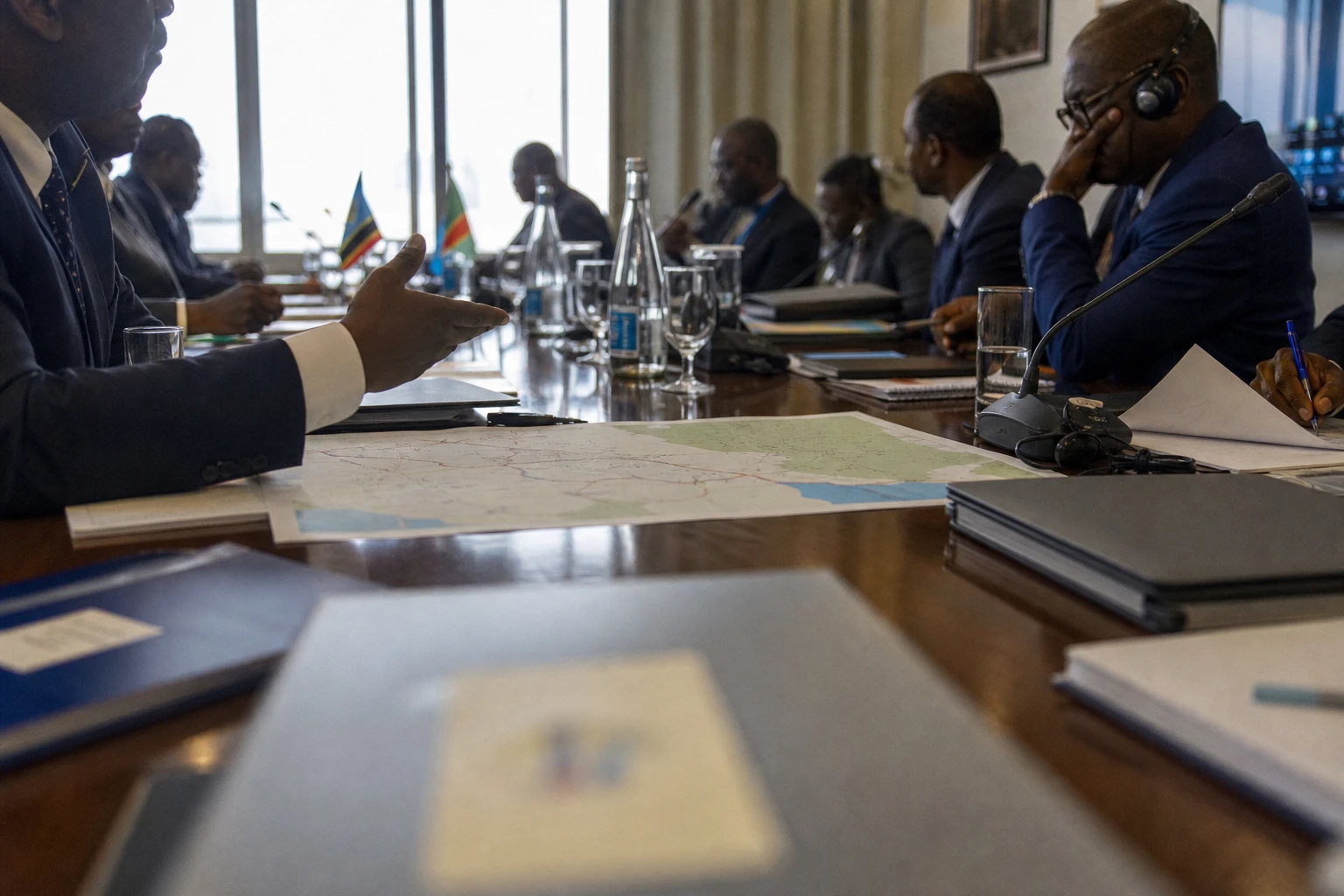
In Kalemie, a road changes more than the map
In Tanganyika, a road is more than a construction project. It can mean the difference between a province that produces and one that sells, between wealth underground and economic activity on the move. The Kalemie-Manono route fits precisely into this logic: it links the provincial capital, Kalemie, to Manono, at the heart of a mining and agricultural basin long held back by isolation. The project is now presented as one of the cornerstones of opening up the province and transporting lithium to Lake Tanganyika, then on to Tanzania.
The project forms part of a broader effort to upgrade infrastructure in the Democratic Republic of the Congo, where the state and its agencies are seeking to secure corridors that support domestic and cross-border trade. In Tanganyika, the Kalemie-Manono road is also tied to a longstanding political ambition: bringing the territories of Nyunzu, Kongolo, Kabalo and Manono closer to the provincial economic centre, Kalemie. The province, located in Central Africa but oriented towards the continent’s east, is also looking towards neighbouring Tanzania, with Lake Tanganyika remaining a strategic trade route.
A strategic road link, with concrete figures now available
The latest information published by the Congolese Agency for Major Works shows that the first phase of the Kalemie-Manono road is 85% complete. On the ground, this means more than 392 kilometres of right-of-way cleared, nearly 378 kilometres of subgrade completed, five of six bridges finished, and 262 of the 285 planned hydraulic structures built. Work began on 28 October 2024 on a route announced to be 446 kilometres long, with delivery of this first phase expected in November 2026.
This timetable is consistent with other official signals. As early as 2024, the Congolese presidency had cited rehabilitation of the Manono-Kalemie road as a way to facilitate lithium mining, alongside other infrastructure projects in Tanganyika. In 2025, the ACGT even announced full connectivity on the RN33, the route that forms the link between Kalemie and the province’s interior. In other words, the project is no longer an abstract promise: it is taking shape over time, through a succession of technical and political announcements.
Mobility issues extend beyond mining traffic alone. In a vast province, transport costs weigh on households, traders, agricultural producers and logistics operators. A passable road cuts journey times, improves access to markets and lowers the price of goods imported into Kalemie as well as products shipped out of the territory. For the population, it is a matter of everyday travel. For businesses, it is a matter of margins, reliability and timing.
Manono’s lithium gives the corridor added significance
In recent months, lithium has taken the project to a new level. In July 2026, the Congolese Ministry of Foreign Trade confirmed that it was supporting Manono Lithium with the export of concentrates, some of which were already stored at the port of Kalemie. The same statement cited an initial production phase of about 500,000 tonnes a year, rising towards roughly one million tonnes annually. This target confirms that the road is no longer merely an infrastructure project: it is becoming part of an emerging industrial chain.
The authorities are also emphasising local processing. Kinshasa wants to prevent Tanganyika from merely exporting raw material, without added value or sustainable jobs. The ministry has therefore stressed that some of the output is to be processed locally into lithium sulphate before export. This approach reflects a broader line in Congolese mining policy: to make critical minerals, including lithium, an industrial lever rather than simply a source of extraction revenues.
Several sources agree on the scale of Manono’s deposit. Official statements cite more than 400 million tonnes of ore. Reuters, carried by several industry media outlets, reported in July 2026 that concentrates were already being transported from Manono to Kalemie before being transhipped via Tanzania, and that the group involved was targeting 30,000 tonnes of lithium carbonate equivalent in 2026. The first export certified by the CEEC was announced around 22 July 2026, departing from Mutowa port near Kalemie for Kigoma, on the Tanzanian side.
This shift is already affecting the local economy. Kalemie port is taking on the role of a hub, while the road is becoming the route for collecting ore, equipment and related services. It could also support other sectors: transport, storage, maintenance, catering, local trade, subcontracting and business services. But the benefits will only be real if the flows are not concentrated in the hands of a handful of players. The challenge is therefore also territorial: ensuring that added value does not leave the province before it has generated local jobs.
A provincial and regional issue
Tanganyika occupies a distinctive position in eastern DR Congo. It is oriented towards SADC and the Great Lakes region, but its logistics links also extend to East Africa via Tanzania. In this picture, Kalemie is no longer just a provincial capital: it is becoming an outlet to the regional market and, potentially, to global battery and energy storage supply chains. This new geography explains the attention being paid to the road, the port and export formalities.
For Kinshasa, the stakes are political as well as economic. Infrastructure delivered on schedule would strengthen the state’s credibility in a province often defined by its distances. Conversely, delays to the project would hold up the entire chain, from the mining site to the port. For residents, the expectation is simpler to express: to see the road become passable, durable and useful for everyday trade, not just mineral exports. That is where the project’s significance lies: in its ability to connect the lithium economy with Tanganyika’s real economy.
Across the continent, the Kalemie-Manono case says much about the competition taking shape around critical minerals. The DRC already occupies a central position in cobalt and copper. With lithium, it is adding another asset at a time when Africa is seeking to capture more value from its resources. Tanganyika is thus becoming a concrete test: a corridor where roads, ports, local processing and exports must all move forward together. The next milestone to watch is the consolidation of this logistics chain through November 2026, the announced completion date for the first phase of the road project.