Algeria
 Egypt
 Libya
 Morocco
 Sudan
 Tunisia
 Benin
 Burkina Faso
 Cabo Verde
 Côte d'Ivoire
 Ghana
 Guinea
 Guinea-Bissau
 Liberia
 Mali
 Mauritania
 Niger
 Nigeria
 Senegal
 Sierra Leone
 The Gambia
 Togo
 Cameroon
 Central African Republic
 Chad
 Equatorial Guinea
 Gabon
 Republic of the Congo
 São Tomé and Príncipe
 Burundi
 Comoros
 Djibouti
 Eritrea
 Ethiopia
 Kenya
 Madagascar
 Malawi
 Mauritius
 Mozambique
 Rwanda
 Seychelles
 Somalia
 South Sudan
 Tanzania
 Uganda
 Angola
 Botswana
 Eswatini
 Lesotho
 Namibia
 South Africa
 Zambia
 Zimbabwe
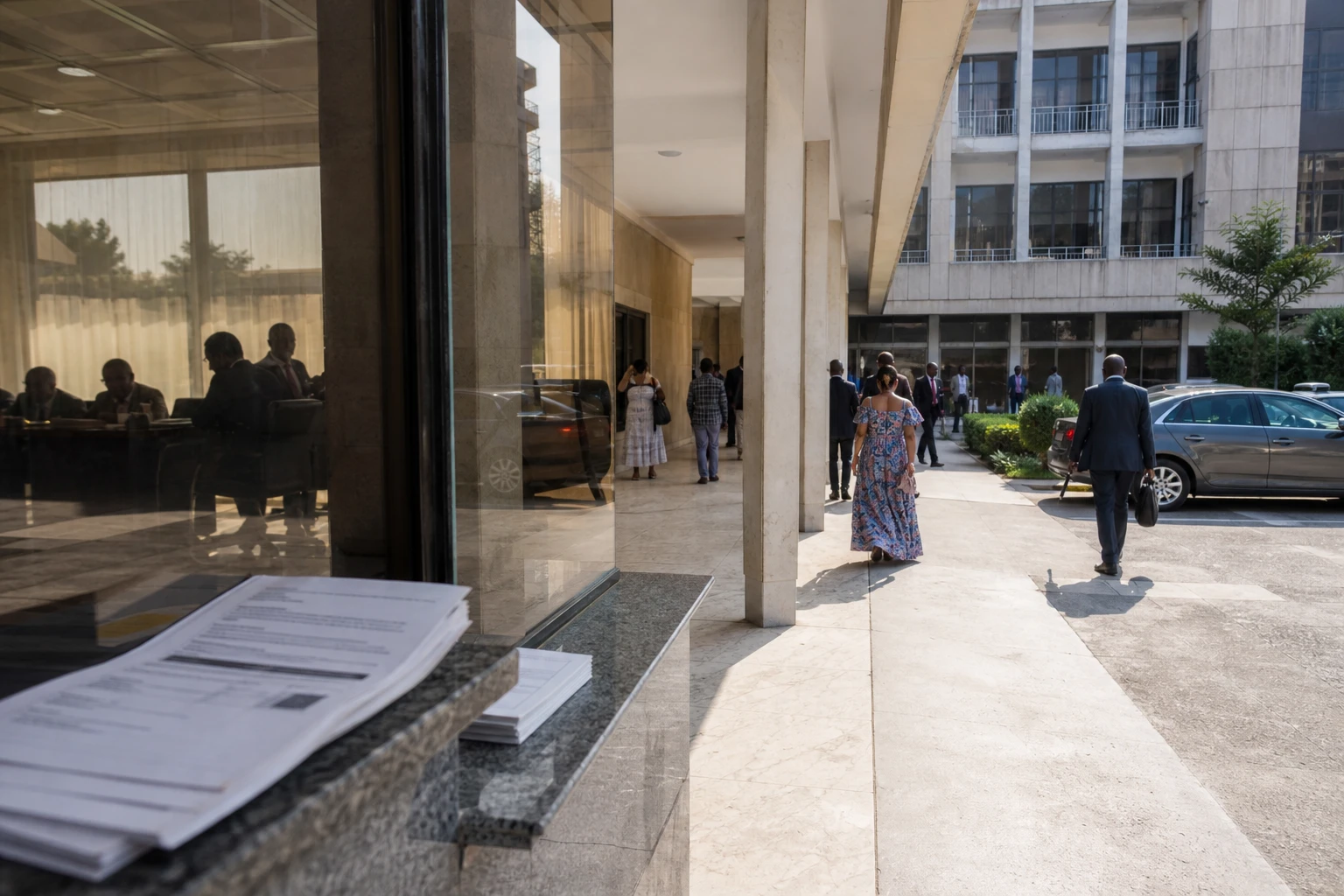
In Kinshasa, political patience is now measured in days
In the Democratic Republic of the Congo, opposition groups know that a single word can shift the entire focus of public debate: dialogue, the Constitution, a referendum, the streets. In Kinshasa, the sequence that began in July has reopened this long-running issue with unusual clarity: should negotiations begin before institutional tensions become entrenched, or should the opposition wait for tangible action from the authorities?
This tension is not isolated. It is playing out in a country where insecurity continues to blight the east, while institutions seek to retain the political initiative. In this setting, the National Episcopal Conference of Congo (CENCO) and the Church of Christ in Congo (ECC) have again acted as mediators, as they often do when the political arena is deadlocked.
What the C64 put on the table
The opposition coalition known as the C64, launched in Kinshasa on 19 May 2026 to defend constitutional order, had postponed its 22 July march following the intervention of religious leaders. In return, it set a deadline of 15 August for the official convening of an inclusive national dialogue, or at least concrete signs that preparations were under way.
The coalition’s case centred on three urgent issues: the security crisis in the east, governance and social conditions. It also warned that it would regard any constitutional overreach as a red line, without calling for a violent break with the institutions.
The meeting scheduled in Kinshasa must therefore answer one simple question: does the political truce continue, or does the C64 consider the deadline to have expired? The question matters because the coalition presented its suspension of mobilisation as a chance for dialogue, not as a surrender.
Dialogue promised, but guarantees still under discussion
On 17 July 2026, Félix Tshisekedi announced that he wanted to initiate an inclusive national dialogue in DR Congo after meeting representatives of religious groups. That same day, Cardinal Fridolin Ambongo said this was now an open option, while the churches continued their consultations with political actors.
The following day, CENCO and the ECC asked the opposition to postpone its 22 July march to give the process a chance. A few days later, other religious groups also called for an inclusive national dialogue, presenting it as a response to the security and political crisis.
But attention soon shifted to action. On 28 July, the Constitutional Court ruled that the law governing the organisation of a referendum was in line with the Constitution, while attaching interpretative reservations. On 10 August, the head of state asked parliament to reconsider the text, so that shortcomings identified by the constitutional judge could be corrected before promulgation.
This point is central, because Article 64 of the Congolese Constitution states that every Congolese citizen has a duty to thwart any seizure or exercise of power in violation of the Fundamental Law. This is precisely the legal foundation the C64 cites to justify its vigilance and political language.
Why this sequence goes beyond a simple stand-off with the opposition
In DR Congo, a national dialogue is not just a way to calm a palace crisis. It also concerns security in the east, relations between the centre and the provinces, the credibility of reforms and trust between institutions and citizens. If promises remain vague, distrust will spread in cities as well as in areas more exposed to violence and displacement.
For the authorities, the challenge is to prevent the debate over the Constitution from consuming the government’s agenda. For the opposition, the opposite risk exists: appearing to be a pressure group without delivering concrete results. Between the two, religious groups are seeking to occupy a mediating space that many Congolese continue to consider more credible than partisan confrontations.
The regional dimension also matters. Since the ongoing crisis in the east, Kinshasa has sought political and diplomatic support beyond its borders, while religious and political mediation efforts move from one African capital to another. Domestic dialogue thus becomes an instrument of regional stability, not merely an exercise in national compromise.
The next step will show whether the sequence that began in mid-July produces a lasting political framework or merely a pause. If the C64 maintains the pressure, the streets may once again become a means of expression. If the authorities make the dialogue a reality, the battle will shift to its substance: security, governance, reforms and the role of institutions in resolving the crisis.