
 Algeria
 Egypt
 Libya
 Morocco
 Sudan
 Tunisia
 Benin
 Burkina Faso
 Cabo Verde
 Côte d'Ivoire
 Ghana
 Guinea
 Guinea-Bissau
 Liberia
 Mali
 Mauritania
 Niger
 Nigeria
 Senegal
 Sierra Leone
 The Gambia
 Togo
 Cameroon
 Central African Republic
 Chad
 Equatorial Guinea
 Gabon
 Republic of the Congo
 São Tomé and Príncipe
 Burundi
 Comoros
 Djibouti
 Eritrea
 Ethiopia
 Kenya
 Madagascar
 Malawi
 Mauritius
 Mozambique
 Rwanda
 Seychelles
 Somalia
 South Sudan
 Tanzania
 Uganda
 Angola
 Botswana
 Eswatini
 Lesotho
 Namibia
 South Africa
 Zambia
 Zimbabwe
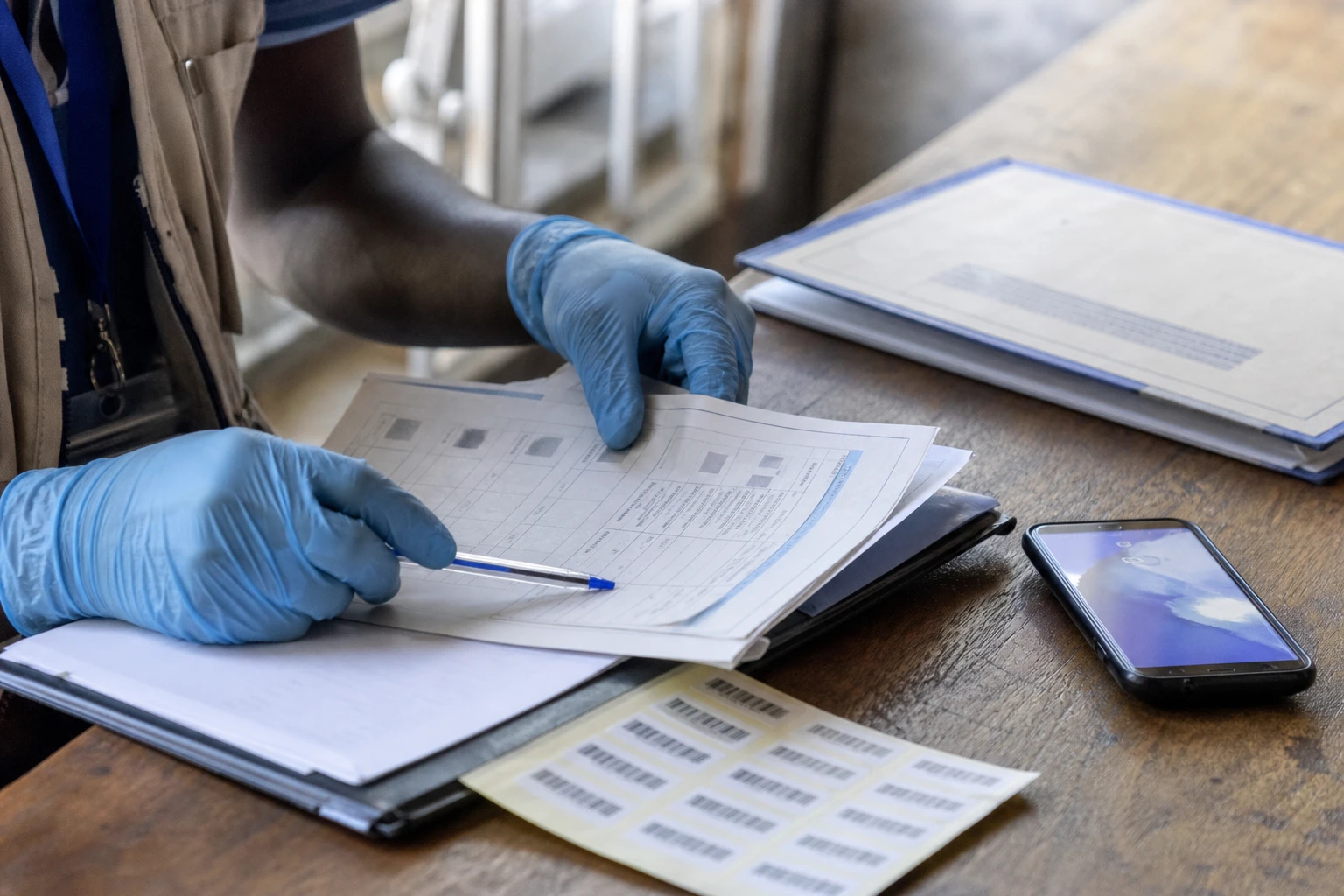
An outbreak spilling beyond the eastern DRC
In the east of the Democratic Republic of the Congo, Ebola is more than a health crisis. It is also a test of speed for a health system strained by population movements, insecurity and cross-border travel with Uganda and South Sudan. Since the official declaration of the 17th outbreak on 15 May 2026, authorities and their partners have been working in fragmented terrain, where every delay costs lives.
The international alert has taken a particular form this year because the outbreak is caused by the Bundibugyo virus, an Ebola strain for which there is no approved vaccine or treatment, unlike the better-known Zaire strain. The WHO classified the outbreak as a public health emergency of international concern on 17 May 2026, and on 5 June the WHO and Africa CDC launched a joint continental preparedness and response plan, with a funding requirement of $518 million over six months.
High figures, but an assessment that needs updating
The raw figures are severe. According to the WHO, as of 15 July 2026 the DRC had reported 2,124 confirmed cases and 828 deaths, a case fatality rate of 39%. The organisation added that 46 health zones across five provinces were affected, with transmission still active in 38 of them. The latest figures shared by the WHO in Africa on 27 July put the number of lives lost since the start of the outbreak at more than 1,000.
These figures do not support the number cited in the raw material, which put deaths at more than 2,128 as of 14 August. They do, however, show rapid and persistent growth, well documented by the WHO and Africa CDC. By 15 June, Africa CDC had already recorded 837 confirmed cases and 196 deaths in the DRC; a month later, the WHO was reporting 2,124 cases and 828 deaths. Expanded surveillance and testing explain part of the increase, but not the full severity of the outbreak.
The epicentre remains in the east, with Ituri at its heart, followed by North Kivu, South Kivu, Haut-Uele and Tshopo. This geography matters. In these provinces, patients often have to travel long distances to reach an equipped facility. Response teams, meanwhile, have to contend with blocked roads, displaced families and mistrust that resurfaces with every major health crisis.
National response, regional pressure
The DRC is not acting alone. In Kampala, at the end of May, the health ministers of the DRC, Uganda and South Sudan worked with Africa CDC and the WHO on cross-border coordination. The aim is simple: to prevent the virus from exploiting daily movement between neighbouring countries. Uganda later announced the end of its outbreak on 28 July, after 42 days without a new case. This end to the crisis does not remove the risk on the Congolese side, but it shows that a rapid response can break the chain of transmission.
On the ground in the DRC, the authorities have also broadened the response. Radio Okapi and Actualité.cd reported rising cases in Ituri, North Kivu and Haut-Uele in July, and as far as Kisangani, in Tshopo, signalling geographical spread beyond the initial outbreak area. The National Institute of Public Health and provincial teams have stepped up surveillance, case isolation and contact tracing. The WHO has also reported the deployment of additional personnel and emergency funding from the CERF, the United Nations Central Emergency Response Fund.
The problem is not only medical. It is logistical, social and political. In several affected areas, access to care depends on community trust, security around treatment centres and the ability to identify suspected cases quickly. The WHO has also noted that deaths among health workers heightened the alert in the first few weeks. In this kind of outbreak, urban populations are often more exposed to information, but also more vulnerable to rumours; rural areas, meanwhile, suffer most from the distance to services and delays in receiving care.
What this crisis says about the DRC and the continent
For Kinshasa, the challenge is also institutional. Ebola is testing coordination between the Ministry of Health, provincial authorities, reference laboratories and international partners. The current outbreak is a reminder that, in eastern DRC, a health crisis almost never remains confined. It quickly intersects with security, regional mobility and the sustainable funding of health systems.
Across Africa, this outbreak confirms a familiar but often underestimated fact: epidemics that cross porous borders require coordinated responses, not isolated action. Africa CDC and the WHO have adopted a common continental framework covering surveillance, laboratories, infection prevention, community engagement and logistics. For the DRC, what happens next will depend on its ability to rapidly reduce transmission in affected provinces, protect health workers and maintain ties with communities. That will determine whether the 17th outbreak remains a prolonged crisis or can finally be contained.



