Algeria
 Egypt
 Libya
 Morocco
 Sudan
 Tunisia
 Benin
 Burkina Faso
 Cabo Verde
 Côte d'Ivoire
 Ghana
 Guinea
 Guinea-Bissau
 Liberia
 Mali
 Mauritania
 Niger
 Nigeria
 Senegal
 Sierra Leone
 The Gambia
 Togo
 Cameroon
 Central African Republic
 Chad
 Equatorial Guinea
 Gabon
 Republic of the Congo
 São Tomé and Príncipe
 Burundi
 Comoros
 Djibouti
 Eritrea
 Ethiopia
 Kenya
 Madagascar
 Malawi
 Mauritius
 Mozambique
 Rwanda
 Seychelles
 Somalia
 South Sudan
 Tanzania
 Uganda
 Angola
 Botswana
 Eswatini
 Lesotho
 Namibia
 South Africa
 Zambia
 Zimbabwe
In Kinshasa, an ultimatum exposes a tense political scene
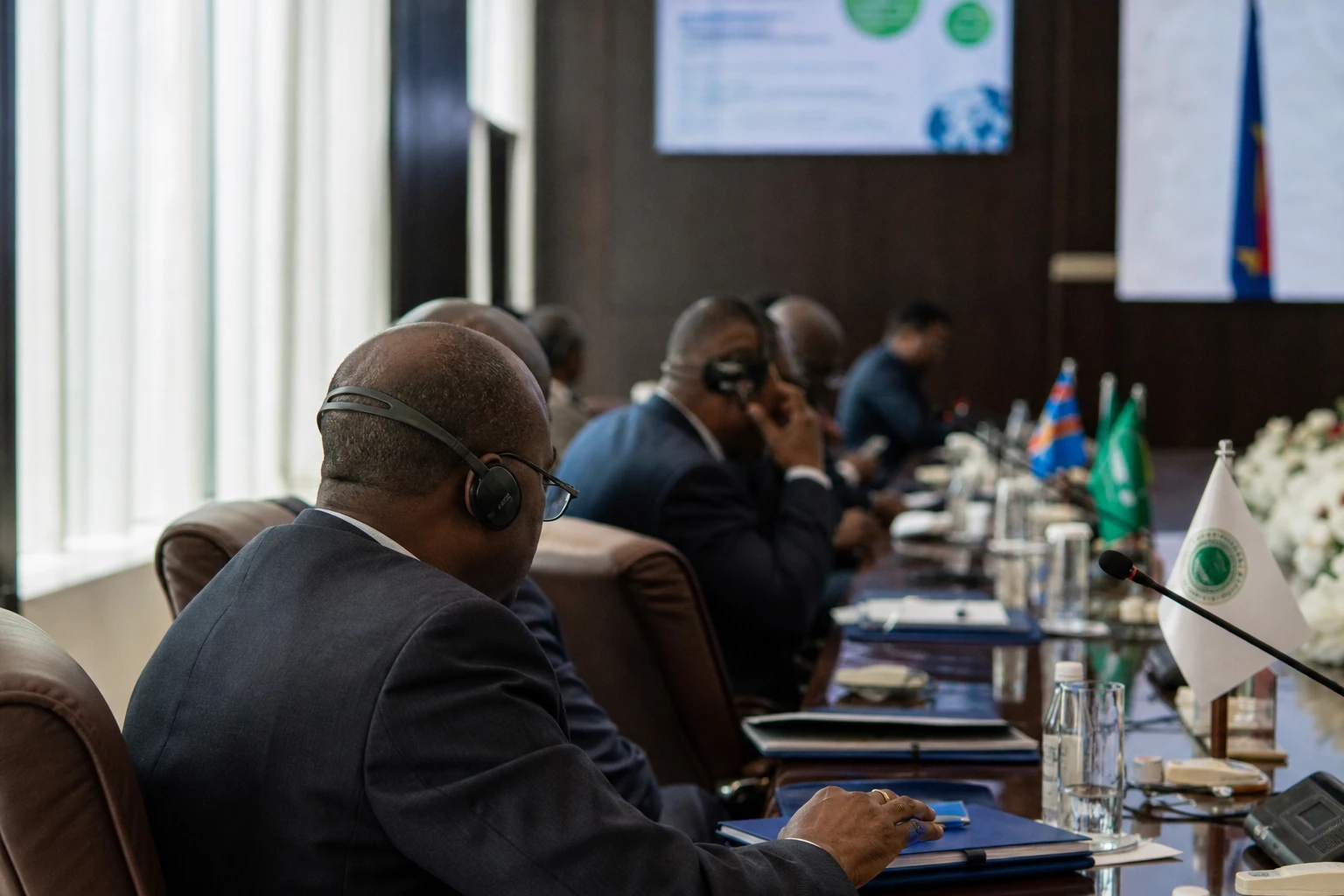
In the Democratic Republic of the Congo, the battle is being fought not only in the corridors of power. It is also being fought in the streets, in churches and on the political calendar, with one simple question: how can dialogue be opened without giving the impression of buying time? The Article 64 Coalition, which brings together several Congolese opposition figures, has chosen to answer with a deadline, 15 August, and the threat of fresh mobilisation if no official action follows.
This stand-off is unfolding against a fraught national backdrop. For several months, debate in the DRC has centred on security in the east, public freedoms and suspicions of an intention to revise the constitutional balance. Kinshasa remains the nerve centre of this political confrontation, but its effects extend beyond the capital: they touch the provinces, political parties, churches and regional balance in the Great Lakes region, where the DRC is still seeking a lasting way out of the crisis.
A coalition formed to safeguard the Constitution
The C64 was launched in Kinshasa in May 2026 as a platform of resistance to any reform deemed dangerous to the constitutional order. Several opposition leaders have joined it, including Martin Fayulu, Moïse Katumbi, Jean-Marc Kabund, Augustin Matata Ponyo and Delly Sesanga. Their position is clear: no amendment to the fundamental text that could open the way to a challenge to term limits.
On 20 July, the coalition postponed a march planned outside the Palais de la Nation after consultations with religious leaders. It then gave the authorities until 15 August to formally convene an inclusive national dialogue. The same principle was reiterated a few days later: no further retreat, and a return to civic action if nothing moves.
This sequence is not happening in isolation. Since the beginning of the year, President Félix Tshisekedi himself has raised the idea of an inclusive national dialogue, particularly after talks with the main religious denominations. On 17 July, the presidency confirmed that the head of state had opted for this path and that the churches were to support the process.
The central role of religious denominations
In this matter, the churches are not playing a decorative role. They serve as a trusted channel in a fragmented political landscape. The CENCO, the ECC and other denominations have already proposed a joint roadmap for an inclusive national dialogue, linking the political crisis to the security situation in the east of the country. Their approach is to bring the parties together without excluding major constituencies, to prevent any future forum from being seen as a mere tool for endorsing the authorities.
The opposition coalition has accepted this mediation, but it is now setting the pace. That is where the shift lies: religious leaders are buying time for negotiations, while the opposition is trying to prevent the dialogue from being put off indefinitely without a precise timetable. This balancing act also reflects a familiar reality in the DRC: when a political crisis drags on, moral and social institutions often become the only interlocutors able to keep communication flowing between rival camps.
In Kinshasa, several opposition figures have even toughened their tone by linking dialogue to concrete guarantees: freedom to demonstrate, an end to prosecutions deemed political, and the abandonment of any constitutional amendment project. The message is not only institutional. It is also strategic: to secure a framework for discussion before the streets once again become the main language of protest.
What the ultimatum changes for the authorities, the opposition and the country
For the authorities, the challenge is twofold. They must show openness without giving the impression of yielding to pressure. They must also preserve the image of a state in control of its agenda, at a time when criticism concerns both security in the east and the concentration of political decisions in Kinshasa. National dialogue may therefore appear to offer a way out of the crisis. But if it is delayed or excludes major forces, it risks deepening the mistrust it is meant to dispel.
For the opposition, the 15 August ultimatum is a test of credibility. The C64 wants to show that it can act in a coordinated way, after years of divisions and competing strategies. It is also seeking to channel genuine social anger without being swept into a logic of permanent confrontation. If the authorities formalise the dialogue, the coalition will be able to claim a political victory. If they do not, it will be able to say that the streets are taking over.
For the population, especially in the major cities, the stakes are even more tangible: to prevent political tensions from leading to blockages, clashes or further restrictions on freedoms. In the eastern provinces, where the security crisis remains the daily priority, dialogue will be judged by its ability to produce tangible effects on peace, displacement and state authority. In Kinshasa, by contrast, attention is also focused on respect for the constitutional timetable and the national political climate.
A Congolese episode with African resonance
This issue extends beyond the DRC. In Central Africa, where institutional transitions are fragile, it raises a broader question: how can credible dialogue mechanisms be organised without turning inclusivity into a slogan? The answer is also of interest to the African Union, which follows crises in the DRC through regional diplomacy, as well as to neighbouring states involved in peace talks around the Great Lakes.
The next date to watch is therefore 15 August. Until then, everything will depend on the authorities’ ability to turn the announcement of a dialogue into a formal political act, and on the opposition’s ability to maintain pressure without leaving the peaceful framework it advocates. In the DRC, the crisis is not simply a confrontation between individuals. Above all, it reflects the difficulty facing a large Central African country in holding together the Constitution, security and public trust.