Algeria
 Egypt
 Libya
 Morocco
 Sudan
 Tunisia
 Benin
 Burkina Faso
 Cabo Verde
 Côte d'Ivoire
 Ghana
 Guinea
 Guinea-Bissau
 Liberia
 Mali
 Mauritania
 Niger
 Nigeria
 Senegal
 Sierra Leone
 The Gambia
 Togo
 Cameroon
 Central African Republic
 Chad
 Equatorial Guinea
 Gabon
 Republic of the Congo
 São Tomé and Príncipe
 Burundi
 Comoros
 Djibouti
 Eritrea
 Ethiopia
 Kenya
 Madagascar
 Malawi
 Mauritius
 Mozambique
 Rwanda
 Seychelles
 Somalia
 South Sudan
 Tanzania
 Uganda
 Angola
 Botswana
 Eswatini
 Lesotho
 Namibia
 South Africa
 Zambia
 Zimbabwe
Monaco prosecutor ends investigations
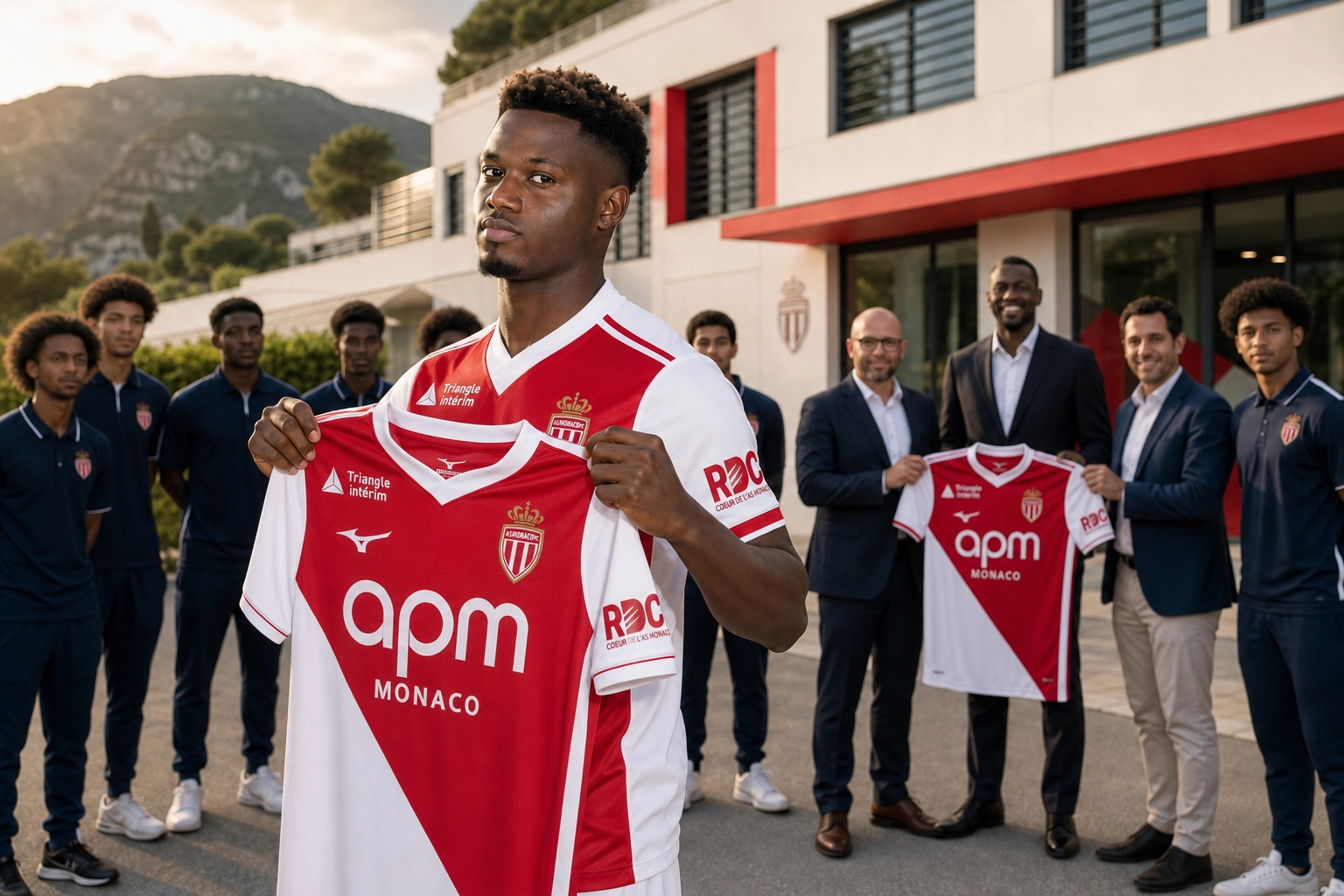
The partnership between the Democratic Republic of the Congo and AS Monaco has reached a major legal turning point. Monaco’s public prosecutor’s office decided on 9 July to drop the complaint filed against the agreement, bringing investigations opened in the principality to an end.
The decision comes after several months of controversy surrounding the partnership, which had fuelled political and media debate in the Democratic Republic of the Congo, as well as in Europe.
Partnership led by the Sports Ministry
Signed in June 2025 for a term of three years, the partnership between the Democratic Republic of the Congo and AS Monaco was led by the Ministry of Sports and Leisure, headed by Didier Budimbu.
The agreement is part of the “DR Congo, Heart of Africa” strategy, designed to enhance the country’s international profile through the visibility offered by the principality’s club.
To support the implementation of this co-operation, the ministry relied on French businessman Aurélien Logeais, who acted as an intermediary in structuring the partnership between the parties.
Beyond the visibility provided by the shirt, the agreement’s promoters say the co-operation forms part of a broader strategy encompassing sports development, training, skills transfer, tourism promotion, economic appeal and institutional co-operation.
A widely publicised complaint
A few months after the agreement was signed, two Congolese nationals living in France filed a complaint with the National Financial Prosecutor’s Office (PNF).
The complaint referred to suspicions of corruption, money laundering and misappropriation of public funds, as well as possible irregularities in the terms under which the partnership was concluded.
The PNF, considering itself territorially incompetent, referred the case to the Monegasque judicial authorities. This referral was in keeping with the rules governing jurisdiction between courts and did not prejudge the merits of the case in any way.
The opening of the preliminary investigation was subsequently widely reported in Congolese, French and international media, making the partnership between the DRC and AS Monaco one of the most discussed sporting cases of recent months.
After several months of investigations, Monaco’s public prosecutor’s office ultimately decided to close the proceedings without further action.
Separate proceedings still under way in Spain
The Monegasque case is not the only legal dispute concerning sporting partnerships entered into by the Democratic Republic of the Congo.
A complaint has also been filed with the Spanish judicial authorities concerning the partnership with FC Barcelona.
As in the Monegasque case, the agreement was led by the Ministry of Sports and Leisure, headed by Didier Budimbu, with French businessman Aurélien Logeais supporting the structuring of the partnership.
At this stage, the Spanish judicial authorities have yet to issue a decision.
When media time runs ahead of the courts
Beyond the substance of the cases, this affair highlights the gap that often exists between media time and the pace of justice.
Announcements of complaints alleging corruption, money laundering or misappropriation of public funds generally attract extensive media coverage. By contrast, decisions handed down several months later, such as a decision to close a case without further action, are often reported much more discreetly.
The partnership between the DRC and AS Monaco illustrates this. The opening of the investigation prompted numerous articles and comments. By comparison, the decision to close the case without further action received markedly less media coverage.
Without calling into question every citizen’s right to seek justice, this difference in coverage is a reminder that the perception of a project can be shaped for a long time before a judicial decision is reached.
Partnerships now expected to deliver results
The decision in Monaco to close the case without further action is unlikely to end the debate over the Democratic Republic of the Congo’s strategy of international partnerships.
For their promoters, these agreements are a development tool combining sport, training, skills transfer, tourism promotion, economic appeal and institutional co-operation. Their critics, for their part, continue to question their cost, governance and the budgetary priorities they represent in a demanding economic and social context.
Beyond the controversies and legal proceedings, these partnerships will now be judged on their results. Their ability to deliver tangible benefits for Congolese football, young people, international co-operation and the profile of the Democratic Republic of the Congo will ultimately be the true measure of their success. As is often the case with projects of this scale, time, rather than controversy, will determine their real impact.