Algeria
 Egypt
 Libya
 Morocco
 Sudan
 Benin
 Burkina Faso
 Cabo Verde
 Côte d'Ivoire
 Ghana
 Guinea
 Guinea-Bissau
 Liberia
 Mali
 Mauritania
 Niger
 Nigeria
 Senegal
 Sierra Leone
 The Gambia
 Togo
 Cameroon
 Central African Republic
 Chad
 DR Congo
 Equatorial Guinea
 Gabon
 Republic of the Congo
 São Tomé and Príncipe
 Burundi
 Comoros
 Djibouti
 Eritrea
 Ethiopia
 Kenya
 Madagascar
 Malawi
 Mauritius
 Mozambique
 Rwanda
 Seychelles
 Somalia
 South Sudan
 Tanzania
 Uganda
 Angola
 Botswana
 Eswatini
 Lesotho
 Namibia
 South Africa
 Zambia
 Zimbabwe

In Gabès, public statements are no longer enough
In southern Tunisia, residents of Gabès are no longer waiting for declarations. They want visible, measurable and swift action. For months, the city has lived with foul odours, health warnings and promises to rehabilitate the Tunisian Chemical Group’s facilities, which have stood on the coast since the 1970s.
President Kaïs Saïed’s surprise visit therefore rekindled cautious hope, but also deep mistrust. For local groups, a presidential visit only matters if it leads to concrete decisions, because industrial pollution is not an isolated episode: it shapes daily life, health and the local economy.
A Tunisian issue, but also a Maghreb and Mediterranean one
Gabès lies in a region where environmental concerns intersect with industry, employment and economic sovereignty. Tunisia remains a relatively small industrial country, but its chemical complex in Gabès plays an important role in processing phosphate, a strategic sector for exports and the balance of public finances. It is precisely this economic importance that explains the slow pace of decisions.
The issue, however, extends beyond national borders. In the southern Mediterranean, coastal pollution compounds water stress, urban pressure and fragile ecosystems. For Tunisia, the case also affects its image as a country capable of reconciling industry, public health and the ecological transition, a debate regularly followed from both African and European shores.
What the presidential visit said—and what it did not resolve
According to information published by the Tunisian press, Kaïs Saïed stressed the need to take measures against pollution and raised the possibility of shutting down some of the most polluting units, with operations resuming only at rehabilitated facilities. The remarks follow a line already apparent in January 2026, when the head of state received the final report of a task force charged with proposing urgent solutions for Gabès.
On the ground, however, residents say they no longer want generalities. Their criticism is simple: announcements keep coming, while the pollution persists. In June 2026, the Stop Pollution collective again called for mass demonstrations against an ecological crisis it describes as longstanding, persistent and incompatible with the right to a dignified life.
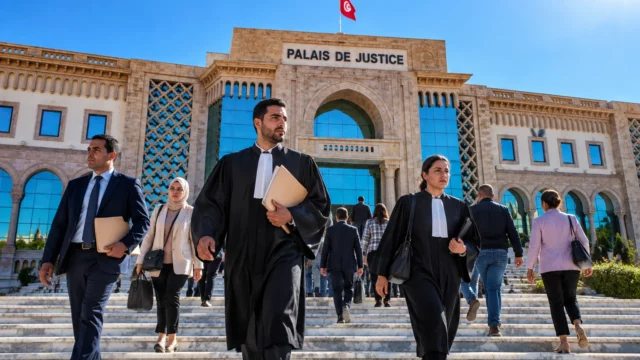
This caution is not new. In February 2026, the Gabès Court of First Instance rejected an urgent application to immediately suspend polluting units operated by the Tunisian Chemical Group, ruling that there was insufficient evidence of the alleged harm. Africanews and TAP reported the same decision. For activists, the legal setback reinforced the view that the battle is being fought as much in courtrooms as in the public arena.
An economy under strain, residents running out of breath
That is the heart of the conflict: chemical production continues to be presented as an economic lever, while the neighbouring population bears the health and environmental costs. In 2025, a rise in cases of poisoning and hospital admissions turned local anger into a political crisis. International media then highlighted how emissions of gas and industrial waste were fuelling lasting protests in the city.
The government has nonetheless begun rehabilitation work. The African Development Agency approved $110 million in funding in January 2026 to modernise the Tunisian Chemical Group’s facilities in Gabès, Skhira and M’Dhilla, with the stated aim of reducing air pollution and improving energy and operational performance. On paper, the direction is clear. In practice, residents want timetables, indicators and results.
The problem is also social. In Gabès, families live right beside the facilities. Schools, residential neighbourhoods, fishing and oasis farming are all affected by a degraded environment. The coastline is suffering, along with part of the informal economy that depends on the sea, small businesses and local services.
What Gabès says about Tunisia today
Gabès has become a political test. The presidency wants to show that it listens to people on the ground and can impose swift decisions. Citizen groups, meanwhile, want a structural response. Between the two lie a slow-moving administration, an ageing industrial sector and difficult trade-offs between jobs, exports and the right to health.
The case resonates beyond Tunisia because it raises a question that has become central in North Africa, as elsewhere on the continent: how can an industrial base be modernised without shifting the cost of that modernisation onto a single city? The response expected in Gabès will say much about Tunisia’s ability to make the ecological transition part of concrete public policy, rather than leaving it in the realm of promises.