Algeria
 Egypt
 Libya
 Morocco
 Sudan
 Tunisia
 Benin
 Burkina Faso
 Cabo Verde
 Ghana
 Guinea
 Guinea-Bissau
 Liberia
 Mali
 Mauritania
 Niger
 Nigeria
 Senegal
 Sierra Leone
 The Gambia
 Togo
 Cameroon
 Central African Republic
 Chad
 DR Congo
 Equatorial Guinea
 Gabon
 Republic of the Congo
 São Tomé and Príncipe
 Burundi
 Comoros
 Djibouti
 Eritrea
 Ethiopia
 Kenya
 Madagascar
 Malawi
 Mauritius
 Mozambique
 Rwanda
 Seychelles
 Somalia
 South Sudan
 Tanzania
 Uganda
 Angola
 Botswana
 Eswatini
 Lesotho
 Namibia
 South Africa
 Zambia
 Zimbabwe
A women’s march that shifted the political balance
In Grand-Bassam, memory is held not only in the buildings of Côte d’Ivoire’s first capital. It is also held in the footsteps of women who took to the streets to make the colonial order yield. In December 1949, their march became part of Ivorian history because it gave a female face to the anti-colonial struggle, at a time when Grand-Bassam prison held several PDCI-RDA leaders without trial.
This act remains meaningful today because it connects two realities often wrongly kept apart: the struggle for political freedoms and the role of women in that struggle. The episode is not merely a local memory. It has become a national landmark, and then a means of passing on history in a historic city listed as a UNESCO World Heritage Site since 2012.
Grand-Bassam, a place of memory at the heart of Ivorian history
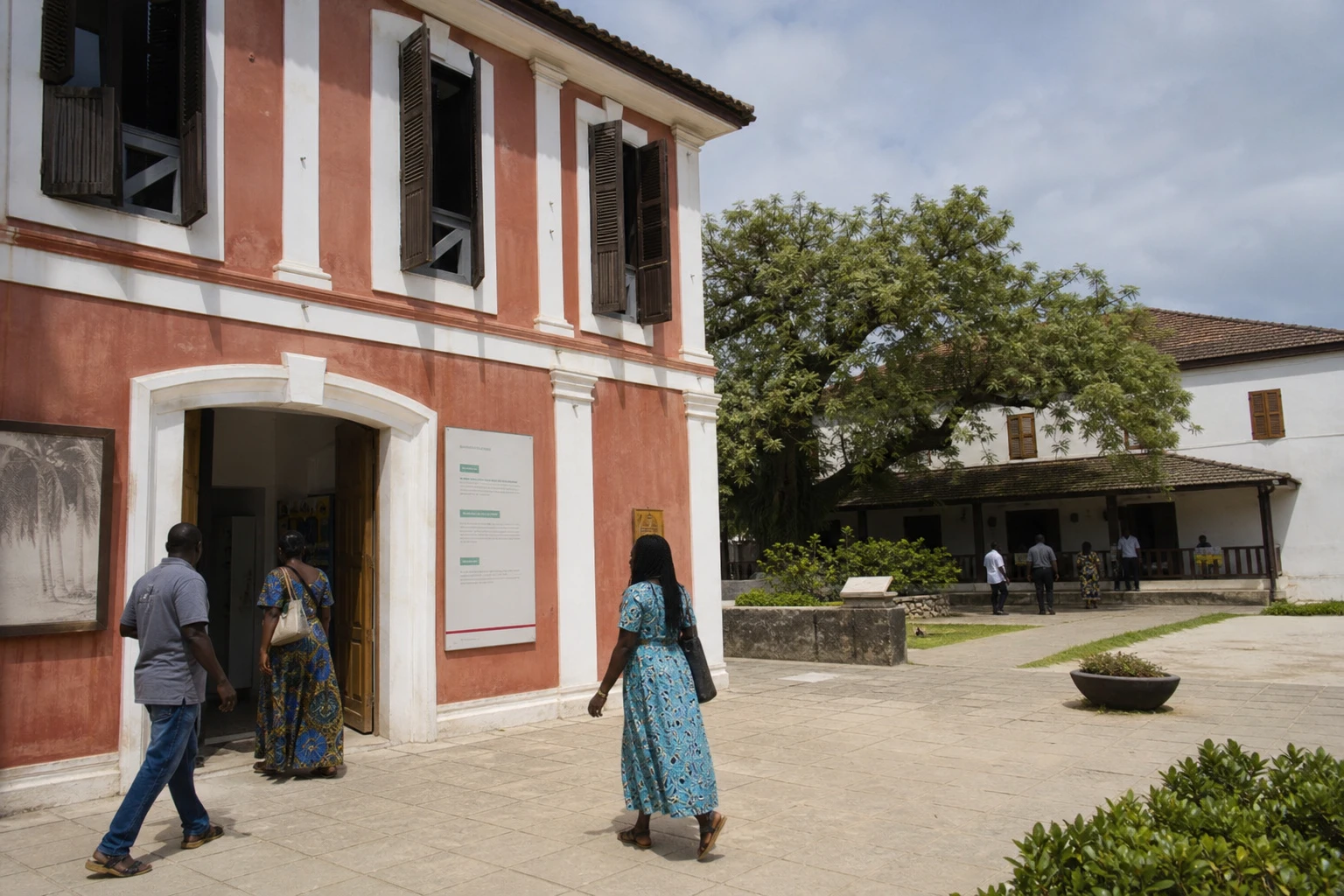
Grand-Bassam is not merely a picturesque setting. It is a pivotal place in Ivorian history. UNESCO notes that it was the first capital of the colonial territory, from 1893 to 1900, and that it retains traces of an urban history shaped by trade, colonial administration and the movement towards independence. Today, the historic city remains at the centre of efforts to conserve heritage, develop cultural tourism and pass on history.
This heritage dimension matters because the memory of 1949 is not frozen in a monument. It is part of a living space, shaped by Ivorian cultural institutions and the site’s conservation measures. The Grand-Bassam National Costume Museum, housed in the former governor’s palace, contributes to this telling of the past, alongside conservation work overseen by the Ministry of Culture and Francophonie.
December 1949: families’ anger becomes political action
The facts are established. In early 1949, several PDCI-RDA officials were arrested by the French colonial administration and imprisoned at Grand-Bassam prison. Academic studies date this wave of arrests to 9 February 1949 and note that the detainees spent long months behind bars without trial. It was in this context that women set out on a march from Abidjan to Grand-Bassam from 22 to 24 December 1949, demanding their release.
The exact number of participants varies across sources. Estimates range from several hundred to about 2,000 women, according to leading historical studies. This matters less than the meaning of the mobilisation: mothers, wives, sisters and activists turned a case of political arrests into a collective show of strength.
The repression was brutal. Available testimonies and studies describe police violence, beatings, humiliating conditions and extreme tensions around the prison. Yet this pressure did not erase the political impact the marchers sought. Academic research indicates that negotiations began afterwards and that some of the detainees were released in stages.
What the march changed for Côte d’Ivoire
Grand-Bassam’s importance lies not only in the emotion it evokes. It also lies in the political dynamic it reveals. In 1949, the colonial authorities believed they could isolate nationalist leaders by neutralising them legally and physically. The women’s march broke that logic. It showed that protest was not confined to parties, notables or male platforms, but could also draw on domestic and social networks capable of becoming a public force.
For Côte d’Ivoire today, the issue is also a civic one. The way this history is passed on says something about how a country creates its shared reference points. Families, foundations and cultural institutions have set out to identify survivors and document their lives. This work of remembrance is all the more necessary as witnesses pass away and women’s accounts of anti-colonial struggles remain less visible than those of political leaders.
This invisibility is not insignificant. It affects the place given to women in the national narrative, even though the history of 1949 shows their role in taking the initiative, organising and enduring hardship. In a country where public debate on representation, political inheritance and the passing on of history between generations remains lively, Grand-Bassam offers a useful counter-narrative: one of women who took action, rather than mere extras in a male-centred moment of independence.
An Ivorian, West African and pan-African legacy
The significance of this march extends beyond Côte d’Ivoire. Across West Africa, it echoes other examples of women mobilising against colonial rule and the denial of political voice. It also serves as a reminder that liberation struggles were often driven by flexible coalitions bringing together activists, families, traders, workers and religious or community figures. This broader perspective remains important in a sub-region shaped by political solidarities, changing memories and regional frameworks such as ECOWAS and WAEMU.
Grand-Bassam is therefore more than a heritage site. It is a platform for thinking about African cultural sovereignty. UNESCO also notes that the historic city is the focus of regular conservation and management efforts, amid risks from erosion, flooding and urban pressures. Preserving this place means preserving an African way of telling the story of emancipation: through archives, but also through spaces, monuments and the voices of those who have been kept in the background for far too long.
As Côte d’Ivoire continues to balance urban development, heritage protection and tourism promotion, the memory of the marchers retains particular force. It is a reminder that a place can carry several lives at once: that of a former colonial capital, that of a World Heritage-listed city and that of a space where women brought politics into the visible historical record.