Algeria
 Egypt
 Libya
 Morocco
 Sudan
 Tunisia
 Benin
 Burkina Faso
 Cabo Verde
 Côte d'Ivoire
 Ghana
 Guinea
 Guinea-Bissau
 Liberia
 Mali
 Mauritania
 Niger
 Nigeria
 Senegal
 Sierra Leone
 The Gambia
 Togo
 Cameroon
 Central African Republic
 Chad
 Equatorial Guinea
 Gabon
 Republic of the Congo
 São Tomé and Príncipe
 Burundi
 Comoros
 Djibouti
 Eritrea
 Ethiopia
 Kenya
 Madagascar
 Malawi
 Mauritius
 Mozambique
 Rwanda
 Seychelles
 Somalia
 South Sudan
 Tanzania
 Uganda
 Angola
 Botswana
 Eswatini
 Lesotho
 Namibia
 South Africa
 Zambia
 Zimbabwe
A boat held, a capital on alert
In Kinshasa, a boat held in Maluku is a reminder of a simple reality: in the Democratic Republic of the Congo, a health alert can quickly become a matter of mobility, river transport and monitoring at entry points. In a country where exchanges still rely heavily on waterways, every unexplained fever on board requires the authorities to act quickly, without waiting for doubt to turn into transmission.
This response is all the more pronounced because the DRC is facing its 17th Ebola outbreak since 1976 in 2026. The epidemic declared in May is mainly affecting Ituri, with spread reported towards North Kivu and South Kivu, while the WHO and Africa CDC have activated regional coordination mechanisms. In this context, an incident on a boat east of Kinshasa is never treated as an isolated episode.
What the facts on the ground show
Initial samples taken from passengers with fever or other symptoms tested negative, according to the health update issued locally. The vessel remains under surveillance in Maluku, however, pending a second test to be carried out about 48 hours after the first. If this further round of tests is also negative, the passengers concerned will be released. This caution follows the standard logic of the Ebola response: isolation, laboratory confirmation, then a gradual lifting of measures once the risk has been ruled out.
The remaining uncertainty concerns the passenger who triggered the alert. He fell ill after leaving the boat in Mongala province, in the north of the country, and died before a sample could be taken. At this stage, it is therefore impossible to say whether he had Ebola or another disease. This distinction matters, because the initial symptoms of several tropical infections can look alike, and Congolese health authorities and the WHO stress that laboratory confirmation is needed before any conclusion is reached.
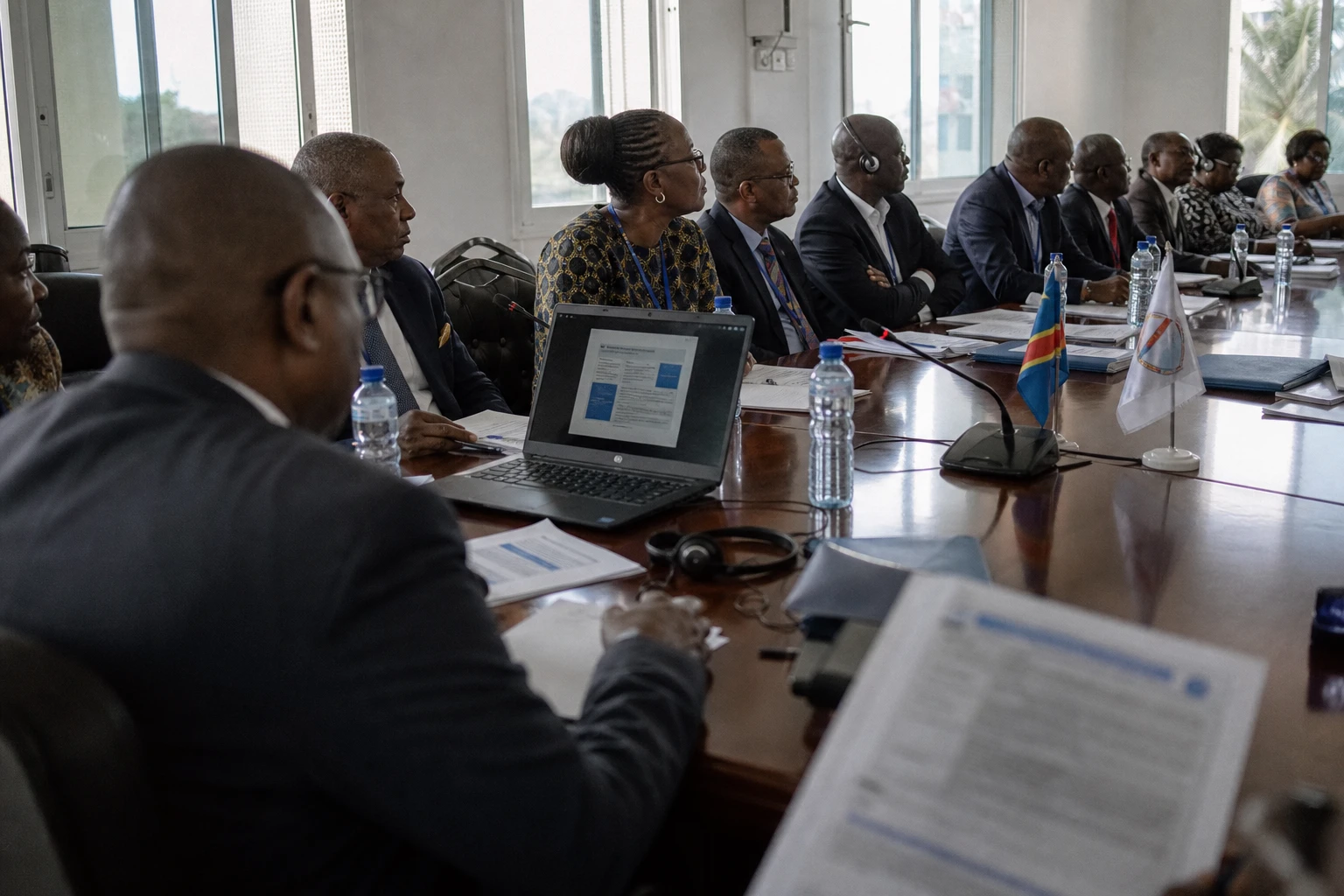
Meanwhile, teams from the INRB have set up autonomous laboratory platforms on site to continue testing without relying on the immediate transfer of samples. This deployment is part of a broader effort: the WHO has said that more than 17 tonnes of emergency supplies have been sent to the DRC, including protective equipment, laboratory materials and PCR kits. Africa CDC, for its part, has reiterated that early detection, rapid isolation and contact tracing remain the most effective tools for breaking the chain of transmission.
Why Maluku is a sensitive location
Maluku is no ordinary place. This outlying commune of Kinshasa has for years been a focus of health monitoring along the river routes linking the capital to the inland provinces. During previous Ebola outbreaks, the Congolese authorities and their partners have already used this area as a surveillance point, precisely because boat journeys bring together commercial traffic, regular passengers and informal movement. In other words, holding a vessel in Maluku means acting at the capital’s logistical gateway.
This health measure is also informed by the country’s recent experience. In May 2026, the Congolese Ministry of Health and the WHO said the Ebola response must protect primary healthcare and strengthen the system over the long term. Prime Minister Judith Suminwa also noted in July that the government and its partners had released funds to speed up treatment and support field teams. This shows that the response is not limited to the emergency: it is also testing the state’s ability to sustain its efforts over time.
For passengers, the measure is restrictive. For the authorities, it is above all precautionary. In an epidemic with potentially high fatality rates, allowing an exposed group to leave too soon could restart a chain of transmission. Conversely, keeping people in quarantine for too long without biological evidence undermines trust. That is the challenge of epidemiological surveillance: protecting people without deepening suspicion or needlessly paralysing travel.
A local incident with regional implications
The Maluku episode extends beyond Kinshasa’s geography. It is a reminder that river and land travel between Congolese provinces remains a potential route for the spread of high-risk diseases. The WHO has already reported transmission concentrated in Ituri, North Kivu and South Kivu, provinces where insecurity makes contact tracing and case isolation more difficult. Africa CDC, for its part, has convened emergency coordination with the DRC, Uganda and South Sudan, a sign that the Ebola response is now playing out at regional level.
This regional dimension also matters for SADC, ECCAS and all the neighbours of East Africa, even when the initial outbreak appears far from the borders. The virus follows trade routes, markets, ports and family ties. That is why health authorities now favour cross-border cooperation over blanket, indiscriminate measures. Africa CDC has also warned against indiscriminate travel restrictions, which can disrupt trade without necessarily offering better protection to the population.
The Maluku case will above all show whether the DRC can combine speed, rigour and proportionality. If the further tests confirm that there is no Ebola, the boat will be able to leave and the alert will be lifted. If a case is ultimately confirmed, the capital will have to strengthen its health safeguards further, just as the country is trying to contain an active outbreak in the east. In either case, the lesson is the same: in the DRC, controlling Ebola depends as much on laboratories as on discipline at entry points.